Home  ›  FAQ

Frequently Asked Questions

UAE Body and Vehicle Camera FAQs

The questions UAE buyers actually put to us, from what the law requires to what sizes the server. Filter by product family or by topic. Every answer is on this page, and the ones that turn on a regulation name the instrument behind them.

Browse the Questions

Pick a product family, then narrow by topic. Answers stay on the page whether or not a question is open, so a search for any of this finds it here.

Product family
Topic

Showing 72 of 72 questions

Legal & Compliance

The answers in this group set out the published position and name the instrument behind it. They are general guidance and not legal advice. Any deployment that records the public, records staff, or carries enforcement powers should be put to your own legal advisers before it goes live.

Data & Storage

How long is footage kept?

Retention is set by your policy rather than by the device. Digital Evidence Management enforces the schedule you configure, so different categories of evidence can be held for different periods and disposed of automatically at expiry.

Is there a UAE rule that sets how long body camera footage must be kept?

Not one figure that covers everybody. Resolution 13 of 2026 defers retention to Dubai Electronic Security Centre policy for the entities it covers. SIRA's technical standard sets 31 days for the fixed camera systems installed at regulated premises, which is a useful reference point and is not a body-worn rule. Everyone else sets their own.

In practice the number comes from the claim or complaint window in your operating contract. It is also the figure that sizes the server, so settle it before you settle resolution.

Video Infrastructure

Where is the footage actually stored?

On a private server you control, deployed on-premise or hosted in-country. The system is built so that evidence does not leave the jurisdiction that collected it, and there is no dependency on a third-party public cloud.

Can footage be stored in a cloud outside the UAE?

The PDPL allows cross-border transfer where the destination has an adequate level of protection recognised by the UAE Data Office, or under safeguards such as contractual clauses, explicit consent, or necessity for a contract or legal obligation. So it is allowed, with conditions attached.

Whether it is a good idea is a separate question, and for police, critical infrastructure and most government work the answer has been no. Every deployment we build puts the server on your own hardware or on hosting inside the UAE, which removes the question.

Can an officer edit or delete their own recording?

No. Footage is written to storage the wearer has no write access to, and every file carries the operator ID and a tamper-evident timestamp. Once it has been extracted, every action taken on it is recorded in the audit trail, including who viewed it, who shared it and who exported it. That is what makes the recording defensible later under review or in court.

Who is allowed to view the footage?

Only people on the authorised-user register, at the access level recorded for them. Resolution 13 requires that register to exist, bars copying recordings to personal devices, and requires written approval before footage is used or shared, for a specified purpose. In practice this means the platform decides who sees what, and a shared drive cannot do that.

How much storage does one shift need?

A ten-hour shift at 1080p is broadly 30 to 60GB per camera, depending on the encoding and how much of the shift is actually recorded. Cameras hold 16 to 256GB internally depending on the model and how it is ordered, comfortably more than one duty needs, because the dock clears the camera daily.

What sizes the server is retention, not the shift. Cameras on shift at once, multiplied by hours recorded, resolution and the number of days you have to keep, is the calculation we work back from.

Video Infrastructure

Is the footage encrypted the whole way?

It is encrypted on the camera and at rest on the server. The Motorola Smart Dock link is AES-256. Not every manufacturer publishes what the link itself uses. For the other docks, bring us your security policy and we will confirm the transport in writing.

How long do we have to keep fleet footage, and where does it live?

Where a retention figure applies it is met at the depot. No mobile recorder holds two months of recording, so the nightly bulk offload is what makes the number achievable, and it is the part of the system to size first. After that the footage sits on infrastructure the operator owns, in your own rack or in a UAE data centre, with retention enforced by the server. One caveat worth settling early: the Motorola in-car systems upload into Motorola's own platform instead, so a fleet wanting everything in one place has to match the brands.

Video Infrastructure

How much storage does 31 days of multi-channel footage need?

More than the vehicle holds, which is the useful answer. At eight channels of 1080p a 4TB drive carries between six and twelve days of continuous recording, roughly two to four weeks for a vehicle running ten hours a day. Four channels roughly doubles it.

So a 31-day or 60-day requirement is not met on the vehicle. It is met by transferring to the depot, and the server is sized from vehicle count, channels, resolution, hours driven and the policy period.

Video Infrastructure

Do vehicle cameras use the same evidence system as body cameras?

Within a brand, yes. The Xignal vehicle recorders and the Xignal body cameras encrypt and stamp footage the same way and report to the same private server, so an incident involving an officer and a vehicle assembles into one case instead of two disconnected sets of files. The Motorola in-car systems run their own chain, alongside Motorola body-worn footage in their video management platform. Both are complete systems, and neither is a compromise. Decide which one you are standardising on before the first vehicle is fitted.

Vehicle Cameras

Product

What resolution should a body camera record at?

1080p is the working floor. It is the minimum SIRA sets for the fixed camera systems it regulates, and it is what a tender will usually ask for. Across the range we supply, recording runs from 1280 x 720 up to 4K.

Higher is not automatically better. Resolution multiplies against retention to size the server, so a jump from 1080p to 4K on a large fleet is a storage decision as much as a picture-quality one. Identification at conversational distance is met at 1080p on every model here.

Compare all models

How long does a body camera record on one charge?

Across the range we supply, published continuous recording runs from 9 to 12 hours on one charge, and 13 hours on the helmet unit, which carries a detachable second cell. Models with a swappable cell extend past their figure without returning to a dock. Internal storage is the second limit, from 16 GB to 256 GB depending on how the model is ordered. Size it against the hours a shift actually records, since the dock clears the camera daily.

Will a body camera survive a UAE summer?

The published operating ceiling across the range we supply is +60 degrees Celsius, which covers outdoor work in a UAE summer, including patrol, inspection and yard duty. Sealing runs from IP54 to IP68 depending on the model, and most carry a published drop test.

Two places it does not stretch to: the inside of a structure fire, and a classified hazardous zone, where a certified device is required and no model in this range carries one. Tell us where the camera actually works and we will say which models hold up.

Key Features

What IP rating do we need?

IP66 is the reference point most UAE specifications reach for, because it is what SIRA and the Sharjah technical guidelines require of outdoor fixed cameras in Gulf heat, humidity and dust. A body camera is not that installation, so treat the figure as a benchmark.

Across the range we supply, sealing runs from IP54 to IP68. Indoor and vehicle-based roles are served well below the top of that; outdoor patrol, ports and industrial work are where the higher ratings earn their place.

Compare all models

Do the cameras need an internet connection to work?

No. Offline units record to encrypted internal storage and transfer everything when they are docked, with no connectivity required at any point. 4G/5G models add live streaming where operations need it, but that is an option rather than a dependency.

What is the difference between an offline and a live-streaming camera?

An offline camera records to encrypted internal storage and transfers the whole shift when it is docked, or over Wi-Fi once it reaches base. A 4G or 5G camera does the same, and also streams to a command centre while the incident is still running. Both end up on the same server. Which one fits depends on whether anyone needs to watch in real time.

Live Streaming

Do the cameras see in the dark?

Most of them, by different means. Some models use infrared, which gives a monochrome image at a published range; some use a starlight sensor, which keeps colour at very low light; one uses white-light illumination, which is visible to the person being recorded and is a deterrent as much as an imaging choice. Two models offer a choice of infrared or starlight at order.

Low light is where the models genuinely differ, so it is worth deciding against the environment the camera actually works in.

Compare all models

Do the cameras record GPS position?

Six of the nine body cameras we supply publish GPS. It is not a feature every model in the range carries, and it is worth confirming per model, because position stamping is often written into a tender as though it were universal.

Where GPS is present, position is written into the file alongside the operator ID and the timestamp, which is what lets an incident be reconstructed against a map afterwards.

Compare all models

Is AI face and plate recognition included?

It is specified as an option at order on the models that support it, not a standard feature across the range. Tell us the use case and we will confirm which models can carry it and what it means for storage and processing.

Can a body camera also work as a radio?

On some models, yes. Several carry push-to-talk over cellular, which puts recording and voice on one device and removes a second thing for an officer to carry. On the streaming platform the console can also speak to a device, device to device, and to a group.

It is worth checking against the radio estate you already run, because push-to-talk here is carried over the cellular network rather than over an existing radio network.

Live Streaming

How many channels does a patrol car need?

Two to four. Road ahead and cabin as the minimum, a rear camera for anything carried in the back, and a fourth on the offside if the unit works traffic stops. That fits a dash camera without a separate recorder, which keeps the installation simple. Where plate recognition in the car is part of the requirement, that moves the specification to the Motorola in-car system.

Dash cameras

What is the difference between AHD and IP on a vehicle, and when does Sharjah change the specification?

AHD sends analog video down coaxial cable to the recorder. IP cameras are networked and carry their own encoding. Most emirates accept AHD for school transport; Sharjah requires IP. This is worth being precise about, because it is often described loosely. The hybrid recorders are not pure IP units: one takes eight analog channels plus up to four IP channels, and the other takes four plus four. So a bus that needs all seven cameras on IP is not covered by one of these units, and the channel plan has to be confirmed against the actual requirement before anything is ordered. Tell us the emirate and the vehicle and we will run that check.

Vehicle recorders

What resolution and field of view does a vehicle camera need?

1080p is the working floor, and it is what the published UAE vehicle rules ask for where they specify at all. On field of view, the cash-in-transit standard is the most concrete reference available: at least 110 degrees front and rear, and at least 90 degrees on each side corner.

Commercial road-facing cameras commonly run wider than that. Where plate reading is part of the requirement, the constraint moves from field of view to pixel density on the plate and to camera angle, and that is a per-vehicle calculation.

Vehicle Cameras

SD card, SSD or hard disk?

A hard disk if capacity is the priority: five of the six recorders take a 2.5 inch drive up to 4TB, and every one of them writes a second copy to an SD card at the same time. SD cards if reliability is the priority: one model has no hard disk at all, runs on two 128GB cards, and is the only H.265 encoder in the range. H.265 halves the file size for the same picture, so 256GB goes further than it sounds. It holds days rather than weeks, so it suits a vehicle that comes back to the same depot every night.

Note that the cash-in-transit standard specifies an SSD, so a regulated security vehicle is a separate case from a general fleet fit.

Vehicle recorders

What can an AI dash camera actually detect?

They are specified at order on the models that carry them, not fitted across the range. ADAS watches the road: lane departure, forward collision and following too closely. Driver monitoring watches the cab: head down, phone use, smoking, looking away, yawning, eyes closed, no face detected and the lens being covered. Both generate alarms rather than recordings on their own, so they are only worth fitting where somebody is going to act on them. Tell us how the alerts will be used and we will say whether they earn their place.

Can I watch my vehicles live?

On the 4G and 5G recorders, yes. A reduced stream goes to the console while the vehicle is out, with position on a map beside it. The full-resolution recording keeps writing to the device the whole time, and that is the copy that becomes evidence.

It needs a SIM and a data plan per vehicle and it needs coverage. Out of coverage the recorder carries on recording normally and the console simply has no live view until the vehicle is back in signal.

Live Streaming

Will a vehicle system survive being parked in a UAE summer?

This is the specification line that matters most here, because a car parked in the open is reported at 60 degrees or more in the cabin, and the windscreen a camera is fixed to is hotter than the cabin air. Across the dash cameras we supply, published operating ceilings run to +60, +65 and +70 degrees Celsius depending on the model.

For a fleet that parks outdoors through the middle of the day, specify against the top of that. For vehicles in continuous use or parked under cover, the ceiling never comes into play and the choice can be made on other grounds.

Dash cameras

Does parking mode drain the vehicle battery?

It can, and that is what the low-voltage cut-off is for. A recorder left running on a stationary vehicle draws from the starter battery, so the install sets a voltage threshold at which recording stops and the vehicle is guaranteed to start.

Where continuous parked surveillance is genuinely needed, the answer is a second battery or a switched supply. Tell us the duty cycle and the installer will size it.

Deployment

How does footage get off the camera?

Through a dock. The camera is placed in a bay at the end of the duty, the files transfer to your server and the camera charges at the same time. Simple multi-bay docks are bounded by the machine they are connected to; the gigabit units and the kiosk move data faster and some hold their own drive so the extraction completes even when the server is unreachable.

Docks are brand-specific. The bays, the contacts and the software all are, so a mixed fleet needs a dock per brand. Settle the camera choice first and let the infrastructure follow.

Video Infrastructure

How many cameras do we actually need?

The number is posts covered at once, not headcount. A team of sixty officers working three shifts needs cameras for the largest shift plus a margin for charging and repair, because a camera returns to the dock at the end of a duty and goes out again on the next one.

That single distinction is the largest cost lever in most deployments, and it is the figure most first specifications get wrong.

Project Cost Guide

What training is required?

On Dubai enforcement work it is an obligation the regulation places on the deploying entity: Resolution 13 of 2026 requires training before enforcement powers are granted. Elsewhere it is not compelled, and it still decides whether the deployment works.

The content that matters is short: when the camera runs and when it does not, what to say at the point of contact, how to dock at the end of a duty, and what happens to a file afterwards. Most of the failures we see start in the policy.

Do we need live streaming, or is offline enough?

Offline is a legitimate choice and not simply the cheap one. Where footage is reviewed after the shift, a camera with no SIM removes a monthly data line per officer and one whole failure mode. Live streaming earns its cost where a supervisor makes resourcing decisions while an incident is running. Both routes end on the same server, which is what makes a mixed fleet workable.

Live Streaming

Can it integrate with our existing command centre?

Within a brand, yes. Across brands, there is no single console, and it is worth saying so plainly. Each manufacturer streams into its own platform: one runs a client and server package you can host yourself, one uses its own command and dispatch platform, and one uses its video management product.

Where a deployment covers officers and vehicles from the same manufacturer, they appear in one place. Where it mixes manufacturers, they do not, and the decision belongs at the start of the project, before the first order goes in.

Live Streaming

Can we run the software on our own servers?

Yes, and most UAE deployments do. The evidence platform sits on your hardware or on hosting inside the country, which is what keeps the footage in the jurisdiction that collected it and satisfies the data residency line in most government tenders.

One of the streaming platforms ships as a client and server package precisely so the server can be yours. Bring us your infrastructure standard and we will map the deployment onto it.

Digital Evidence Management

Who installs a vehicle system and how long does it take?

Fitting is done by an installer, on the vehicle, and a straightforward multi-camera fit is a day's work per vehicle once the first one has set the pattern. The first vehicle takes longer, because camera positions, cable routes and the recorder location are agreed on it and then repeated.

Two things to settle before the first fit: heat-rated mounts and adhesives, because a windscreen in summer defeats general-purpose ones, and ventilation around the recorder. Check the effect on any vehicle warranty with the dealer, since that varies by manufacturer and is not something we can answer for your fleet.

Vehicle Cameras

Can we retrofit vehicles that already have cameras?

Often, yes. The hybrid recorders exist for this: one keeps eight analogue channels and adds up to four IP alongside them, so an existing analogue fit is not thrown away when IP cameras are added.

Two things to check first. The hybrid caps at a 2TB drive where the analogue models take 4TB, and the two hybrids differ on whether they publish ONVIF and a built-in switch. Which way that trade falls depends on what is already on the vehicle.

Vehicle recorders

Procurement & Support

How much does a body camera or fleet camera system cost in the UAE?

We do not publish prices, and the reason is not coyness. A camera is a line in a system that also contains docks or recorders, a server, licences, storage sized to a retention rule, installation and support, and the ratios between those change completely between a twenty-camera pilot and a fleet-wide rollout.

Send us the shift pattern or the vehicle list and the retention obligation and we will work a real figure back from them.

Project Cost Guide

What drives the cost of a deployment?

Four things, in this order: how many posts are covered at once, whether the cameras carry SIMs, what resolution you record at, and how long you are obliged to keep the footage. The last two multiply together and are what sizes the server. We do not publish prices, because a real figure comes from the post list and the retention rule, and we would rather quote against yours than print a number that fits nobody.

Project Cost Guide

What should a tender specification contain?

The lines that decide a deployment are fewer than most specifications carry. Resolution and frame rate; sealing and operating temperature against the real environment; battery against the actual shift; whether removable media is permitted at all; encryption and audit logging; retention period and where the data resides; the extraction route and how many devices arrive at once; and training and support in the UAE.

The two that get missed are retention and simultaneous posts, and they are the two that set the budget. Send us a draft and we will mark it up against what the range can actually evidence.

Talk to us about a tender

Do you sell single units or to individuals?

We supply organisations. The range is built around a system: cameras with docks or recorders behind them, a server, and evidence management on top. A single camera without the rest of it does not give a buyer what these products are for.

Pilots are a different matter, and we run them regularly at small volumes.

Contact us

What warranty and support do you provide in the UAE?

Support is local, and we scope it with the order: warranty terms, spares held against the fleet, repair turnaround, firmware updates and who to call. For a deployment of any size we recommend holding a percentage of the fleet as spares, because a camera in for repair is a post uncovered.

Tell us the fleet size and the shift pattern and we will put the support model in writing alongside the quotation.

Contact us

Can we run a pilot before committing to a full rollout?

Yes. Components are specified and procured separately, so a pilot can run on a small number of cameras and a single docking station, then extend without replacing anything already in the field.

Which brands do you supply?

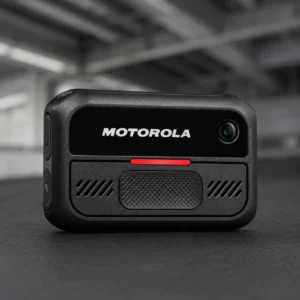
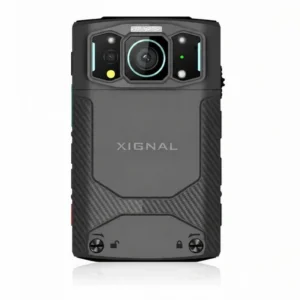
Hytera, Motorola and Xignal, which is the Recoda range. Nine body camera models and fourteen vehicle units across dash cameras, mobile DVRs and NVRs, and PTZ heads, all listed with full specifications and comparison tables.

The brands are not interchangeable behind the scenes: docks, evidence platforms and streaming consoles are brand-specific, which is why the decision belongs at the start of a project.

See the full range

Which emirates do you cover?

All seven. The specification changes between them more than most buyers expect, which is the useful part: school transport is specified differently in Abu Dhabi, Dubai and Sharjah, Dubai has published enforcement-camera rules that the other emirates have not, and the approved-equipment regimes differ.

Tell us which emirate the work is in and we will specify against the rules that actually apply there.

Which rule applies to your sector

No questions match that combination. Ask us directly and we will answer it.

Not Answered Here?

Look at the hardware

Nine body camera models with a full comparison table, plus accessories, key features and the offline and streaming split.

Look at the vehicle range

Dash cameras, mobile DVRs and NVRs, and PTZ heads, with the channel counts and the school transport configuration worked through.

Ask us the one we missed

Send the tender wording, the shift pattern or the emirate. We answer specification questions in writing, and we will say when something is not published.

Still Have a Question?

Send us the tender wording, the shift pattern, the vehicle list or just the emirate you operate in. We answer specification and compliance questions in writing, and we say so when a figure is not published anywhere.

Body Camera Models

Two ways to deploy. Browse below.
Request a Demonstration

Tell us where the cameras will be deployed and we will arrange a demonstration with the right models for your sector.
Connect on WhatsApp