Home › Resources › Offline vs Live Streaming
Offline and live streaming body cameras put the same footage on the same server. One does it at the end of the shift for the cost of a dock; the other does it while the incident is running, for a SIM and a data plan per camera. This guide sets out which is worth paying for, and when.
BodyCamera.ae Technical Team
The short answer
Live streaming is worth its cost when somebody is watching the feed and can act on what they see. If footage is reviewed after the event, a docked camera delivers the same evidence without a SIM, a data plan or the battery penalty.
Written for security and operations managers scoping a deployment, and for procurement staff comparing quotes that are not comparing the same thing.
The two columns are not better and worse. They are different answers to the question of when the footage has to be reachable.
| Docked or Wi-Fi upload | 4G or 5G streaming | |
|---|---|---|
| When footage arrives | At the end of the shift, or when the camera reaches a trusted network | While the incident is still running, and again in full at the end of the shift |
| Ongoing cost | None beyond storage and maintenance | A SIM and a data plan for every camera, every month |
| Battery | The longest runtimes in the range, because the radios stay idle | Streaming and cellular search both draw hard. Expect noticeably less than the published figure |
| Depends on | A dock, or a wireless network you control | Mobile coverage at the place the incident happens, which nobody controls |
| Failure mode | A camera that fails to dock is one late upload, and the file is still on the device | A camera out of coverage streams nothing. The recording continues locally and uploads later |
| What it supports | Investigation, complaints, evidence, training review | All of that, plus a control room seeing the incident and directing the officer |
| Best suited to | Fixed posts, retail, reception, hospitality, corporate premises, any team that returns to a base | Mobile patrol, incident response, lone working, and anything with a staffed control room |
| The trap | Buying it for a team that turns out to need escalation, and having to replace the fleet | Buying it because live video sounds valuable, then finding nobody is rostered to watch |
Scroll the table sideways on a narrow screen.
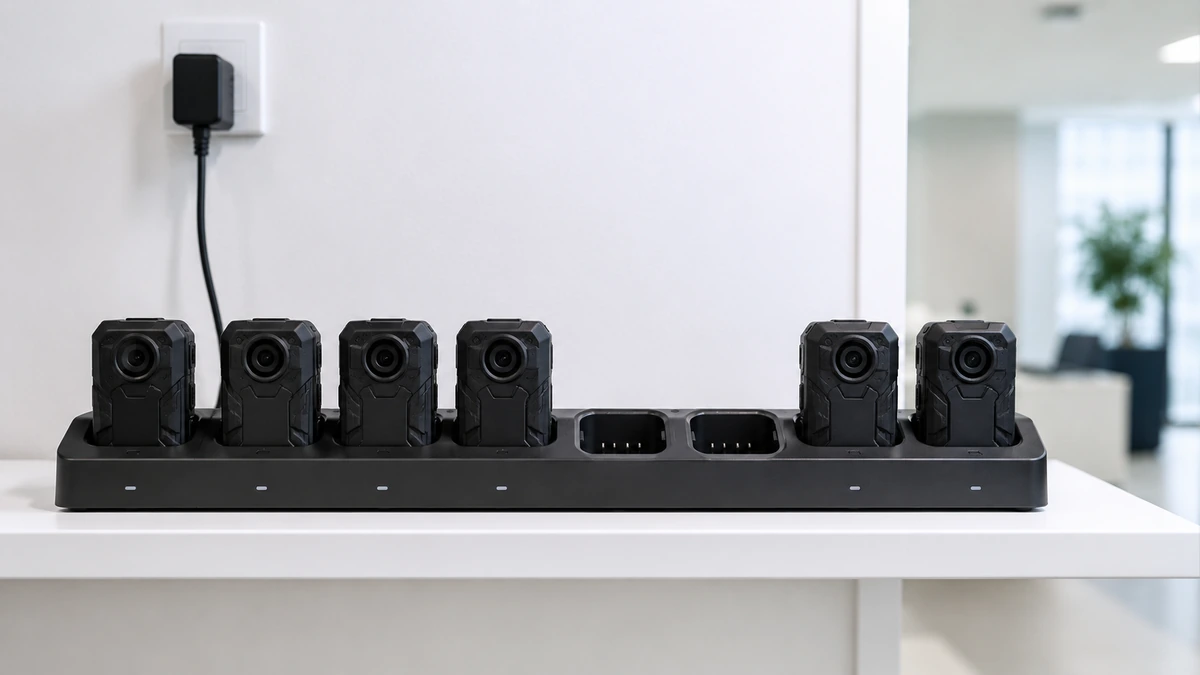
A third option sits between them and is often the right one: a camera that uploads over a wireless network it trusts, without waiting for a dock. Evidence moves within the shift, and there is no SIM to pay for.
The comparison is usually framed as offline against live, which hides the option that suits the largest number of deployments. Three architectures are available across the range we supply, and they differ in when the footage becomes reachable.
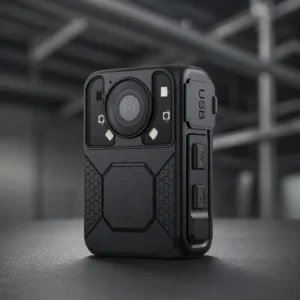
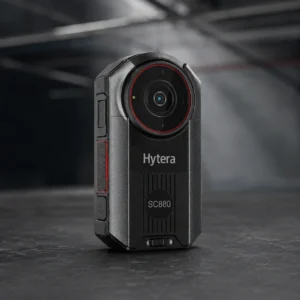
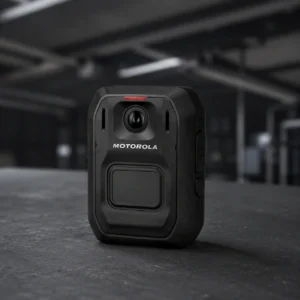
Wireless upload is worth naming separately because it removes the main operational complaint about offline cameras, which is that nothing can be reviewed until somebody physically returns. A camera that offloads when it walks past a trusted access point gives an operations room same-shift access without a data plan. The offline and Wi-Fi upload body cameras in the range cover the first two architectures, and the 4G and 5G live streaming body cameras cover the third.
The hardware premium for a cellular camera is real but modest. The cost that decides the business case is recurring: a SIM and a data plan for every camera, every month, for as long as the deployment runs.
Two things make that larger than teams expect. Streaming is continuous while it is running, so a single sustained incident consumes far more than a day of ordinary telemetry. And the plan has to be sized for the busiest camera, not the average one, because a bundle that runs out mid-incident fails at the moment it was bought for.
There is a second recurring cost that is easier to miss. Somebody has to watch. A live feed only converts into an operational outcome if a control room is staffed, trained and authorised to act on what it sees. Where that role does not already exist, it is a headcount decision as much as a hardware one.
A useful test before committing: if a live feed had been available during your last three significant incidents, who would have been watching, and what would they have done differently? If the answer is nobody and nothing, the money belongs elsewhere in the deployment.
UAE mobile coverage is strong across populated areas, which makes it easy to assume coverage is universal. The places body cameras are worn include several where it reliably is not: underground and multi-storey car parks, plant rooms and basements, lift cores, warehouse interiors, reinforced data halls, and the inside of large steel or concrete structures.
What happens at the edge of coverage matters more than the headline. A camera that loses signal keeps recording locally and uploads the full file when connectivity returns, so the evidence is not lost. What is lost is the live view, and it is lost precisely where an officer is least reachable by other means.
Streams are also compressed harder than the recording kept on the device. The control room sees a version fit for a decision, and the file that later becomes evidence is the full-quality one held on the camera. That is the correct design, and it is worth explaining to anyone who judges the system by what the live view looks like.
One figure worth knowing when a tender quotes it at you: the 1080p floor, the 25 frames per second and the 110 dB dynamic range in SIRA's technical standard are written for the fixed cameras installed at a premises, not for a worn device.1 They are useful reference points and they do not describe what a body camera has to stream.
Published runtimes across the range run from nine hours to twelve, with one helmet-mounted unit reaching thirteen. Those figures describe continuous recording with the radios quiet. Streaming changes the arithmetic in two ways at once: the cellular radio transmits continuously, and the encoder runs harder to produce a second compressed stream alongside the file it is already writing.
The worst case is not a strong signal but a weak one. A camera searching for a usable connection transmits at higher power and keeps retrying, which drains faster than streaming successfully. A deployment that spends its shift at the edge of coverage sees the shortest runtimes of all.
Heat compounds it. Ambient temperatures above 45 degrees in summer sit on top of the heat the device generates encoding and transmitting, and heat shortens both the runtime on the day and the life of the cell over the deployment.4 Where cameras stream through UAE summer shifts, plan for swappable or hot-swap batteries and budget cell replacement inside the deployment, not at the end of it.
Live is worth paying for when seeing an event as it happens changes what happens next. Five patterns meet that test consistently.
The common thread is that a decision has to be made by someone who is not present, quickly enough that waiting for the file is too late. Where that is not true, the footage is still valuable and it does not have to arrive in real time.
Connectivity is a hardware property, so it cannot be added to a camera after purchase. That is the constraint people are really worried about when they overbuy cellular, and there is a better answer than buying it for everyone.
A mixed fleet is normal and usually cheaper. Cellular goes to the roles where the live view has a job to do, and docked or wireless cameras cover the fixed posts. Both feed the same evidence management platform, so the footage is searched, retained and audited the same way whatever captured it.
Two things make a mixed fleet workable. The evidence platform has to treat both sources identically, which is a question to put to any supplier before ordering. And the split should follow the role, not the individual, so a camera moves with the post when someone changes shift.
One constraint applies to both halves of a mixed fleet. Where the deployment touches government work, footage has to be held under the Dubai Electronic Security Centre's cloud standard, which in practice means in-country hosting.3 That applies to a live stream's destination as much as to the stored file.
If the honest answer is that live might be needed later, the cheapest hedge is to buy cellular for the small number of roles most likely to need it first and review after a season of real use. That is a much smaller commitment than fitting a whole fleet against a maybe. The rest of the specification is covered in how to choose a body camera.
It depends on whether anybody is watching. Cellular earns its cost when a control room can see an incident while it is running and act on it. If footage is reviewed after the event, a docked or wireless camera delivers the same evidence with no SIM and no monthly data plan per unit.
Connectivity cannot be retrofitted, so decide it honestly at specification time. The question is not whether live video would be useful, but who would watch it and what they would do.
No. Both architectures end with the same full-quality recording on the same server, under the same retention and access rules. What differs is when it gets there.
The live view is a separate, more heavily compressed stream produced for a decision in the moment. The file that becomes evidence is the full-quality one written on the device.
It keeps recording locally. The recording is not interrupted and nothing is lost; the camera uploads the complete file when connectivity returns or when it is docked.
What is lost is the live view for the duration of the outage. That matters most because coverage tends to fail in the places officers are least reachable by other means, such as basements, car parks and plant rooms.
Enough to plan around. Published runtimes assume the radios are idle; streaming runs the cellular radio continuously and works the encoder harder at the same time.
The worst case is weak signal, not strong. A camera hunting for a usable connection transmits at higher power and keeps retrying, which drains faster than streaming successfully. Where cameras stream through UAE summer shifts, specify swappable or hot-swap batteries.
Yes, and for most organisations it is the cheaper answer. Cellular goes to the roles where a live view has a job to do, and docked or wireless cameras cover the fixed posts.
The requirement to confirm with any supplier is that the evidence platform treats both sources identically, so footage is searched, retained and audited the same way whatever captured it.
The recording rules are the same either way: a basis to record, notice at the point of contact, the places that stay off limits, and custody of the file. Streaming adds one consideration, which is that the live view is seen by people who are not present at the incident.
Access to the feed should sit on the same named-user list as access to the stored footage, and be logged the same way. For enforcement work under Dubai's Resolution 13 of 2026, recordings are held by the commissioning government entity, which shapes where a stream may terminate.
This page is general technical guidance for planning a body-worn camera deployment in the UAE. Runtimes, coverage behaviour and data consumption vary by configuration, network and environment, and the figures here are planning estimates. Regulatory summaries are general information and not legal advice. Confirm any figure with us for a specific configuration.
Tell us the shift pattern, where the work happens and whether anyone is rostered to watch a feed. We will tell you which architecture fits, and say so plainly when the cheaper one is the right answer.
Complete body-worn camera systems for government and enterprise operators across the UAE and GCC.
© 2026 BodyCamera.ae
Two ways to deploy. Browse below.
Tell us where the cameras will be deployed and we will arrange a demonstration with the right models for your sector.