Home › Resources › Body Camera Mandates
For most security work in the UAE, no. For one narrow category of role it is compulsory and tightly specified, and that category now reaches private companies. This guide sets out which side of the line each role falls on, what the one real mandate requires, and what is obligatory even where the camera is not.
BodyCamera.ae Compliance Team
The short answer
No UAE regulator requires an ordinary security guard to wear a camera. One instrument does compel it: Dubai's Executive Council Resolution No. 13 of 2026, which reaches enforcement officers and the private companies contracted to act as them.
Written for security companies bidding on UAE contracts, and for the facilities and procurement teams writing the tenders. It is general information about UAE regulation and not legal advice.
The answer turns on the function a team has been assigned, not on the uniform it wears. Select a role for the verdict and the instrument behind it.
This is the category the resolution was written for. Officers documenting violations or carrying out enforcement under judicial supervision must record, and the recording is governed end to end: no private homes, places of worship or changing rooms, people told that recording is happening, encrypted storage held by the government entity, nothing copied to personal devices, and structured training completed before enforcement powers are granted.
The reach of the resolution is the part most companies miss. It covers private contractors assigned a statutory function or engaged by a government entity to execute judicial judgments. The same five duties apply, with no allowance for the contractor being private.
The practical consequence is that the contractor cannot hold its own copy of the footage. Recordings live in the commissioning entity's system, which means the storage architecture has to be agreed before the contract starts.
Abu Dhabi published its rules ahead of Dubai. Officers may record in public spaces and, unlike Dubai's general prohibition, in private places during a legally authorised search or arrest. The camera goes in clear sight on the uniform or civil attire, detainees are told when it is switched on, storage prevents alteration by the officer, and nothing is shared without written approval from the competent authority.
The camera requirement here is real, precisely written, and it is on the vehicle. SIRA sets a minimum of five cameras: front and rear each covering at least 110 degrees, one inside the middle cabin covering the safe door and the entry and exit door, and left and right corner cameras at 90 degrees or more. The standard specifies solid-state storage.
No published requirement puts a camera on the crew member. Body cameras are common on these contracts because the client wants a continuous record of the handover, and that is a commercial decision made in the contract.
No instrument requires a body camera on these sites. What drives the specification is the operator's own security plan and the evidence standard written into the contract, which on regulated sites is often stricter than anything a regulator has published.
Retention is where these deployments differ from ordinary guarding. High-security establishments including banks, financial institutions and critical infrastructure are expected to hold footage for at least 90 days, against the 31 days set for standard regulated premises.
This is the largest part of the private security market and it carries no camera mandate. SIRA licenses the guarding company and the individual officer, and it approves the security system installed at the premises. A camera an officer wears is not part of that installation.
Where a body camera appears on a guarding contract, a client asked for it. That puts the whole compliance position on the guarding company: a written policy setting out when the camera runs, signage at the site, officers who say they are recording, and footage only a named list of people can reach.
Nothing requires an in-house team to wear cameras. The constraint that does apply is employment law: officers owe a duty of confidentiality, may not keep work records personally, and written consent to the monitoring is the advised position, set out in the contract or the staff policy.
Inside the DIFC or ADGM the free-zone data protection regimes replace the federal PDPL, and their accountability obligations are heavier.
Sitting on both sides of the line is normal. A company can be inside the mandate on a government inspection contract and outside it on the mall contract it services the same afternoon, so the camera policy belongs to the contract and not to the company.
Issued by Sheikh Hamdan bin Mohammed bin Rashid Al Maktoum on 2 June 2026, it regulates cameras used to document violations and to carry out enforcement under judicial supervision.3 It is the only UAE instrument that compels a body camera, and the five duties below are what compliance means in practice.
The second-order effect is the one worth planning around. By pulling private contractors inside a law written for judicial execution, Dubai has put them on the same data-security footing as the state agencies they work for. A contractor bidding on enforcement work is being asked for a government-grade evidence architecture, and that is a procurement question long before it is a legal one.
Dubai Law No. 24 of 2008 first required defined commercial sectors, principally hotels, financial institutions and large retail, to meet published security specifications. Law No. 10 of 2014 extended that to residential buildings and office complexes.7 Both were written around static cameras.
Law No. 12 of 2016 established the Security Industry Regulatory Agency and centralised governance of private security in Dubai.8 In Abu Dhabi, Law No. 5 of 2011 created the Monitoring and Control Centre, which requires monitoring systems across designated public and private facilities and penalises unapproved installations.9
Mobile recording stayed unaddressed through all of it. A guard walking a public concourse with a running camera sat awkwardly against federal privacy law, and no regulator wanted to authorise it in general terms. The resolution came in June 2026,1 and it resolved the tension by scope: it authorises and compels recording for one defined function, and leaves everything else where it was.
The resolution defines enforcement officers by what they have been assigned to do. It covers government employees, and it explicitly covers private companies contracted by a government entity or assigned a statutory function: executing judicial judgments, asset seizures, evictions and regulatory compliance checks.2
A single company can sit on both sides of the line on the same day. A guarding firm holding a municipal inspection contract is inside the resolution for that work and outside it on the mall contract it services that afternoon. The camera policy has to be written per contract, not per company.
Abu Dhabi Police General Headquarters set out camera rules for police personnel in January 2025.10 The one substantive divergence from Dubai is private premises: officers may record there during a legally authorised search or arrest, because the warrant removes the privacy expectation the offence protects. The equipment side is covered separately, under body cameras for Abu Dhabi operations.
Private security in the emirate is regulated by the Private Security Business Department and the Auxiliary Security Services Department.11 Neither has published a body-worn camera requirement for standard guarding. Where a facility deploys cameras voluntarily or a high-value client contract calls for them, the deployment answers to federal privacy law on its own, without the cover an enforcement mandate would give it.
No published specification sets a resolution, a battery life or a sealing rating for a worn camera. What the resolution and DESC standards do set is how the file behaves: encrypted at rest and in transit, written to an approved system, reachable only by a named list, and beyond the officer's ability to alter.
Every requirement above is a purchasing decision. Firmware that removes delete and trim, docking that offloads without a manual step, and a platform that logs access are the three that cannot be retrofitted onto the wrong hardware.
Resolution 13 defers information security, retention and business continuity to the Dubai Electronic Security Centre.2 AES-256 is the baseline encryption expectation for high-security facilities, with role-based access control over the store and immutable logs recording who viewed, downloaded or transferred which file and when.4
Nothing leaves that ecosystem without written authorisation from the commissioning entity or the judicial authority. Data sits on government-approved systems or secure localised enterprise servers, and any breach or storage failure is reported through official DESC channels.
Two federal instruments sit underneath all of this and apply whether or not a mandate does. Article 44 of the cybercrime law makes recording or transferring material about a person without consent an offence in itself,19 and the Personal Data Protection Law makes whoever runs the cameras responsible for everything they capture.20 A guard moving a clip to a personal phone breaches both, and the company carries the consequence with them.
| Site type | Minimum retention | What it means for storage |
|---|---|---|
| Standard regulated premises | 31 days | The baseline figure in SIRA's technical standard, with capacity computed above the calculated requirement |
| Banks, financial institutions, critical infrastructure | 90 days | Roughly triple the array, with redundancy so a single drive failure cannot cost footage |
| Enforcement recordings under Resolution 13 | Set by DESC policy | No single published figure. The commissioning entity's retention schedule governs |
Scroll the table sideways on a narrow screen.
The 90-day tier is what sizes the project. Tripling retention triples the array, and the redundancy expectation on top of it means a single drive failure cannot cost footage. Retention, resolution and headcount are the three numbers that decide the storage bill, and they are worth settling before hardware is chosen.
VideoGuard is SIRA's remote monitoring platform, and connection to it is a condition of passing a compliance audit for the installations it covers.5 It is widely misunderstood as a live video feed to the regulator. It is not.
The platform monitors the operational health and telemetry of the system: whether cameras are online, whether a recorder's storage has failed, and whether the installation has been physically or electronically tampered with.13 Pulling live video from every connected premises would exhaust bandwidth and raise exactly the privacy problem the rest of the framework exists to prevent. What it means commercially is that video management software has to be VideoGuard-certified before it can be proposed for a regulated site.
The wider pattern is the point. Hassantuk connects buildings to a central command centre for fire and life safety,6 and number plate recognition is increasingly specified across access control and traffic systems. Standalone, unmonitored security systems are no longer the expectation in the UAE, and a body camera programme that cannot report its own health sits outside that pattern.
Operating security services in Dubai without SIRA approval is a serious violation. A Department of Economy and Tourism trade licence authorises the company to exist; SIRA approval authorises it to deliver the service.12 Activities are categorised separately: general guarding, event security, cash and valuables transport, security consulting, installation of security devices, and command and control centre operation.14
Individuals are licensed too. Every guard, supervisor, control room operator and systems engineer holds a SIRA Security Cadre Card that ties the profession on their residency visa to the security role they perform.15 Certificates of good conduct, medical fitness and attested qualifications are part of obtaining it. SIRA publishes the current regulations and the approved activity list in its legal library.22
The consequence of getting this wrong is administrative before it is financial. An installation that fails audit blocks the Certificate of Compliance, and without that certificate the trade licence cannot be renewed.21 That is the mechanism that stops a security business trading, and it is worth reading before a first UAE contract is signed.
Cadre training runs by role and culminates in written and oral examination alongside physical assessment.16 That framework predates the camera mandate and is unaffected by it.
What Resolution 13 added is a separate, specialised course that has to be completed before judicial enforcement powers are granted. It covers how violations are documented, the cases in which recording is legally permitted, secure handling and transfer of recordings, and the privacy obligations that attach to them.3
For a contractor pricing enforcement work this is a lead-time item, not a line item. Officers cannot be deployed on the function until it is done, so it belongs in the mobilisation plan alongside the hardware.
Tender documents and vendor material regularly apply SIRA's fixed-camera specification to body-worn equipment. The specification is real and the figures are accurate; they are written for the video surveillance system installed at a premises.18 The Preventive Systems Manual covers the same ground for the installations it governs.17 Applying either to a worn device is an inference, and on two of the five it is an inference that would disqualify most of the equipment on the market.
| Often quoted as | What has actually been published | How to treat it |
|---|---|---|
| Body cameras must record for at least 12 hours | No battery figure has been published for worn devices. The 12-hour figure describes a shift, not a rule | Match battery to your shift pattern and hot-swap policy. Across our range recording runs from 9 to 12 hours, and 13 on the helmet unit |
| Body cameras must be 1080p, 25 fps, WDR 110 dB and IP66 | These are the Standard and Technical Specifications for fixed cameras in a regulated installation | Useful benchmarks and worth meeting. Not a pass or fail gate for a worn device |
| SIRA prohibits audio on body cameras | The prohibition covers microphones on the security systems SIRA regulates, unless approval is obtained | Treat audio as the highest-risk setting either way. Default it off and document the decision. Put the worn-device question to SIRA in writing |
| Body cameras must have tamper-proof non-removable storage | No storage requirement has been published for worn devices. Resolution 13 addresses custody of the file, not the medium | Specify firmware that removes delete and trim, and automatic offload. That satisfies the actual obligation |
| SIRA mandates body cameras for cash-in-transit | The published cash-in-transit rule specifies five cameras on the vehicle and says nothing about a worn device | Fit the vehicle to the standard. Body cameras on these contracts are a client requirement, and a reasonable one |
Scroll the table sideways on a narrow screen.
None of this means the figures are bad targets. Most of the range we supply clears 1080p and IP66 comfortably, and encryption and access control are worth having whoever is asking. The distinction matters when a tender treats one of these as a pass or fail gate, or when a supplier claims a certification that does not exist for the product category.
If a tender cites an approved list or a technical standard at a worn camera, ask the issuing authority which document is meant, in writing, before pricing against it. Send us the wording and we will tell you which part of the specification the camera falls under.
Licensing and certification are the fixed floor under any UAE security operation, camera or no camera. The figures below give the order of magnitude.
| Business activity | Activity fee | Personnel requirement |
|---|---|---|
| Security consulting | AED 3,020 | A certified security consultant |
| Installation of security devices | AED 2,020 | At least three certified engineers or technicians |
| General guard services | AED 2,020 | A certified security manager |
| Event security and personal guarding | AED 4,020 | A certified security manager |
| Cash and valuables transport | AED 4,020 | A security manager and at least three certified crew |
| Command and control centre | AED 5,020 | A certified security manager |
| Cadre category | Course cost |
|---|---|
| Event guard | AED 550 |
| Basic course for security guards | AED 1,000 |
| Security systems technician | AED 3,000 |
| CCTV and security system operator | AED 3,000 |
| Security supervisor | AED 4,000 |
| Security manager or equipment engineer | AED 5,000 |
Fees and course costs are as published by third-party advisers and were current when this page was written. Confirm both with SIRA before budgeting, because they are revised and the activity categories change.
The questions buyers put to us before a tender. The full set is on our FAQ hub.
Not for ordinary guarding. No UAE regulator has published a requirement for a security guard to wear a camera on a mall, compound, event or corporate post. SIRA licenses the guarding company and the individual officer, and approves the security system installed at a premises, which is where its approved-equipment list applies.
The exception is enforcement work. Dubai's Executive Council Resolution No. 13 of 2026 compels body cameras for enforcement officers, and it reaches private companies contracted by a government entity or assigned a statutory function.
Yes, when they are carrying out an enforcement function. The resolution defines enforcement officers by what they have been assigned to do, and explicitly covers private contractors executing judicial judgments, asset seizures, evictions and regulatory compliance checks for government entities.
The same company is outside the resolution on its ordinary guarding contracts. The policy has to be written per contract.
No published rule requires it. The cash-in-transit camera requirement is on the vehicle: SIRA specifies a minimum of five cameras, front and rear each covering at least 110 degrees, one in the middle cabin covering the safe door and the entry and exit door, and left and right corner cameras at 90 degrees or more, with solid-state storage.
Body cameras are common on these contracts because the client wants a continuous record of the handover. That is a contractual requirement and a sensible one, and it is not a regulatory mandate.
No body-worn approval requirement has been published. SIRA certifies security devices for use in Dubai and publishes approved lists covering the systems installed at regulated premises. A camera worn by an officer is not part of that installation.
If a tender asks for SIRA-approved equipment, send us the wording and we will tell you which part of the specification the camera falls under.
It depends on the site. SIRA's technical standard sets 31 days for the fixed camera systems at regulated premises. High-security establishments including banks, financial institutions and critical infrastructure are expected to hold footage for at least 90 days. For enforcement recordings under Resolution 13, retention follows Dubai Electronic Security Centre policy and no single figure is published.
Retention is the number that sizes the storage, so settle it before choosing hardware.
VideoGuard is SIRA's remote monitoring platform and connection to it is a condition of passing a compliance audit for the installations it covers. It does not pull live video.
It monitors the health of the system: whether cameras are online, whether storage has failed, and whether the installation has been tampered with. The commercial consequence is that video management software needs to be VideoGuard-certified before it can be proposed for a regulated site.
Fines run from AED 1,000 to AED 50,000 depending on severity, and escalate for repeat findings. The more serious consequence is administrative: failing an audit blocks the Certificate of Compliance, which blocks the trade licence renewal.
Separately, misuse of footage is a federal criminal matter under Article 44 of the cybercrime law, carrying at least six months of detention, AED 150,000 to AED 500,000, and deportation for expatriate staff.
Yes. Body-worn cameras are lawful to buy, own and operate in the UAE and no licence attaches to the device. What the law regulates is the act of recording a person and what happens to the footage afterwards.
Where no mandate applies, the deployment rests on a documented operational purpose, notice so people are not surprised, respect for the places that stay off limits, and custody of the file once it exists.
This page is general information about UAE regulation, prepared to help security companies and procurement teams scope a deployment. More guides are collected on our resources hub. It is not legal advice and it does not create a professional relationship. Fees, retention figures and regulatory requirements change, and their application depends on the facts of a specific contract. Confirm any figure with the issuing authority and take advice from a qualified UAE practitioner before relying on a position set out here.
Send us the tender wording, the emirate and the function the team has been assigned. We will come back with a configuration that meets the obligations on this page, and say plainly where a requirement has not actually been published.
Complete body-worn camera systems for government and enterprise operators across the UAE and GCC.
© 2026 BodyCamera.ae
Two ways to deploy. Browse below.
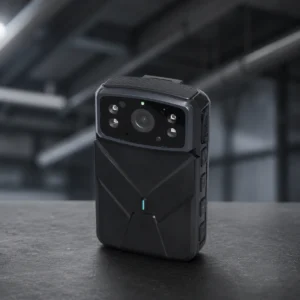
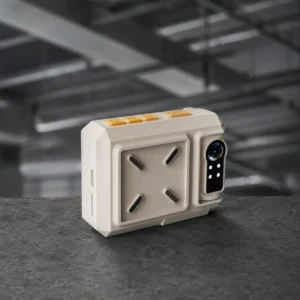
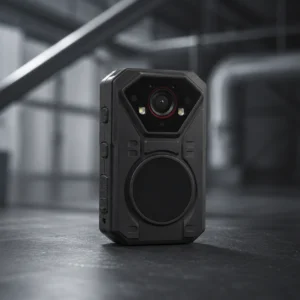
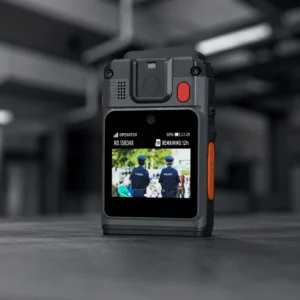
Tell us where the cameras will be deployed and we will arrange a demonstration with the right models for your sector.