Home › FAQ
Answers on the law, the hardware and the cost of a deployment. We supply and support body and vehicle camera systems across the UAE and GCC.
Filter by topic, or read straight down.
Showing 19 of 19 questions
General guidance, not legal advice. Put any deployment that records the public or your own staff to your legal advisers before it goes live.
Yes. No UAE law prohibits owning or issuing a body camera. What the law governs is how you record and what you do with the recording afterwards: the Personal Data Protection Law, Federal Decree-Law No. 45 of 2021, treats image, voice and location as personal data, and Article 44 of the cybercrime law makes recording a person without consent an offence. A deployment stands or falls on its policy rather than its hardware: when the camera runs, who is told, and who can open the footage afterwards.
Yes, and there is no separate licence for the camera itself. What governs it is Article 44 of the federal cybercrime law, which makes recording a person without their consent an offence, and the Personal Data Protection Law, which makes the guarding company responsible for everything it records. Both are satisfied the same way: a written policy setting out when the camera runs, signage at the site, officers who say they are recording, and footage only a named list of people can reach.
Treat audio as the highest-risk part of a deployment. Article 44 of the cybercrime law covers recording conversations without consent, and SIRA prohibits microphones on the security systems it regulates unless approval has been obtained. So audio is a decision to take deliberately and document, with notice given at the point of contact. Where there is no clear basis for it, record video only.
Not as a general practice. Article 44 turns on consent, and the UAE has no broad public place exception of the kind found in some other jurisdictions, so recording somebody covertly carries real criminal exposure. Dubai's rules for enforcement officers run the other way and require the camera to be visible and the subject informed; Abu Dhabi Police require the device to be in clear sight on the uniform.
Covert recording for a specific investigation is a matter for the competent authorities to authorise, not something a private deployment decides for itself.
Digital recordings are accepted where they were lawfully obtained, are authentic, and can be shown not to have been altered, with a documented chain of custody behind them. Dubai's Resolution 14 of 2020 goes further for police recordings and gives them conclusive evidentiary value unless the contrary is established.
That is what the evidence platform is for. Hashing at the point of extraction, an audit entry for every view, share and export, and originals that stay where they were written are the things that answer a challenge to authenticity later.
Yes, a dash camera is legal, and Dubai Police have stated publicly that a complainant may submit footage to them as part of a case file. Sharing it publicly is another matter. Article 44 of Federal Decree-Law No. 34 of 2021 sets imprisonment of no less than six months and a fine of AED 150,000 to AED 500,000 for using technology to infringe on someone's privacy without consent. Send footage to the police through Police Eye, the MOI UAE app or Aman, never to social media.
1080p is the working floor. It is the minimum SIRA sets for the fixed camera systems it regulates, and it is what a tender will usually ask for. Across the range we supply, recording runs from 1280 x 720 up to 4K.
Higher is not automatically better. Resolution multiplies against retention to size the server, so a jump from 1080p to 4K on a large fleet is a storage decision as much as a picture-quality one. Identification at conversational distance is met at 1080p on every model here.
Across the range we supply, published continuous recording runs from 9 to 12 hours on one charge, and 13 hours on the helmet unit, which carries a detachable second cell. Models with a swappable cell extend past their figure without returning to a dock. Internal storage is the second limit, from 16 GB to 256 GB depending on how the model is ordered. Size it against the hours a shift actually records, since the dock clears the camera daily.
The published operating ceiling across the range we supply is +60 degrees Celsius, which covers outdoor work in a Gulf summer, including patrol, inspection and yard duty. Sealing runs from IP54 to IP68 depending on the model, and most carry a published drop test.
Two places it does not stretch to: the inside of a structure fire, and a classified hazardous zone, where a certified device is required and no model in this range carries one. Tell us where the camera actually works and we will say which models hold up.
An offline camera records to encrypted internal storage and transfers the whole shift when it is docked, or over Wi-Fi once it reaches base. A 4G or 5G camera does the same, and also streams to a command centre while the incident is still running. Both end up on the same server. Which one fits depends on whether anyone needs to watch in real time.
On a private server you control, deployed on-premise or hosted in-country. The system is built so that evidence does not leave the jurisdiction that collected it, and there is no dependency on a third-party public cloud.
Retention is set by your policy rather than by the device. Digital Evidence Management enforces the schedule you configure, so different categories of evidence can be held for different periods and disposed of automatically at expiry.
No. Footage is written to storage the wearer has no write access to, and every file carries the operator ID and a tamper-evident timestamp. Once it has been extracted, every action taken on it is recorded in the audit trail, including who viewed it, who shared it and who exported it. That is what makes the recording defensible later under review or in court.
We do not publish prices, and the reason is not coyness. A camera is a line in a system that also contains docks or recorders, a server, licences, storage sized to a retention rule, installation and support, and the ratios between those change completely between a twenty-camera pilot and a fleet-wide rollout.
Send us the shift pattern or the vehicle list and the retention obligation and we will work a real figure back from them.
Four things, in this order: how many posts are covered at once, whether the cameras carry SIMs, what resolution you record at, and how long you are obliged to keep the footage. The last two multiply together and are what sizes the server. We do not publish prices, because a real figure comes from the post list and the retention rule, and we would rather quote against yours than print a number that fits nobody.
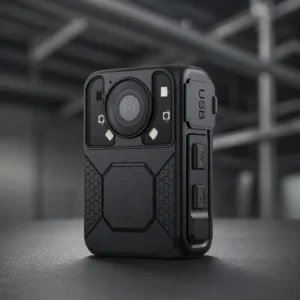
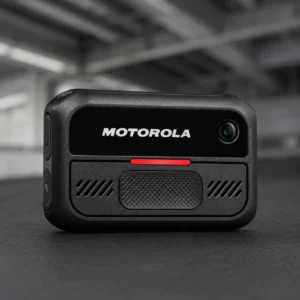
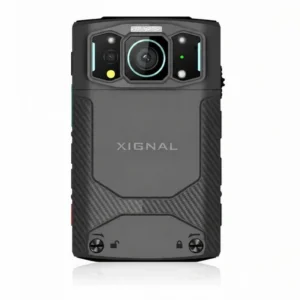
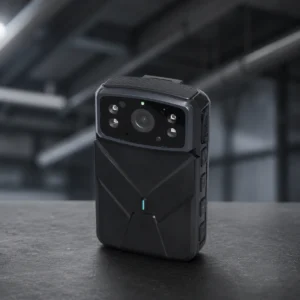
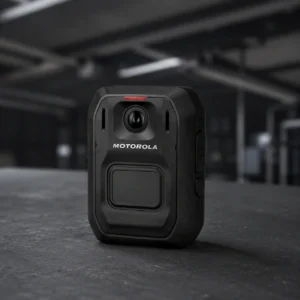
Hytera, Motorola and Xignal, which is the Recoda range. Nine body camera models and fourteen vehicle units across dash cameras, mobile DVRs and NVRs, and PTZ heads, all listed with full specifications and comparison tables.
The brands are not interchangeable behind the scenes: docks, evidence platforms and streaming consoles are brand-specific, which is why the decision belongs at the start of a project.
We supply organisations. The range is built around a system: cameras with docks or recorders behind them, a server, and evidence management on top. A single camera without the rest of it does not give a buyer what these products are for.
Pilots are a different matter, and we run them regularly at small volumes.
Support is local, and we scope it with the order: warranty terms, spares held against the fleet, repair turnaround, firmware updates and who to call. For a deployment of any size we recommend holding a percentage of the fleet as spares, because a camera in for repair is a post uncovered.
Tell us the fleet size and the shift pattern and we will put the support model in writing alongside the quotation.
Within a brand, yes. Across brands, there is no single console, and it is worth saying so plainly. Each manufacturer streams into its own platform: one runs a client and server package you can host yourself, one uses its own command and dispatch platform, and one uses its video management product.
Where a deployment covers officers and vehicles from the same manufacturer, they appear in one place. Where it mixes manufacturers, they do not, and the decision belongs at the start of the project, before the first order goes in.
No questions match that combination. Ask us directly and we will answer it.
Dash cameras, mobile recorders and PTZ heads, with channel counts.
Send us the tender wording or the shift pattern. We answer in writing.
Send us the tender wording, the vehicle list, or just the country you operate in. We answer in writing, and we say so when a figure is not published.
Complete body-worn camera systems for government and enterprise operators across the UAE and GCC.
© 2026 BodyCamera.ae
Two ways to deploy. Browse below.
Tell us where the cameras will be deployed and we will arrange a demonstration with the right models for your sector.