Home › Vehicle Cameras › C814 Vehicle PTZ Camera
Xignal · Vehicle PTZ Camera
Xignal C814 Vehicle Mounted PTZ Camera
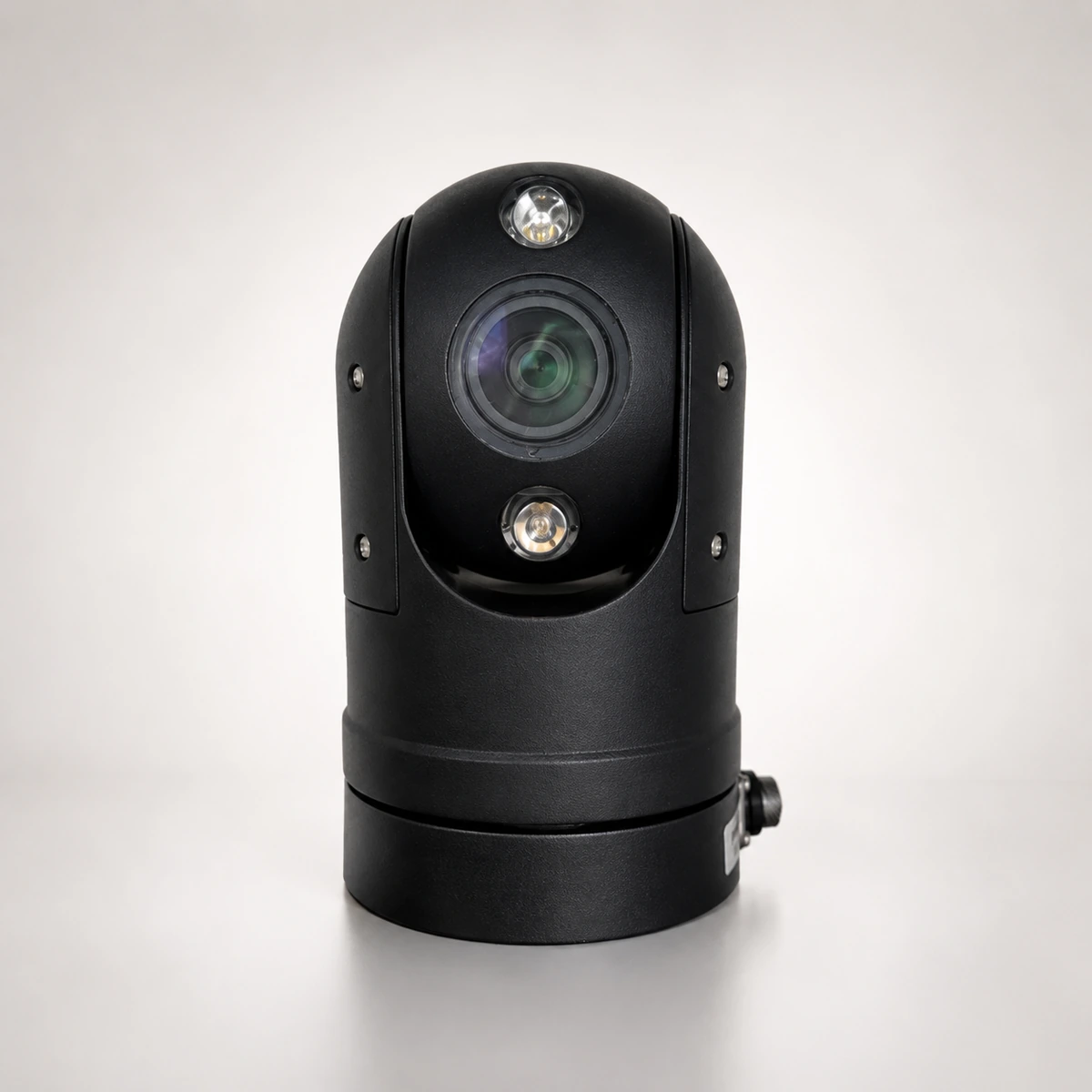
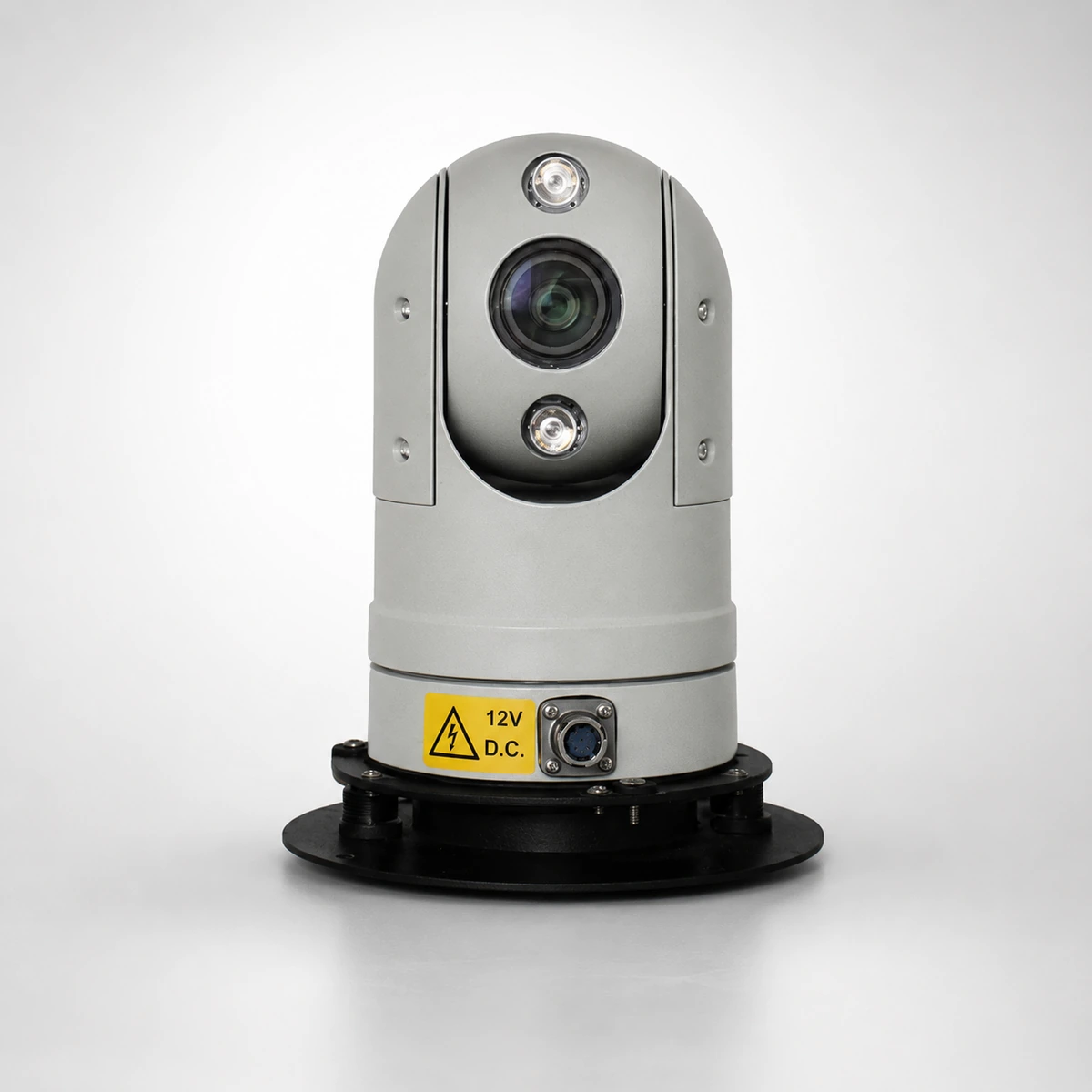
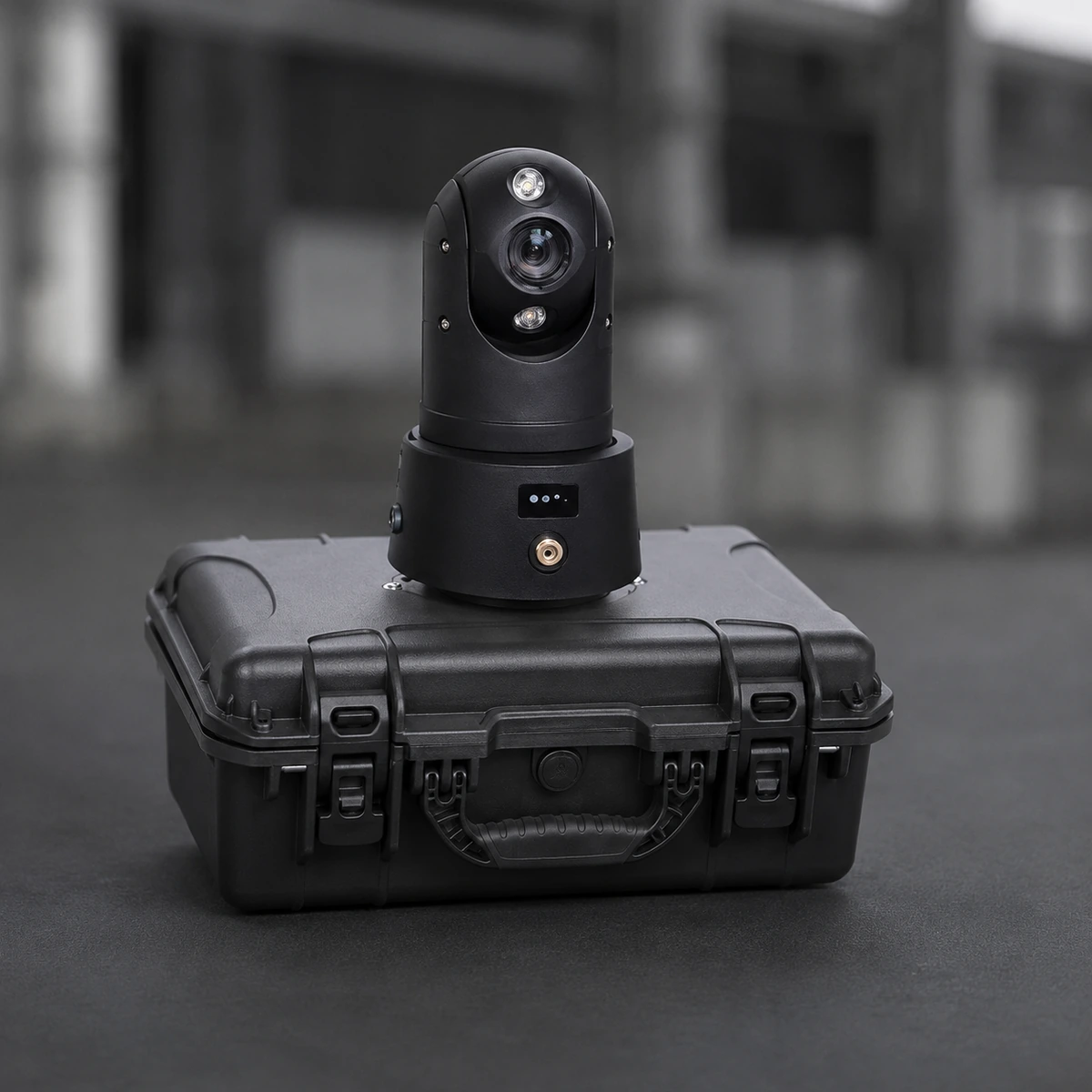
The fast, light PTZ in the range. It sweeps to a preset at 300 degrees per second, three times the speed of the larger head, on a 2.5 kilogram dome that mounts on a shock absorbing base. IP66 with a wiper, lightning and surge protection, and a coaxial HD path that reaches the recorder without any compression.
Supplied, fitted and commissioned
Overview
What the C814 PTZ camera does
The quick one. This head reaches a stored position at 300 degrees per second against 100 on the larger PTZ in this range, and an operator can drive it at 220. On a vehicle that matters more than it sounds: the difference between a camera that is already looking at the doorway when you arrive and one that is still swinging round. It holds 256 positions through a power cut and comes back to them when the vehicle restarts.
It is also the lighter of the two at 2.5 kilograms against 6, in a cast aluminium dome on a shock absorbing base made to sit on a roof bracket, with three grades of lightning protection and surge protection on top of IP66 and a wiper. What you give up against the bigger head is reach and cold tolerance: infrared to 60 to 80 metres rather than 100 to 120, no laser illuminator, and a ceiling of 55 degrees rather than 65.
Where it fits best
- Patrol and response vehicles that need the camera on target quickly
- Roofs where 6 kilograms of PTZ is more than the bracket should carry
- Vehicles running a fixed patrol pattern, through cruise tracks and line scans
- Existing analogue installations, through the uncompressed AHD, CVI or TVI path
- Fleets that want the camera to return to a home view on its own between jobs
Not sure this is the right recorder? See how many channels your vehicle needs.
Full specifications
Every published figure
The complete Xignal C814 specification, as published by the manufacturer.
Three times faster onto a stored position
The outer arc is this camera at 300 degrees per second; the inner one is the larger PTZ head in this range at 100. A half turn takes about 0.6 seconds here against roughly 1.8 there. Under manual control it drives at up to 220 degrees per second, and it holds 256 positions through a power cut.
- Pan range
- 360 degrees, endless rotation
- Tilt range
- +90 to −20 degrees
- Pan preset speed
- 300 degrees per second
- Tilt preset speed
- 120 degrees per second
- Pan control speed
- 0 to 220 degrees per second
- Tilt control speed
- 0 to 90 degrees per second
- Motor
- 0.9 degree precision, smooth at low speed and without jitter
- Processor
- Integrated 8-bit, for low power draw and stability
- Preset positions
- 256, held through a power cut and restored on power up
- Cruise tracks
- 6
- Line scanning
- 4 commands
- Pattern scan
- 1
- Home position
- Returns to a preset, a line scan or a track on its own
- Subject auto-tracking
- Not published
- Video out
- Maximum 1080P
- Sensor
- Megapixel digital high definition movement and HD sensor, compatible with mainstream HD platforms
- Coaxial HD
- AHD, CVI or TVI to a coaxial recorder, with no coding compression on the way
- Infrared night vision
- Array infrared, multi-angle, 60 to 80 metres, rated to 30,000 hours
- Optical zoom
- Not published
- Frame rate
- Not published
- Control
- RS485 with 16 built-in protocols, baud rate 2400 to 19200
- Interface protocols
- ONVIF, PSIA, CGI and ISAPI
- Network protocols
- TCP/IP, HTTP, DHCP, DNS, DDNS, RTP, RTSP, PPPoE, SMTP, NTP, UPnP, SNMP, FTP, 802.1x, QoS, HTTPS and IPv6. SIP and SRTP at order
- Video compression
- H.265 or H.264
- Audio compression
- G.722.1, G.711 a-law, G.711 u-law, MP2L2, G.726, AAC and PCM
- Output rate
- 32 Kbps to 12 Mbps
- Storage
- MicroSD card in the camera
- Alarms
- Motion detection, mask alarm, memory full and memory error
- IP rating
- IP66
- Wiper
- Fitted
- Shell
- Cast aluminium alloy, impact and corrosion resistant
- Components
- Industrial grade throughout, for severe weather
- Lightning protection
- Three grades, with surge protection
- Shock absorption
- Built into the base, matched to a vehicle roof bracket
- Operating temperature
- −35 °C to +55 °C
- Relative humidity
- Under 90%
- Impact resistance
- 4G or better
- Weight
- 2.5 kg
- Mounting
- A range of options depending on the vehicle
- Dimensions
- Not published
- Input voltage
- Not published
- Power consumption
- Not published
Figures published by the manufacturer. Two things to read carefully. There is no published subject auto-tracking on this camera: what it does is programmed movement, 256 presets with 6 cruise tracks, 4 line scans and a pattern scan, which is a different thing and is set out in its own section above. And there is no published optical zoom factor, dimension set, input voltage or power draw, so we will get any of those confirmed in writing rather than estimate them. Where a figure reads Not published, the manufacturer does not state it, which is not the same as the feature being absent.
Supply
What ships, and what the install needs
A vehicle PTZ is quoted as a fitted system rather than a boxed product, and the manufacturer does not publish a packing list. The mounting and the cable route are surveyed per vehicle, though at 2.5 kilograms this head is far easier to place than the larger one.
The camera
- Dome head with the zoom lens and infrared lamps
- Shock absorbing base, matched to a car bracket
- Wiper across the lens
- MicroSD card, if you want recording in the head
Fitted on the vehicle
- A roof bracket rated for 2.5 kg plus wind load
- Cable route for video, power and the RS485 control line
- A recorder channel, coaxial or IP
- A control terminal or joystick for the operator
Specified at order
- Coaxial HD or IP, to match the recorder already fitted
- SIP and SRTP, if the platform needs them
- Mounting hardware for the specific vehicle
- The preset, cruise and home positions, set at commissioning
Accessories
What goes on the order with it
A recorder is one line on a vehicle quotation. These are the parts that make up the rest of it.
Mounting and cabling
- A roof bar or bolted plate rated for 6 kg plus wind load
- Cable route for video, power and the RS485 control line
- Mounting hardware surveyed for the specific vehicle
- A range of mounting options, per the manufacturer
Seeing in the dark
- Array infrared, 100 to 120 m, rated to 30,000 hours
- 808 nm laser illuminator, 3 W or 5 W at order
- The laser beam narrows as the lens zooms in
- Wiper and heated housing keep the lens clear
Control and recording
- A recorder channel, on AHD or on IP
- RS485 control from the recorder, Pelco-D or Pelco-P
- ONVIF for the IP route, matching the M720(G4F)-IP
- A joystick or control terminal for the operator
Compare
How it sits against the alternatives
The larger PTZ head in this range, the portable unit, and the hybrid recorder both cameras pair with over IP. The full comparison lives on the range page.
| Xignal C814 | Vehicle PTZ, AHD or IP | Portable 4G PTZ | Xignal M720(G4F)-IP | |
|---|---|---|---|---|
| Model number | C814 | None published | None published | M720(G4F)-IP |
| Weight | 2.5 kg | 6 kg | 3.5 kg net | 2.2 kg |
| Pan preset speed | 300 degrees per second | 100 degrees per second | Not published | Not applicable |
| Tilt range | +90 to −20 | +60 to −90 | −20 to +90 | Not applicable |
| Infrared | 60 to 80 m | 100 to 120 m | 60 to 80 m | Not applicable |
| Laser illuminator | Not published | 808 nm, 3 W or 5 W | Not published | Not applicable |
| Defogging heater | Not published | Fitted | Not published | Not applicable |
| Lightning protection | Three grades, plus surge | Not published | Not published | Not published |
| Operating range | −35 to +55 °C | −35 to +65 °C | −15 to +50 °C | −20 to +70 °C |
| Subject auto-tracking | Not published | Not published | Not published | Not applicable |
| You are here | View the AHD or IP PTZ | Find it in the range | View the M720(G4F)-IP |
Scroll sideways to see every column.
Questions
Before you specify the C814
Questions we are asked about this model.
Does this camera track a moving subject on its own?
No, and we want to be direct about it because the phrase auto-tracking gets attached to this class of camera loosely. The manufacturer publishes no subject tracking for this model, and none for either of the other two PTZ variants in the range. What it does publish is programmed movement: 256 preset positions, 6 cruise tracks that patrol between them, 4 line scanning commands, a pattern scan that replays a movement you recorded by hand, and a home position it returns to on its own. That covers a lot of real work, but it is not the same as a camera that locks onto a person and follows them. If genuine auto-tracking is a requirement, tell us and we will source against it rather than imply this does it.
What does 300 degrees per second actually buy me?
Time on target. The larger PTZ in this range reaches a stored position at 100 degrees per second, so a half turn takes it about 1.8 seconds. This one does the same move in about 0.6. On a vehicle arriving at an incident, or following something across a junction, that is the difference between the camera already looking at what matters and the operator watching it catch up. Under manual control it drives at up to 220 degrees per second, which is fast enough that most operators wind the speed down.
Why choose this over the larger AHD or IP head?
Weight and speed against reach. This one is 2.5 kilograms and moves three times faster, which makes it far easier to mount and much quicker on target. The larger head is 6 kilograms and slower but sees further, with array infrared to 100 to 120 metres against 60 to 80 here, an 808 nanometre laser illuminator this model does not have, and a defogging and defrosting module. It also tolerates 65 degrees against 55. If the job is long range observation, take the big one. If it is quick situational coverage from a light vehicle, take this.
Is 55 degrees enough for a vehicle roof?
It is the thing to check on this model. The manufacturer publishes minus 35 to plus 55 degrees Celsius, where the larger PTZ reaches 65 and the recorders reach 70. A metal camera housing on a roof in direct July sun sits well above shade temperature, and a vehicle standing in the open all day is the hard case. For a vehicle in use and moving, airflow keeps it far cooler than a parked one. Tell us how the vehicles are actually used and we will say plainly whether this or the 65 degree head is the right specification.
What does the uncompressed coaxial path mean?
The camera can send AHD, CVI or TVI down a coaxial cable to a recorder with no coding compression applied on the way. In practice that means the recorder receives the full real-time picture and decides how to encode it, rather than receiving something already compressed once and compressing it again. On a zoomed shot where you are trying to read detail, one compression stage instead of two is a visible difference. If you are running IP instead, it publishes ONVIF and the M720(G4F)-IP publishes ONVIF too, so that pairing is documented on both sides.
What is the lightning and surge protection for?
A camera on a roof is the highest point on the vehicle and it is wired into the vehicle’s electrical system, so it is exposed to both atmospheric surges and the transients a vehicle generates by itself. The manufacturer publishes three grades of lightning protection plus surge protection. In a dry climate the lightning case is rare but the vehicle-generated case is not: starting motors, alternators and radios all put spikes on the same supply, and a PTZ head that resets mid-job is worse than useless.
The range
Other models worth comparing
Three other cameras in the range, and what each one changes against the C814.
 Xignal · Vehicle PTZ
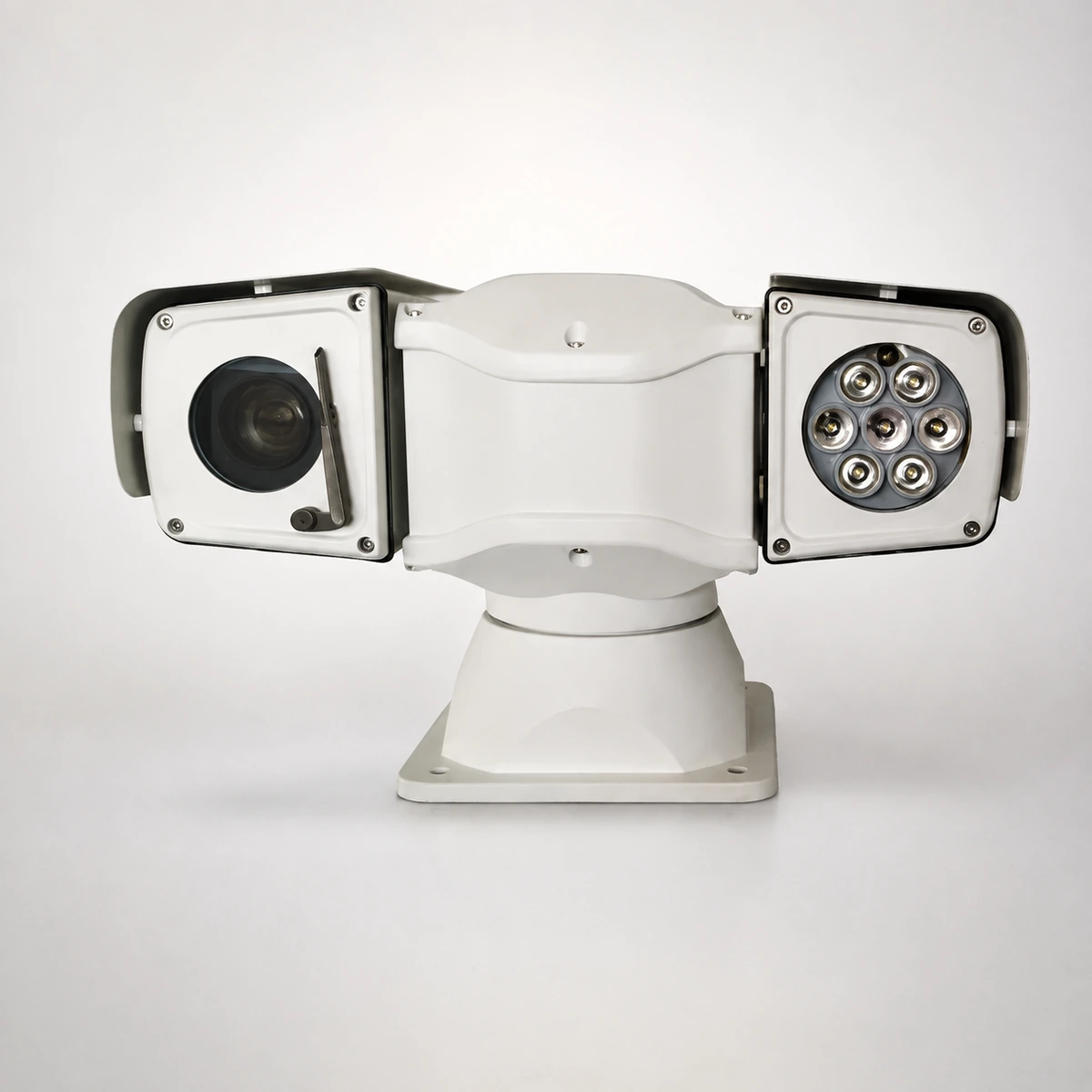
Vehicle PTZ, AHD or IP
+120 m infrared+laser−6 kg and slower
The long range head. Further infrared, a laser illuminator and a defogging heater, at a third of the speed.
Xignal · Vehicle PTZ
Vehicle PTZ, AHD or IP
+120 m infrared+laser−6 kg and slower
The long range head. Further infrared, a laser illuminator and a defogging heater, at a third of the speed.
 Xignal · Portable PTZ
Portable 4G PTZ
+lifts off the vehicle+battery and 4G
Comes off the vehicle onto a tripod and streams over 4G, with its own battery.
Xignal · Portable PTZ
Portable 4G PTZ
+lifts off the vehicle+battery and 4G
Comes off the vehicle onto a tripod and streams over 4G, with its own battery.
 Xignal · Hybrid Mobile NVR
M720(G4F)-IP
+publishes ONVIF+records the PTZ
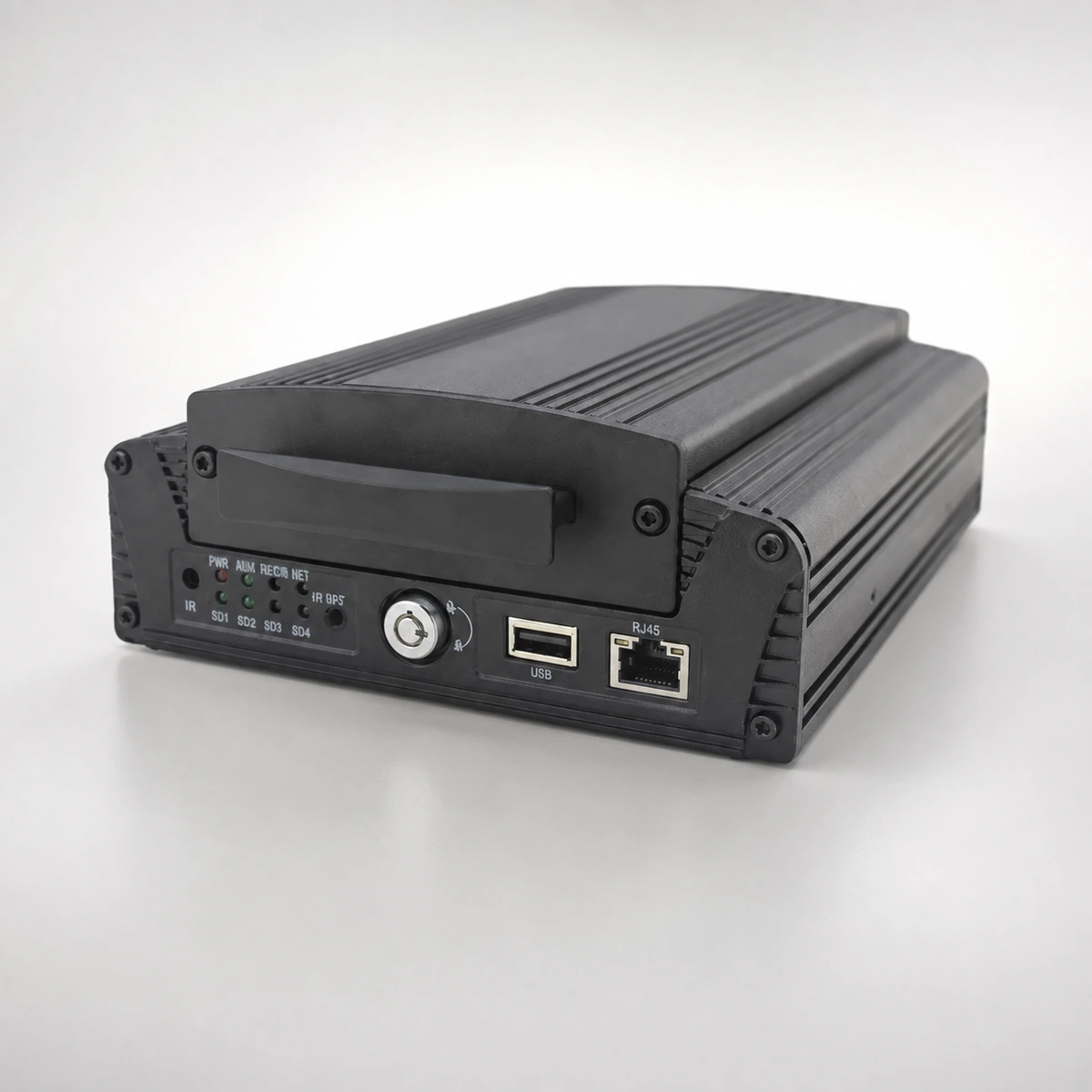
The recorder this camera pairs with over IP, because both publish ONVIF.
Xignal · Hybrid Mobile NVR
M720(G4F)-IP
+publishes ONVIF+records the PTZ
The recorder this camera pairs with over IP, because both publish ONVIF.
fleet and surveillance rules
The C814 PTZ camera against common requirements
A steerable camera can be pointed deliberately at people and places, which makes who operates it and what happens to the footage a governance question rather than a hardware one. This is what applies, and where the camera ends and your policy begins.
- Who may steer it: an operator chooses what this camera looks at, so the authorised-user register and access levels matter more here than on a fixed channel.
- Preset tours are a policy decision too: cruise tracks and line scans run without anyone watching, so where they point should be agreed rather than left at the installer's defaults.
- Encrypted storage and retention: the footage lands on the recorder and then on your server, and the evidence rules that apply govern it there. The camera itself holds only a MicroSD buffer.
- Written approval before sharing: a process obligation on the operating entity, unchanged by the camera being steerable.
- Fitted to the vehicle safely: 2.5 kilograms on a roof still needs a bracket rated for the load and the wind at speed, though it is far easier to place than the 6 kg head.
- Check the temperature ceiling: plus 55 degrees is the lowest in the vehicle range. For vehicles parked in the open through summer, raise it with us.
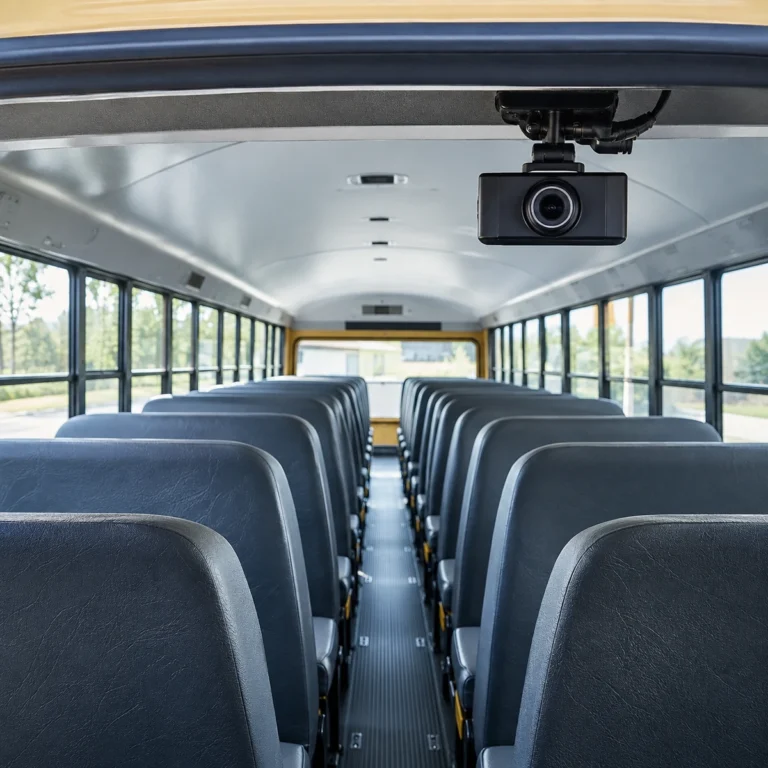
- Not a school bus camera: school transport needs seven fixed cameras and a recorder. A PTZ answers a different job entirely.
Get a price for the Xignal C814
Tell us the vehicle, whether the recorder is coaxial or IP, what distance you need to see at, and how the vehicles are parked through the summer. If you actually need a camera that follows a moving subject on its own, say so, because this one does not and we would rather source against the requirement than talk around it.