Home › Vehicle Cameras › Vehicle PTZ Camera
Xignal · Vehicle PTZ Camera
Xignal Vehicle PTZ Camera, AHD or IP
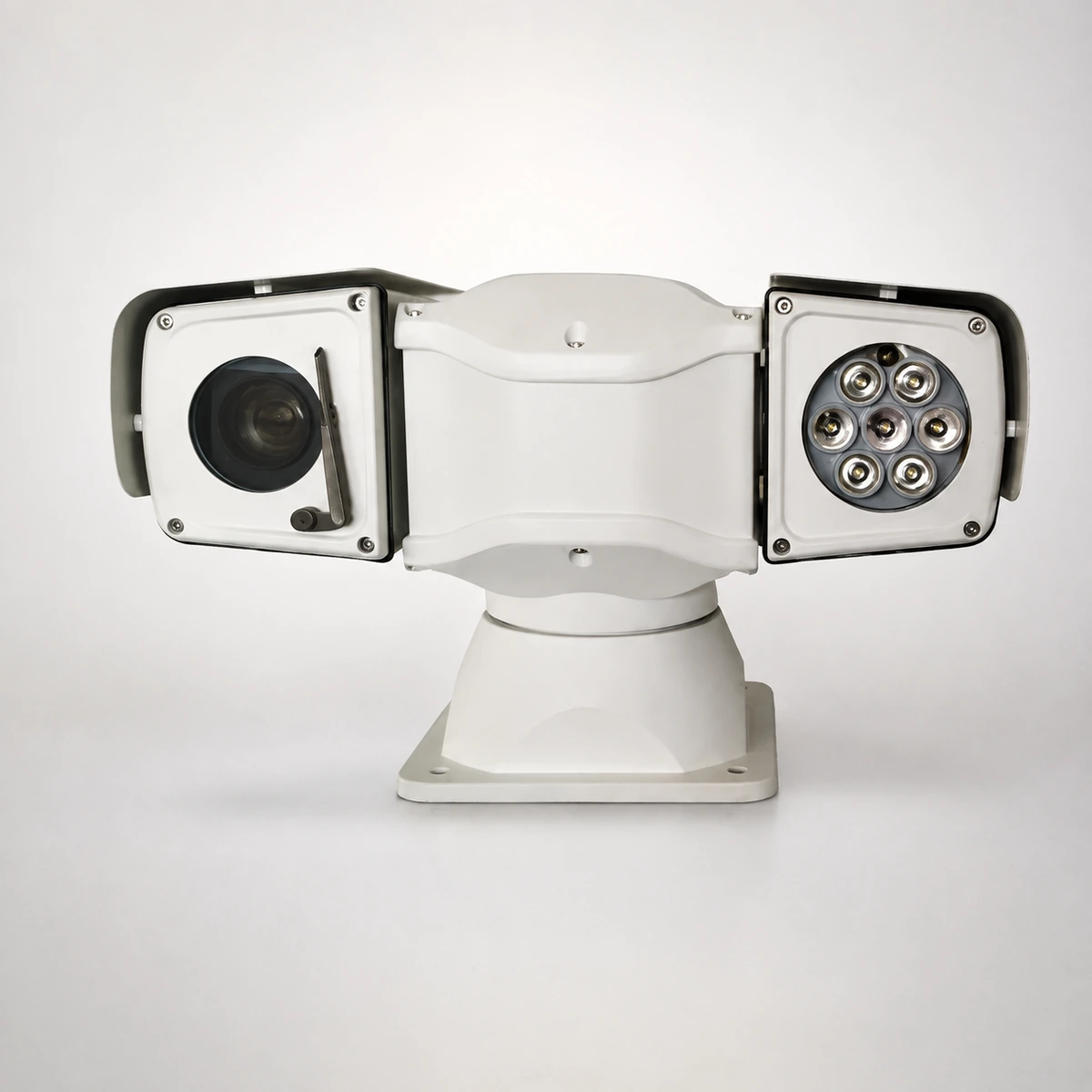
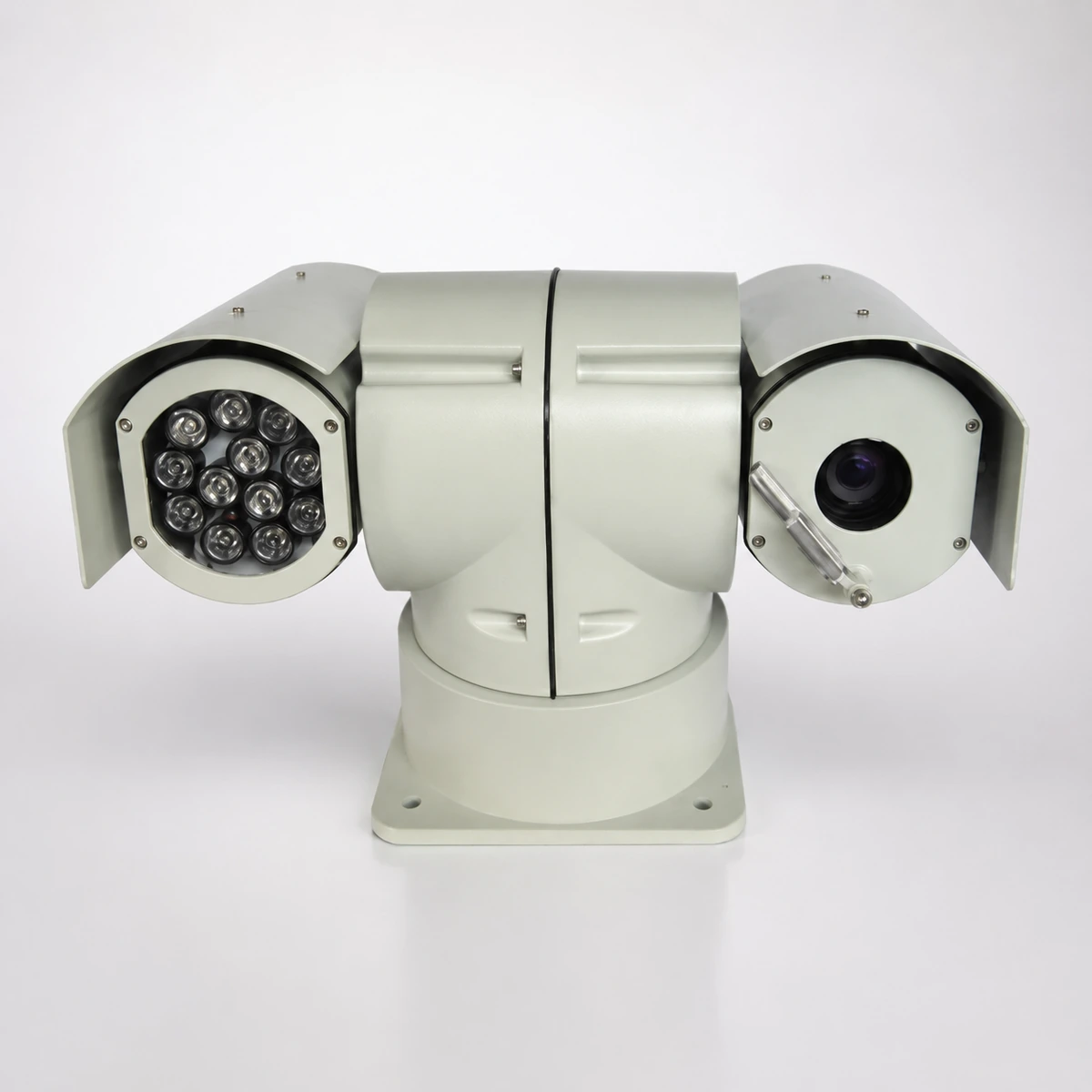
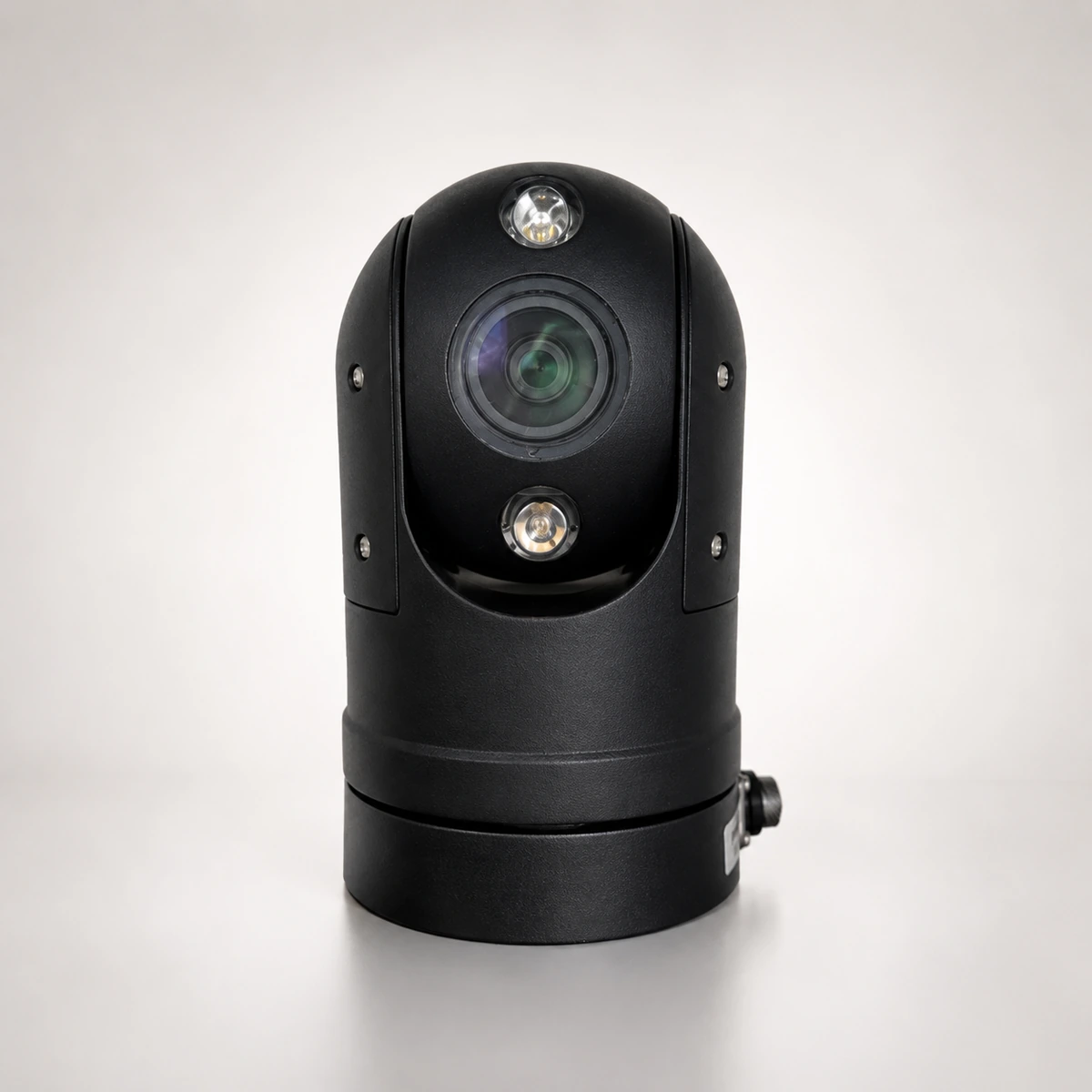
A steerable camera for the roof of a vehicle, and the only product in this range with a published IP rating. It turns through 360 degrees without stopping, holds 256 preset positions, sees 100 to 120 metres on array infrared with a laser illuminator beyond that, and carries a wiper and a heated housing so the lens stays clear. It runs on AHD to a recorder or over IP with ONVIF.
Supplied, fitted and commissioned
Overview
What the Vehicle PTZ Camera does
Every other camera in this range points where it was bolted. This one is steered: a full 360 degrees of continuous pan, 60 degrees up and 90 down, at up to 100 degrees per second onto any of 256 stored positions. It is what you fit when the job is to look at something specific at distance, rather than to record everything around the vehicle, which is why it turns up on patrol, border, port and incident-response vehicles rather than on buses.
It is also the only product here built to sit outside. IP66, a wiper across the lens, an independent heating module that clears fog and frost from the housing, tolerance to 4G of impact, and its own regulator so the vehicle’s electrical noise does not make the head drift. At 6 kilograms it needs a real mounting point. Night vision comes twice over: array infrared out to 100 to 120 metres, and an 808 nanometre laser illuminator that narrows its beam as the lens zooms in.
Where it fits best
- Patrol and response vehicles that need to look at something specific at distance
- Border, port and perimeter vehicles working a wide area from a fixed parking position
- Incident command vehicles, where an operator steers the camera from inside
- Fleets already running an Xignal recorder, which can drive it over RS485
- IP installations, where ONVIF lets it join a recorder from another manufacturer
Not sure this is the right recorder? See how many channels your vehicle needs.
Full specifications
Every published figure
The complete Xignal vehicle PTZ camera specification, as published by the manufacturer.
It turns without ever having to unwind
Continuous rotation through the full circle, plus 60 degrees up and 90 down, at up to 100 degrees per second onto any of 256 stored positions. A head with mechanical end stops has to reverse most of a turn to pick a subject up again; this one simply keeps going the way it was already travelling.
- Pan range
- 360 degrees, endless rotation
- Tilt range
- +60 to −90 degrees
- Pan preset speed
- 100 degrees per second
- Tilt preset speed
- 80 degrees per second
- Pan control speed
- 0 to 60 degrees per second
- Tilt control speed
- 0 to 40 degrees per second
- Presets and tours
- 256 preset positions, 6 tracking tours
- Video out
- Maximum 1080P
- Sensor
- Megapixel digital high definition movement and HD sensor, compatible with mainstream HD platforms
- Infrared night vision
- Array infrared, multi-angle, 100 to 120 metres, rated to 30,000 hours
- Laser night vision
- 808 nm laser with synchronous zoom. Spot angle 1 to 50 degrees, adjustable or automatic. 3 W or 5 W at order
- Optical zoom
- Not published
- Frame rate
- Not published
- Control
- RS485 with 16 built-in protocols, baud rate 2400 to 19200
- Protocol
- Pelco-D and Pelco-P
- Interface protocols
- ONVIF, PSIA, CGI and ISAPI
- Network protocols
- TCP/IP, HTTP, DHCP, DNS, DDNS, RTP, RTSP, PPPoE, SMTP, NTP, UPnP, SNMP, FTP, 802.1x, QoS, HTTPS, IPv6, GB28181. SIP and SRTP at order
- Video compression
- H.265 or H.264
- Audio compression
- G.722.1, G.711 a-law, G.711 u-law, MP2L2 and G.726
- Output rate
- 32 Kbps to 12 Mbps
- Storage
- MicroSD card in the camera
- Alarms
- Motion detection, mask alarm, memory full and memory error
- Other
- Dual stream, heartbeat and password protection
- IP rating
- IP66
- Wiper
- Fitted
- Defogging and defrosting
- An independent module, with heating elements through the housing so the whole shell clears the lens
- Operating temperature
- −35 °C to +65 °C
- Relative humidity
- Under 90%
- Impact resistance
- 4G or better
- Power regulation
- A regulator module that filters transient current from the vehicle, so the head stays steady
- Construction
- Integrated upper and lower structure, so the pan-tilt head and the infrared housing cannot knock out of alignment
- Weight
- 6 kg
- Mounting
- A range of options depending on the vehicle
- Dimensions
- Not published
- Input voltage
- Not published
- Power consumption
- Not published
Figures published by the manufacturer, which lists this camera by description rather than by a model number. Read the gaps as gaps: there is no published optical zoom factor, which on a PTZ camera is the figure most buyers want first, and no published dimensions, input voltage or power draw. We will get any of them confirmed in writing before you order rather than estimate them. Where a figure reads Not published, the manufacturer does not state it, which is not the same as the feature being absent.
Supply
What ships, and what the install needs
A vehicle PTZ is quoted as a fitted system rather than a boxed product, and the manufacturer does not publish a packing list. At 6 kilograms the mounting and the cable route matter as much as the camera, so these are surveyed per vehicle.
The camera
- Pan-tilt head with the camera and illuminator pods
- Wiper and the defogging and defrosting module
- Built-in regulator for vehicle power
- MicroSD card, if you want recording in the head
Fitted on the vehicle
- A roof bar or plate rated for 6 kg plus wind load
- Cable route for video, power and the RS485 control line
- A recorder channel, on AHD or IP
- A control terminal or joystick for the operator
Specified at order
- AHD or IP, to match the recorder already fitted
- Laser illuminator at 3 W or 5 W
- SIP and SRTP, if the platform needs them
- Mounting hardware for the specific vehicle
Accessories
What goes on the order with it
A recorder is one line on a vehicle quotation. These are the parts that make up the rest of it.
Mounting and cabling
- A roof bar or bolted plate rated for 6 kg plus wind load
- Cable route for video, power and the RS485 control line
- Mounting hardware surveyed for the specific vehicle
- A range of mounting options, per the manufacturer
Seeing in the dark
- Array infrared, 100 to 120 m, rated to 30,000 hours
- 808 nm laser illuminator, 3 W or 5 W at order
- The laser beam narrows as the lens zooms in
- Wiper and heated housing keep the lens clear
Control and recording
- A recorder channel, on AHD or on IP
- RS485 control from the recorder, Pelco-D or Pelco-P
- ONVIF for the IP route, matching the M720(G4F)-IP
- A joystick or control terminal for the operator
Compare
How it sits against the alternatives
The other two steerable cameras on the range page, and the hybrid recorder this one pairs with over IP. None of the three PTZ variants carries a published model number, so all three are listed by description.
| Vehicle PTZ, AHD or IP | Xignal C814 | Portable 4G PTZ | Xignal M720(G4F)-IP | |
|---|---|---|---|---|
| Type | Operator steered PTZ | Operator steered PTZ | Portable PTZ on a tripod | Hybrid recorder |
| Model number | None published | C814 | None published | M720(G4F)-IP |
| Pan range | 360 degrees, endless | 360 degrees, endless | 360 degrees | Not applicable |
| Presets | 256, plus 6 tours | 256, plus 6 tours | Not published | Not applicable |
| Infrared | 100 to 120 m array | 60 to 80 m array | 60 to 80 m | Not applicable |
| Laser illuminator | 808 nm, 3 W or 5 W | Not published | Not published | Not applicable |
| IP rating | IP66 | IP66 | Not published | Not published |
| Wiper and heater | Both fitted | Wiper only | Not published | Not applicable |
| Optical zoom | Not published | Not published | 20x or 30x | Not applicable |
| Connects by | AHD, or IP with ONVIF | Coaxial AHD, CVI or TVI | 4G, standalone | Takes 1 to 4 IP cameras |
| You are here | Find it in the range | Find it in the range | View the M720(G4F)-IP |
Scroll sideways to see every column.
Questions
Before you specify the Vehicle PTZ Camera
Questions we are asked about this model.
What is the optical zoom?
The manufacturer does not publish it, and we are not going to estimate it. That is an unusual gap because on a PTZ camera the zoom factor is normally the first number anyone asks for, and it is the one that decides whether you can read a plate at 80 metres or only see that a vehicle is there. What is published is that the laser illuminator zooms in step with the lens and narrows its beam from 50 degrees down to 1, which tells you the lens has a substantial zoom range but not what it is. If zoom is a tender requirement, ask us and we will get the figure from the manufacturer in writing before you commit.
Why does it have no model number?
The manufacturer lists it as Vehicle PTZ AHD/IP Camera and publishes no model code for it, and the same is true of the portable 4G variant. The third PTZ in the range does carry one, the C814. We describe it exactly as they do rather than assign a number that would not appear on a purchase order or a shipping document. On a formal tender we will confirm the manufacturer’s own part number for the exact configuration you are buying, because that is set by whether you take AHD or IP and 3 W or 5 W laser.
Does the heating module make sense in a hot climate?
The defrosting half does not, and we would rather say so. What does matter here is the other half. A vehicle that has been running with air conditioning has a cold camera housing, and when it stops in humid coastal air near a port or on the coast road the lens fogs from the outside in seconds. The heating elements in the housing clear that, and the wiper clears rain, spray and dust. So it earns its place, just for a different reason than in the climate it was designed for.
Can it work with the recorders you supply?
Yes, and it is published on both sides. Every Xignal recorder in this range publishes an RS485 line for a PTZ camera, and this camera is controlled over RS485 using Pelco-D or Pelco-P, which are the standard protocols those lines speak. For the IP route it publishes ONVIF, which the M720(G4F)-IP also publishes, so the two pair without a converter. The M728(G4F)-IP does not publish ONVIF, so on that combination ask us first.
What does 360 degree endless rotation actually change?
A camera with mechanical end stops has to unwind. If a subject moves past the stop, the head reverses through most of a full turn to pick them up again, and you lose them for a second or two at exactly the wrong moment. Endless rotation means it simply keeps going the way it was already turning. Combined with 100 degrees per second onto a preset, that is the difference between following a vehicle through a junction and watching it leave the frame.
How is it mounted, and what does the weight mean?
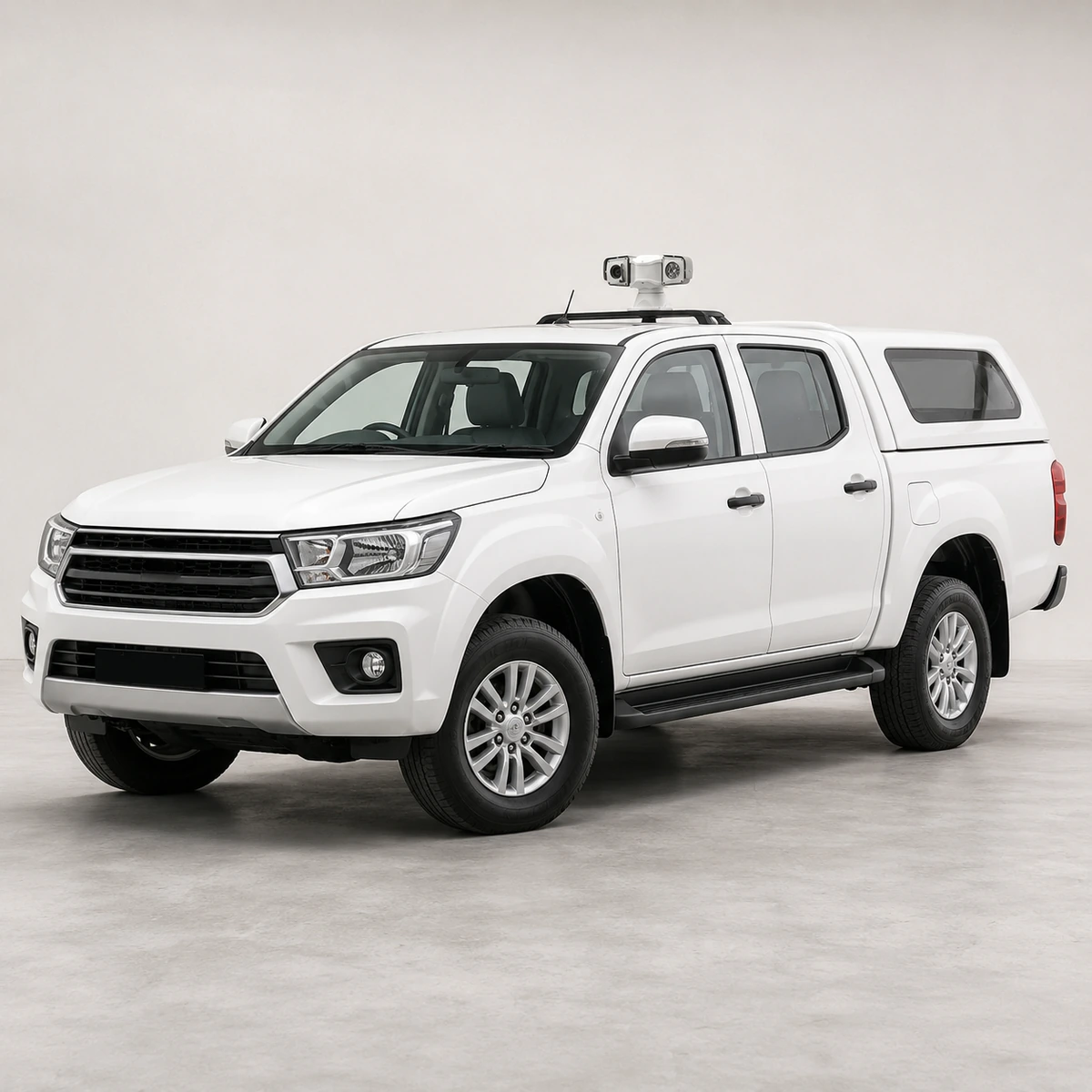
It weighs 6 kilograms before cabling, which is roughly four times a typical vehicle camera, so it does not go on an adhesive pad or a light bracket. It needs a roof bar or a bolted plate rated for the weight plus the wind load at speed, and the mounting point has to be surveyed on the actual vehicle. The manufacturer publishes a range of mounting options rather than one, so tell us the vehicle and we will specify the mount with it.
The range
Other models worth comparing
Three other cameras in the range, and what each one changes against the Vehicle PTZ Camera.
 Xignal · Vehicle PTZ
Xignal C814
+300°/s to a preset−shorter infrared
Reaches a stored position three times faster, at a quarter of the weight.
Xignal · Vehicle PTZ
Xignal C814
+300°/s to a preset−shorter infrared
Reaches a stored position three times faster, at a quarter of the weight.
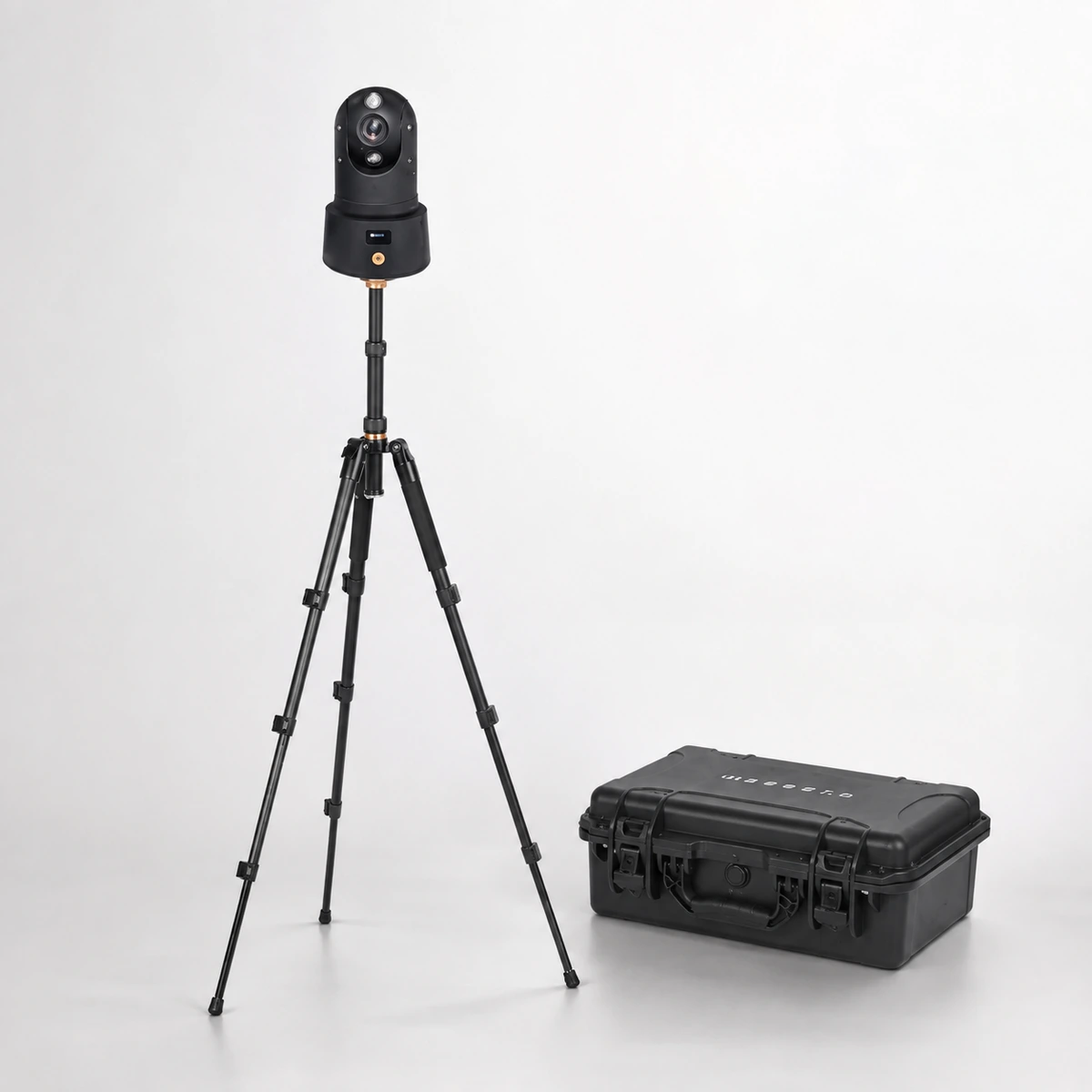 Xignal · Portable PTZ
Portable 4G PTZ
+lifts off the vehicle+battery and 4G
Comes off the vehicle onto a tripod and streams over 4G, with its own battery.
Xignal · Portable PTZ
Portable 4G PTZ
+lifts off the vehicle+battery and 4G
Comes off the vehicle onto a tripod and streams over 4G, with its own battery.
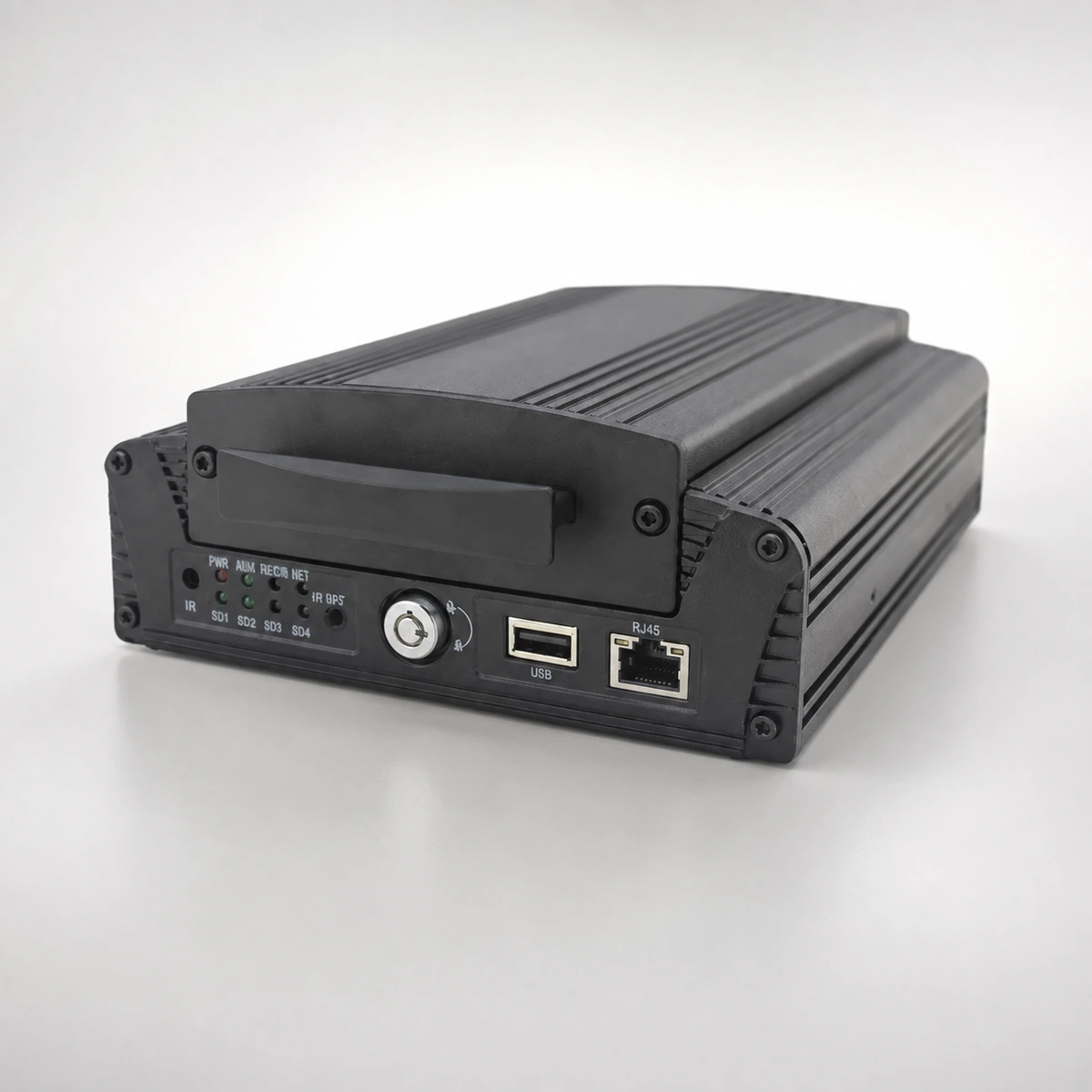 Xignal · Hybrid Mobile NVR
M720(G4F)-IP
+publishes ONVIF+records the PTZ
The recorder this camera pairs with over IP, because both publish ONVIF.
Xignal · Hybrid Mobile NVR
M720(G4F)-IP
+publishes ONVIF+records the PTZ
The recorder this camera pairs with over IP, because both publish ONVIF.
fleet and surveillance rules
The vehicle ptz camera against common requirements
A steerable camera raises a question the fixed cameras do not: it can be pointed deliberately at people and places, which makes who may operate it and what is done with the footage a governance matter rather than a hardware one. This is what applies, and where the camera ends and your policy begins.
- Who may steer it: an operator chooses what this camera looks at, so the authorised-user register and access levels matter more here than on a fixed channel.
- Encrypted storage and retention: the footage lands on the recorder and then on your server, and the evidence rules that apply govern it there. The camera itself holds only a MicroSD buffer.
- Written approval before sharing: a process obligation on the operating entity, unchanged by the camera being steerable.
- Notification where it applies: a roof-mounted PTZ is visible equipment on a marked vehicle, which is usually the point, but a covert deployment is a different legal question. Ask before specifying one.
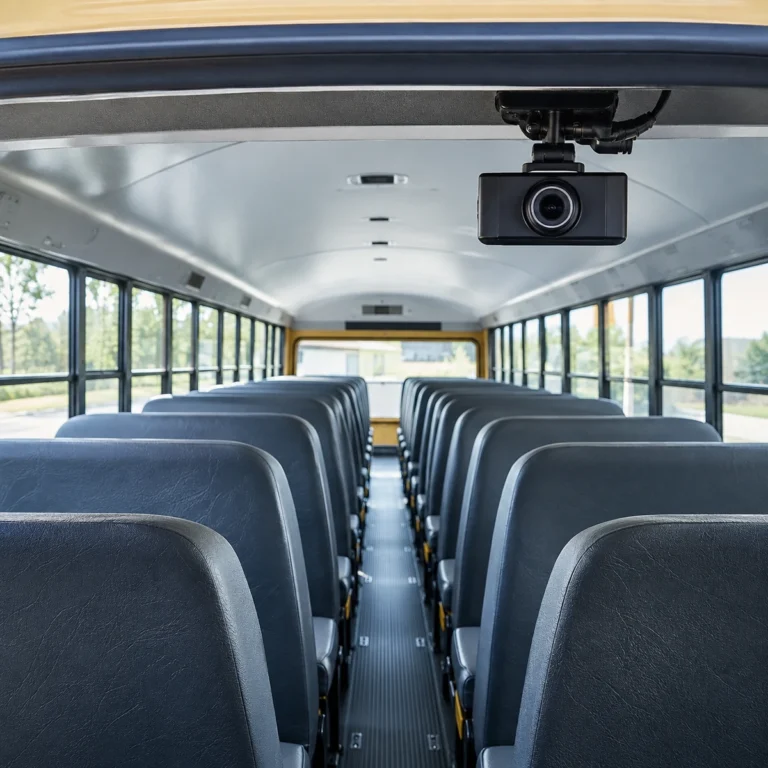
- Not a school bus camera: school transport needs seven fixed cameras and a recorder. A PTZ answers a different job entirely.
- Fitted to the vehicle safely: 6 kilograms on a roof needs a mounting point rated for the load and the wind at speed. We survey it rather than assume it.
- Position on the record: the recorder supplies GPS and time, so a steered clip can be tied to where the vehicle was standing.
Get a price for the Xignal vehicle PTZ camera
Tell us the vehicle, whether you need AHD or IP, what distance you need to see at, and which recorder is already fitted. If optical zoom is a stated requirement, say so on the enquiry, because that is the one figure the manufacturer does not publish and we will get it confirmed before you commit.