Home › Vehicle Cameras › Xignal M606
Xignal · ADAS and DSM Dash Camera
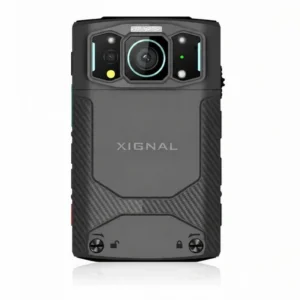
Xignal M606 ADAS Dash Camera with DSM
The dash camera to specify for a fleet that parks outdoors. Rated to plus 70 degrees where the M607 stops at 60, with 140 degree lenses front and cabin, infrared night vision inside the car, two memory cards and a super capacitor that finishes the file when the power is cut. Driver monitoring, lane warnings and face recognition are all available.
Supplied, fitted and commissioned
Overview
What the M606 dash camera does
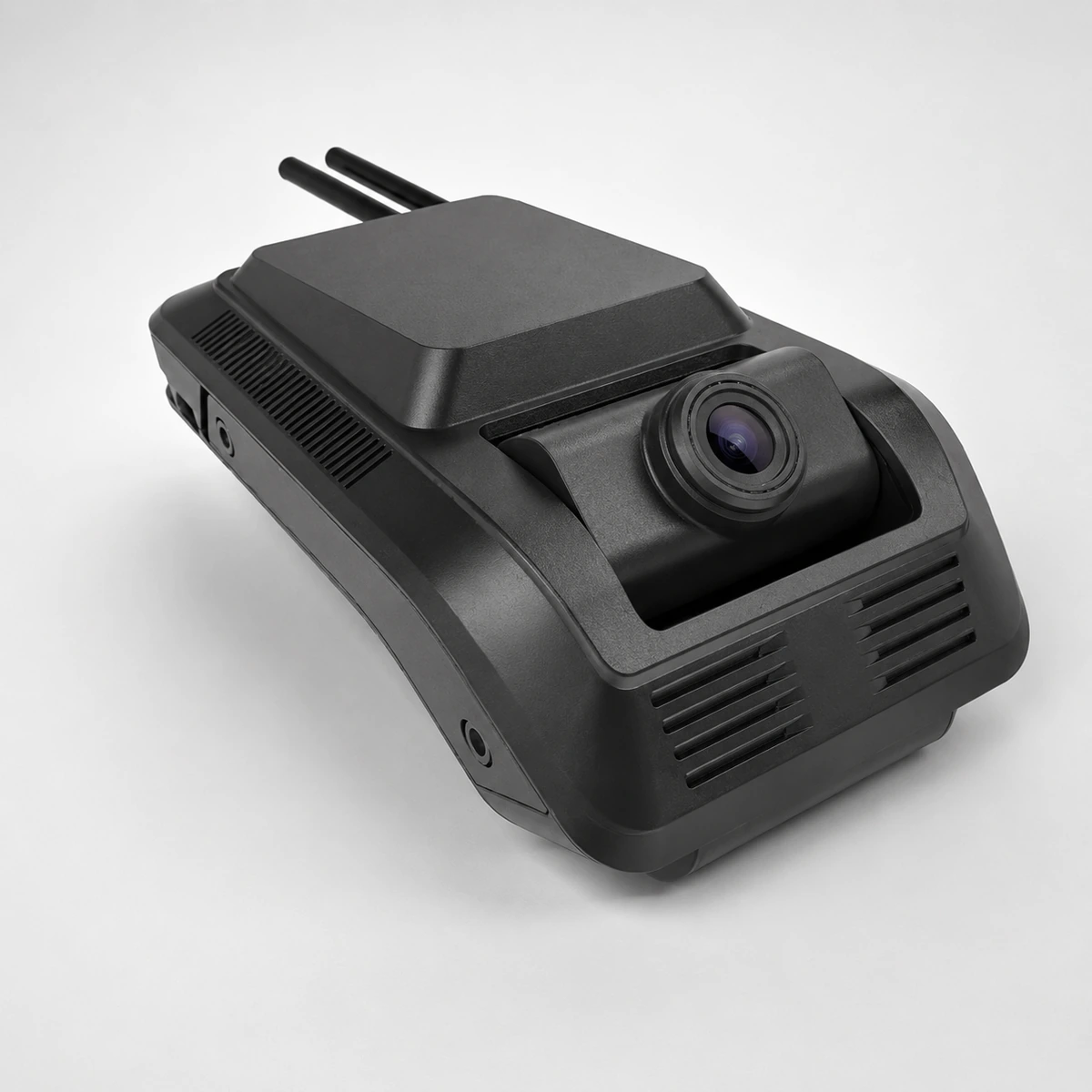
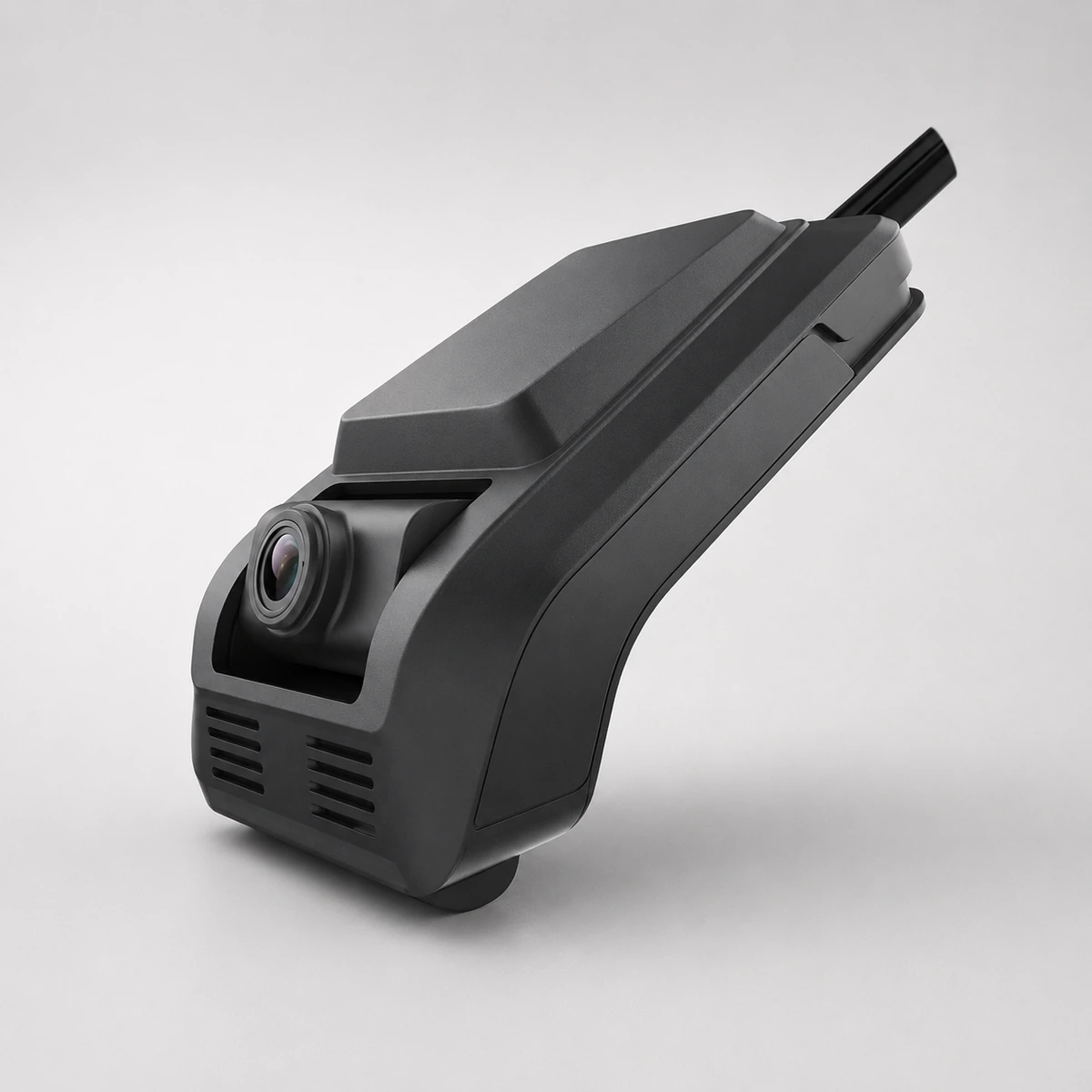
The better specified of the two dash cameras, and the one to reach for in this climate. It is rated from minus 20 to plus 70 degrees Celsius where the M607 stops at 60, which matters because a windscreen mounting is the hottest position in a vehicle and a car parked in the open through a hot August goes well past 60 degrees behind the glass. If the fleet parks outdoors, this is the dash camera that belongs on the quote.
The rest of the specification follows the same pattern. Both built-in cameras are 2 megapixel at 140 degrees, the outside one with wide dynamic range for glare and the cabin one with infrared so the inside of the car is visible at night. It takes two memory cards rather than one, and a super capacitor keeps it running about three seconds after the power is cut so the file being written is finished rather than abandoned. Driver monitoring, lane warnings and driver face recognition are all available as options, on a body of 240 grams.
Where it fits best
- Fleets parking outdoors through a hot summer, where the temperature rating decides it
- Taxis and ride-hail vehicles needing a clear cabin view after dark
- Vehicles driving into low sun or out of tunnels, where the outside camera's wide dynamic range earns its place
- Operators who need to know which driver was at the wheel, through face recognition
- Fleets wanting driver behaviour monitoring without fitting a separate recorder
Not sure this is the right recorder? See how many channels your vehicle needs.
Full specifications
Every published figure
The complete Xignal M606 specification, as published by the manufacturer.
Two built in, two you can add
The top pair are inside the unit and cannot be moved: one looks out of the vehicle and one into the cabin, both 2 megapixel at 140 degrees. The outside one adds wide dynamic range for glare, the cabin one adds infrared so the inside of the car is visible at night. The pair below are AHD inputs for a rear or nearside view.
- Built-in cameras
- 2, one facing out of the vehicle and one into the cabin
- Outside camera
- 2 MP sensor, 140 degree wide angle, with wide dynamic range
- In-car camera
- 2 MP sensor, 140 degree wide angle, with infrared night vision
- External cameras
- 2 channels over AHD
- Total channels
- 4
- Video resolution
- 1080P, 720P or D1
- Video compression
- H.265 or H.264. H.265 saves about 40% of the storage and roughly half the transmission data
- Main chip
- Hisilicon, H.265
- Memory
- 4 GB
- File format
- Special file system with loop recording. Files export as ASF
- Frame rate
- Not published
- ADAS
- Lane deviation, forward collision and following distance alarms
- DSM
- Needs the DSM camera. Detects head down, phone calls, smoking, looking around, yawning, eyes closed, no face detected and a covered camera
- Face recognition
- Identifies the driver and reports it
- Gyroscope
- Collision and vibration alarms
- Alarm types
- Low voltage, over speed, parking overtime, fatigue driving, SOS, collision and video occlusion
- SOS button
- Emergency alarm, with video uploaded from before and after it
- PTT button
- Short press captures a picture, long press opens a voice call
- Alarm output
- Not published
- Storage
- Two TF cards, 32 GB, 64 GB, 128 GB or 256 GB
- Super capacitor
- Built in. Keeps the camera running about 3 seconds after an abnormal power cut so the file is completed
- USB
- Mini USB, for copying footage, firmware updates and mouse control
- Factory reset
- One-key restore
- Cellular
- 4G, with support for global frequency bands
- Wi-Fi
- 2.4 GHz, in station or access point mode, with mobile preview
- Positioning
- BeiDou and GPS dual mode, with AGPS, and driving track playback
- Platform functions
- Real time monitoring, intercom, track playback, remote capture and remote playback
- Platform protocols
- JT/T 794-2011, JT/T 808-2011, JT/T 1078, JT/T 905.2-2014 and GB28181. These are Chinese transport standards, listed for platform compatibility rather than as a local requirement
- Self diagnostics
- Automatic equipment detection, which surfaces faults for maintenance
- Power
- VCC 9 V to 36 V, with ground
- Ignition
- ACC line for ignition detection and switching
- External display
- CVBS video output
- Serial
- 1 × RS232 for extended functions
- Camera inputs
- 2 × AHD
- Audio
- Speaker and microphone, both built in
- Dimensions (L × W × H)
- 120 × 77 × 55 mm
- Weight
- About 240 g, plus or minus 10 g
- Operating temperature
- −20 °C to +70 °C
- Relative humidity
- Up to 93%
- Power consumption
- Not published
- IP rating
- Not published
- Certifications
- Not published
Figures published by the manufacturer. One conflict inside its own page: the feature summary lists card sizes up to 512 GB while the specification table stops at 256 GB, so the table figure is published here and the larger card is worth confirming on a quotation. Note also that this model publishes no power consumption figure where the M607 does, and no alarm output, so it cannot drive a beacon or a cut-off. Where a figure reads Not published, the manufacturer does not state it, which is not the same as the feature being absent.
Supply
What ships, and what the install needs
A dash camera is quoted as a fitted system rather than a boxed product, and the manufacturer does not publish a packing list for this model. Confirm exactly what it ships with on your own quotation. Because two cameras are built in, the list around it is shorter than it is for the recorders.
Comes as one unit
- Outside camera, 2 MP at 140 degrees with wide dynamic range
- In-car camera, 2 MP at 140 degrees with infrared
- Speaker, microphone and gyroscope
- SOS and PTT buttons
Ordered with it
- Two TF cards, up to 256 GB each
- A 4G SIM on a data plan
- Up to two external AHD cameras
- A monitor on the CVBS output for commissioning
Specified at order
- The ADAS algorithm for lane and collision warnings
- The DSM algorithm, which needs its own camera
- The face recognition algorithm
- A device on the RS232 line
Accessories
What goes on the order with it
A recorder is one line on a vehicle quotation. These are the parts that make up the rest of it.
The unit and its mount
- Outside camera at 140 degrees with wide dynamic range
- Cabin camera at 140 degrees with infrared
- Speaker, microphone and gyroscope, all built in
- A monitor on the CVBS output for commissioning
Driver AI, at order
- ADAS for lane deviation, collision and following distance
- DSM for fatigue, phone use, smoking and a covered camera
- Face recognition, to identify which driver was at the wheel
- The DSM algorithm needs its own camera
Cards, SIM and extras
- Two TF cards, up to 256 GB each
- A 4G SIM, if the fleet needs live view
- Up to two external AHD cameras
- A device on the RS232 line
Compare
How it sits against the alternatives
The other dash camera in the range and two recorders often considered against it. The full comparison lives on the range page.
| Xignal M606 | Xignal M607 | Xignal M605 | Xignal M710(G4F) | |
|---|---|---|---|---|
| Type | Dash camera | Dash camera | SD card recorder | HDD recorder |
| Built-in cameras | 2 at 1080p | 2 at 1080p | None | None |
| Field of view | 140 degrees on both | Not published | Not published | Not published |
| Night vision | Infrared on the cabin camera | Not published | Not published | Not published |
| Operating range | −20 to +70 °C | −10 to +60 °C | −20 to +70 °C | −20 to +70 °C |
| Records to | 2 TF cards to 256 GB each | 1 TF card to 256 GB | 2 SD cards to 128 GB each | HDD to 4 TB + 128 GB SD |
| Power-loss hold | Super capacitor, about 3 s | Not published | 8 to 10 s delay recording | Not published |
| Driver AI | ADAS, DSM and face recognition | ADAS and DSM at order | DSM, ADAS and blind spot | ADAS and DSM at order |
| Alarm output | Not published | None | 2 channels | 2 channels |
| Weight | About 240 g | 0.5 kg | 0.55 kg | 2.2 kg |
| You are here | View the M607 | View the M605 | View the M710(G4F) |
Scroll sideways to see every column.
Questions
Before you specify the M606
Questions we are asked about this model.
Which of the two dash cameras should I specify?
Start with where the vehicles park. This model is rated from minus 20 to plus 70 degrees Celsius and the M607 is rated minus 10 to plus 60. A windscreen mounting is the hottest position in a vehicle and a car left in the open through a hot summer goes well past 60 behind the glass, so for any fleet parking outdoors this is the one that belongs on the quote. Beyond temperature it also publishes more: 140 degree lenses on both cameras, infrared in the cabin, two memory cards instead of one, a super capacitor, and driver face recognition. The M607’s own advantages are a second RS232 line, 802.11 b/g/n Wi-Fi with a hotspot mode, and a published power draw.
What does infrared on the cabin camera actually get me?
A usable picture of the inside of the vehicle at night. Without it a cabin camera sees very little once the interior light is off and the only illumination is passing street lighting, which is exactly when it matters most for a taxi, a ride-hail vehicle or a lone driver. The manufacturer pairs it with wide dynamic range on the outside camera, which is the opposite problem: driving into low sun or out of a tunnel, where an ordinary camera loses either the bright or the dark part of the frame.
What is a super capacitor for, and how is it different from the M605's 8 to 10 seconds?
Both solve the same problem, which is a file left incomplete when power is cut mid write. This camera uses a super capacitor, a component that holds a small charge and releases it immediately, keeping the camera running about three seconds so it can close the file. The M605 publishes 8 to 10 seconds of delay recording instead. A capacitor is generally preferred to a battery in a vehicle because heat does not degrade it the same way, which fits a camera rated to plus 70.
Is 140 degrees wide enough, and is it the same on both cameras?
Both built-in cameras are published at 2 megapixel and 140 degrees. On the outside camera that covers the full width of the road ahead including the adjacent lanes, which is what a lane departure or following distance warning needs. On the cabin camera it covers the driver and the front passenger, and on most vehicles the front row of the back seat as well. The M607 publishes no field of view figure at all, so this is not a small difference between the two on a tender.
Does it have an alarm output for a beacon or a cut-off?
The manufacturer does not publish one. It has a rich set of alarm types it can raise, including low voltage, over speed, parking overtime, fatigue driving, SOS, collision and video occlusion, and it reports them to the platform. What is not published is an output that can drive a light, a sounder or a power cut-off on the vehicle. If your specification requires the camera to actuate something, the M605 and the recorders publish two alarm outputs each and are the safer choice.
What are the JT/T and GB28181 protocols in the specification?
They are Chinese national standards for vehicle video platforms. They are listed because the camera can talk to platforms built to them, which matters if you are integrating with an existing system that expects one. They are not a requirement here and we do not present them as one. For any deployment what matters is that the footage reaches your server and that GPS reporting is configured to an approved provider, which we set up at commissioning.
The range
Other models worth comparing
Three other dash cameras in the range, and what each one changes against the M606.
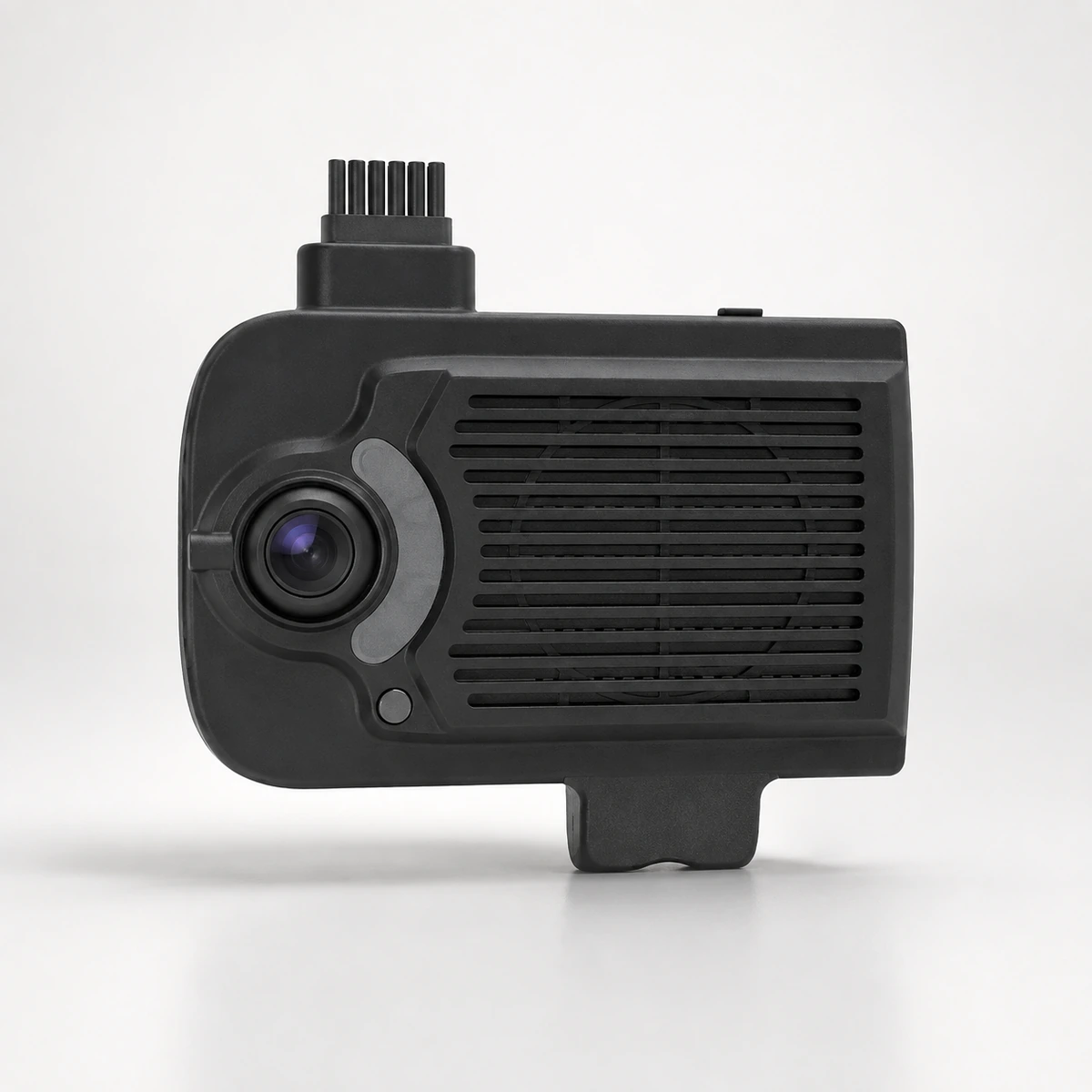 Xignal · 4G AI Dash Camera
M607
+2nd RS232+Wi-Fi hotspot−rated to +60 only
The other dash camera. A second serial line and a Wi-Fi hotspot, but a lower temperature ceiling.
Xignal · 4G AI Dash Camera
M607
+2nd RS232+Wi-Fi hotspot−rated to +60 only
The other dash camera. A second serial line and a Wi-Fi hotspot, but a lower temperature ceiling.
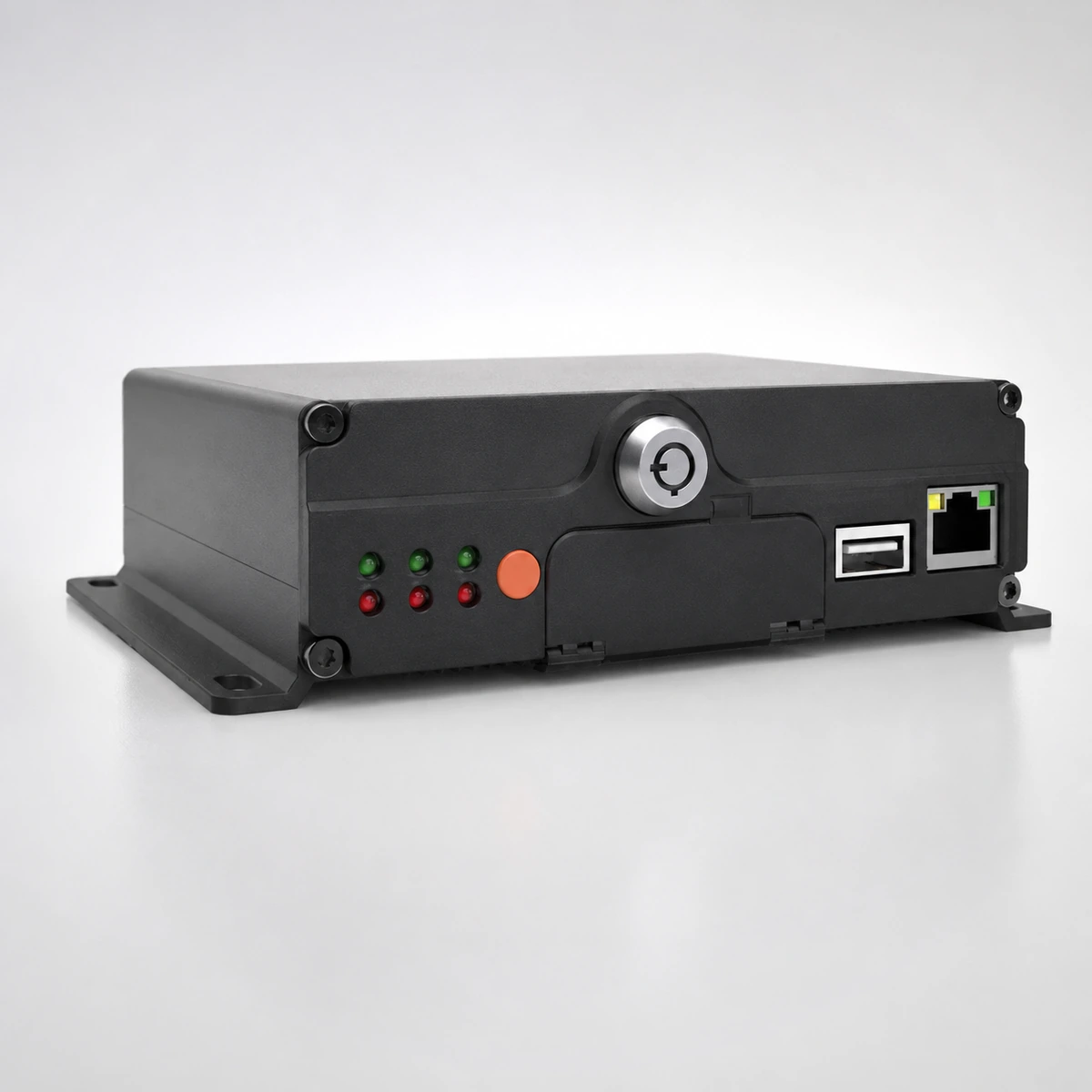 Xignal · AI SD Card Mobile DVR
M605
+blind spot+alarm outputs−no built-in cameras
A recorder rather than a dash camera. Four cameras you position yourself, plus blind spot detection.
Xignal · AI SD Card Mobile DVR
M605
+blind spot+alarm outputs−no built-in cameras
A recorder rather than a dash camera. Four cameras you position yourself, plus blind spot detection.
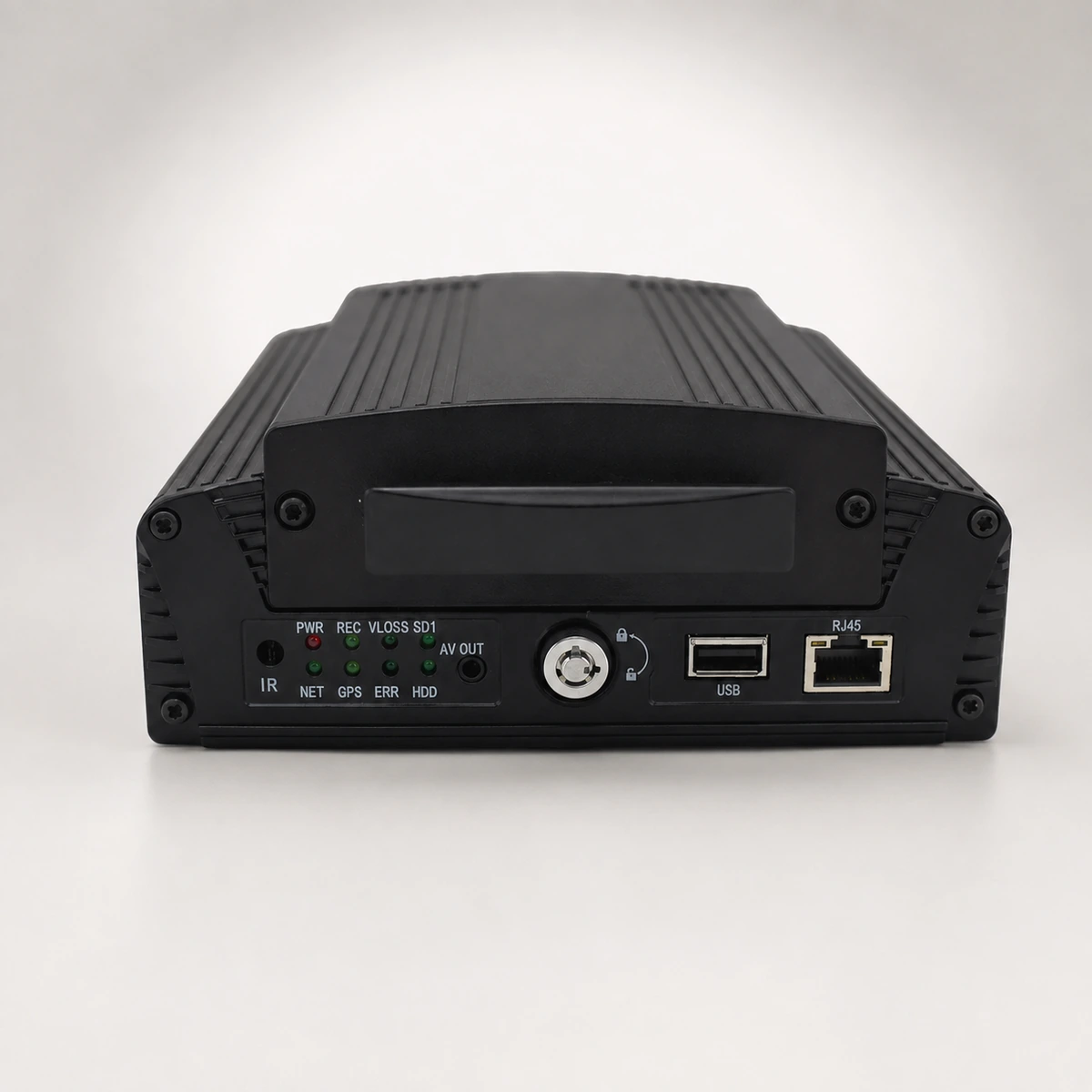 Xignal · HDD Mobile DVR
M710(G4F)
+4 TB drive+alarm outputs−720p
The disk based entry point, when days of footage on the vehicle matter more than a fast fit.
Xignal · HDD Mobile DVR
M710(G4F)
+4 TB drive+alarm outputs−720p
The disk based entry point, when days of footage on the vehicle matter more than a fast fit.
fleet and duty of care rules
The M606 dash camera against common requirements
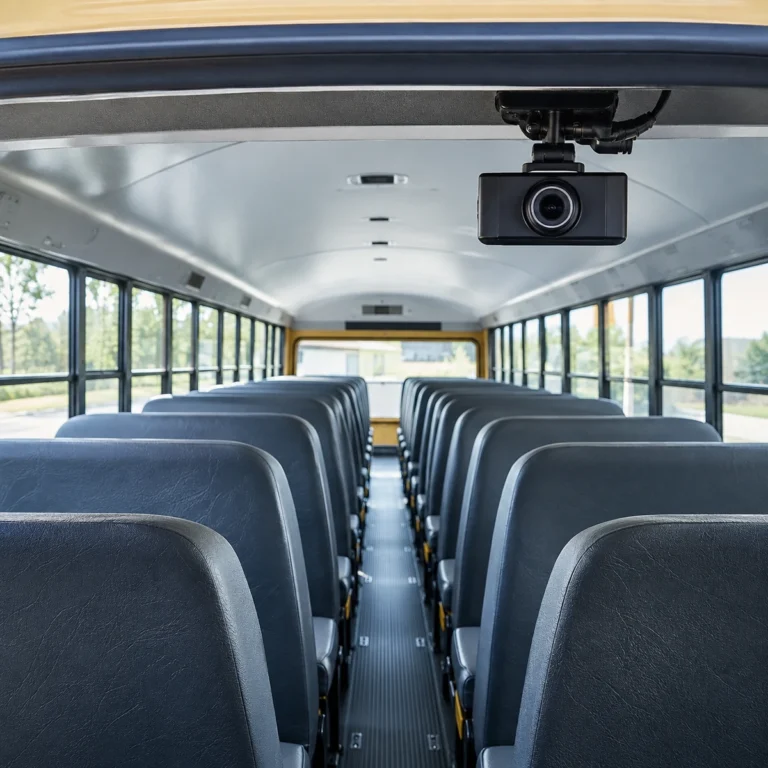
A dash camera answers a narrower set of obligations than a recorder does. It is not a school bus system and cannot be made into one. Where it fits is driver behaviour, incident evidence and live position on cars and light vans, and it is the one dash camera here rated for a windscreen in this climate.
- Rated for the climate: minus 20 to plus 70 degrees, which is the range the recorders carry and the M607 does not. On a windscreen in a hot summer that is the specification that matters.
- Not a school bus recorder: school transport requires seven cameras, four exterior and three interior. Four channels, two of them fixed, cannot cover that.
- Telematics on heavy vehicles: many authorities require driving hours, harsh braking, acceleration and speeding to be reported on heavier vehicles, and licensing can depend on it.
- Driver behaviour on the record: the optional DSM algorithm detects fatigue, phone use, smoking and a covered camera, and face recognition can identify which driver was at the wheel.
- An SOS the driver can reach: one-touch emergency alarm from the driving position, with the video from before and after it uploaded.
- Position from an approved provider: BeiDou and GPS dual mode with AGPS reports position, and the link to the approved provider is configured at commissioning.
- Retention sized on the server: two cards are a rolling buffer. Any retention period longer than they hold is met by the server, not by the camera.
Get a price for the Xignal M606
Tell us the vehicle type, how many vehicles, whether you need the external cameras wired in, and whether you want driver monitoring or face recognition. If the vehicles park outdoors through the summer, this is the dash camera we would put on the quote, and we will say so plainly if a recorder would serve you better.