Home › Vehicle Cameras › Xignal M605
Xignal · AI SD Card Mobile DVR
Xignal M605 AI SD Card Mobile DVR
The AI recorder, and the only one in the range that writes to SD cards instead of a hard disk. Four channels of 1080p in H.265, which halves the storage for the same picture, on a chassis a quarter the weight of the others. Driver monitoring, lane warnings and blind spot detection are what it is built around.
Supplied, fitted and commissioned
Overview
What the M605 mobile DVR does
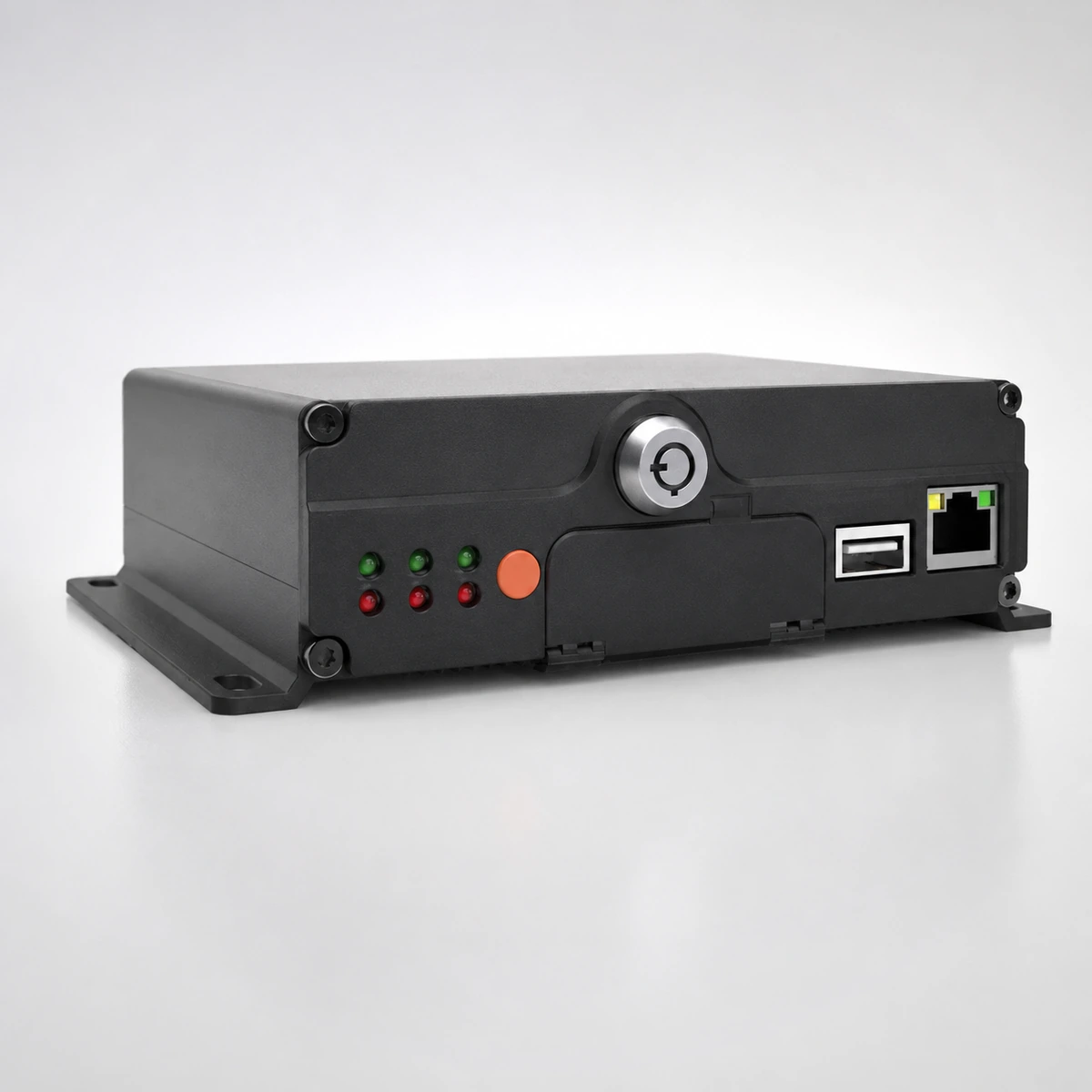
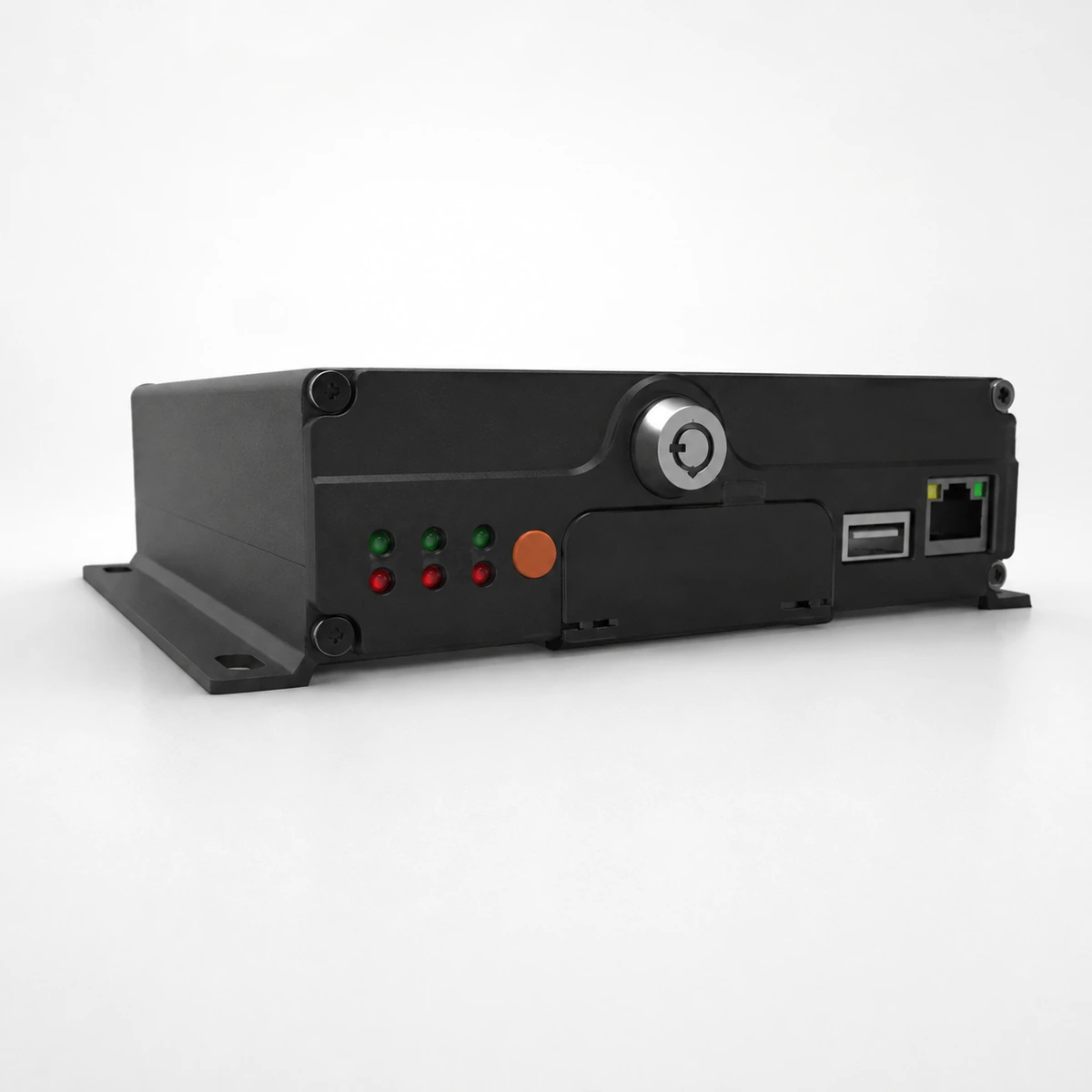
The odd one out in the range, and deliberately so. Every other recorder we supply writes to a 2.5 inch hard disk in a caddy. This one writes to two SD cards, which removes the only moving part in the box and takes the chassis down to 154 by 42 by 138 millimetres and 0.55 kilograms, a quarter of the weight of the others. On a vehicle with no room behind a seat or under a bunk, that is often the whole argument.
It is also the only recorder here that encodes in H.265, which the manufacturer summarises as the same video quality in half the storage. That matters more than usual on a card based recorder, because 256 gigabytes across two cards is a smaller buffer than a 4TB drive and H.265 is what makes it workable. The third difference is the AI: driver monitoring, forward warnings and blind spot detection are the point of this model rather than options bolted to it, and blind spot detection is published for this recorder and no other in the range.
Where it fits best
- Light commercial vehicles and vans with no space for a drive caddy
- Fleets buying for driver behaviour and duty of care rather than channel count
- Vehicles on rough roads or high vibration routes, where a spinning disk is a liability
- Operators who want blind spot warnings alongside lane and fatigue detection
- Installations where the recorder has to hide behind a trim panel
Not sure this is the right recorder? See how many channels your vehicle needs.
Full specifications
Every published figure
The complete Xignal M605 specification, as published by the manufacturer.
Four channels of 1080p, in H.265
Four AHD inputs, and the only recorder in the range that encodes in H.265. The manufacturer summarises that as the same video quality in half the storage, which is what makes two SD cards a workable buffer where they would not be in H.264. There are no IP channels on this model.
- Video channels
- 4 channels, AHD
- Video resolution
- Up to 4 channels of 1080P
- Also records
- 720P, D1, HD1, CIF
- Video compression
- H.265 or H.264
- Video quality
- 0 to 7 levels, 0 is the highest
- Video standard
- PAL 100 f/s, CCIR625, 50 field · NTSC 120 f/s, CCIR525, 60 field
- Bit rates
- 1080P 4 to 8 Mbps · 720P 4 to 6 Mbps · D1 800 Kbps to 3 Mbps · HD1 600 Kbps to 2.5 Mbps · CIF 256 Kbps to 1.5 Mbps
- Recording modes
- Automatic on power up by default, plus timed, alarm triggered and manual
- Video input
- Aviation connector, 1.0Vp-p, 75Ω
- Video output
- 1 CVBS aviation, 1.0Vp-p, 75Ω. One channel full screen or a four channel view
- Preview
- 1 and 4 channel preview, with manual or alarm triggered full screen
- On-screen overlay
- Date, time and vehicle ID
- Interface
- Graphical interface, set up with the remote control
- DSM
- Detects fatigue, distraction, phone use and smoking
- ADAS
- Advanced driver assistance, for forward warnings
- BSD
- Blind spot monitoring
- Audio input
- 4 channels, aviation plug
- Audio output
- 1 channel, aviation plug
- Audio compression
- G.726 at 8 KB/s
- Voice
- Voice intercom and group talking, with alarms shown in the client software
- Storage
- Dual SD cards, each up to 128 GB, with loop recording
- Hard disk
- None. This model records to SD cards only
- Data protection
- 8 to 10 second delay recording, so the file closes if the vehicle battery is cut
- File format
- H.265 or H.264
- File system
- Special FAT32
- Firmware update
- By SD card
- Positioning
- Built-in GPS and BeiDou module
- G-sensor
- Supported
- Fleet software
- Runs with the central monitoring software for live video, audio and GPS tracking
- 4G and Wi-Fi
- Named in the manufacturer's feature summary but not itemised in its specification table
- Alarm input
- 4 channels, with alarm linkage
- Alarm output
- 2 channels
- Serial
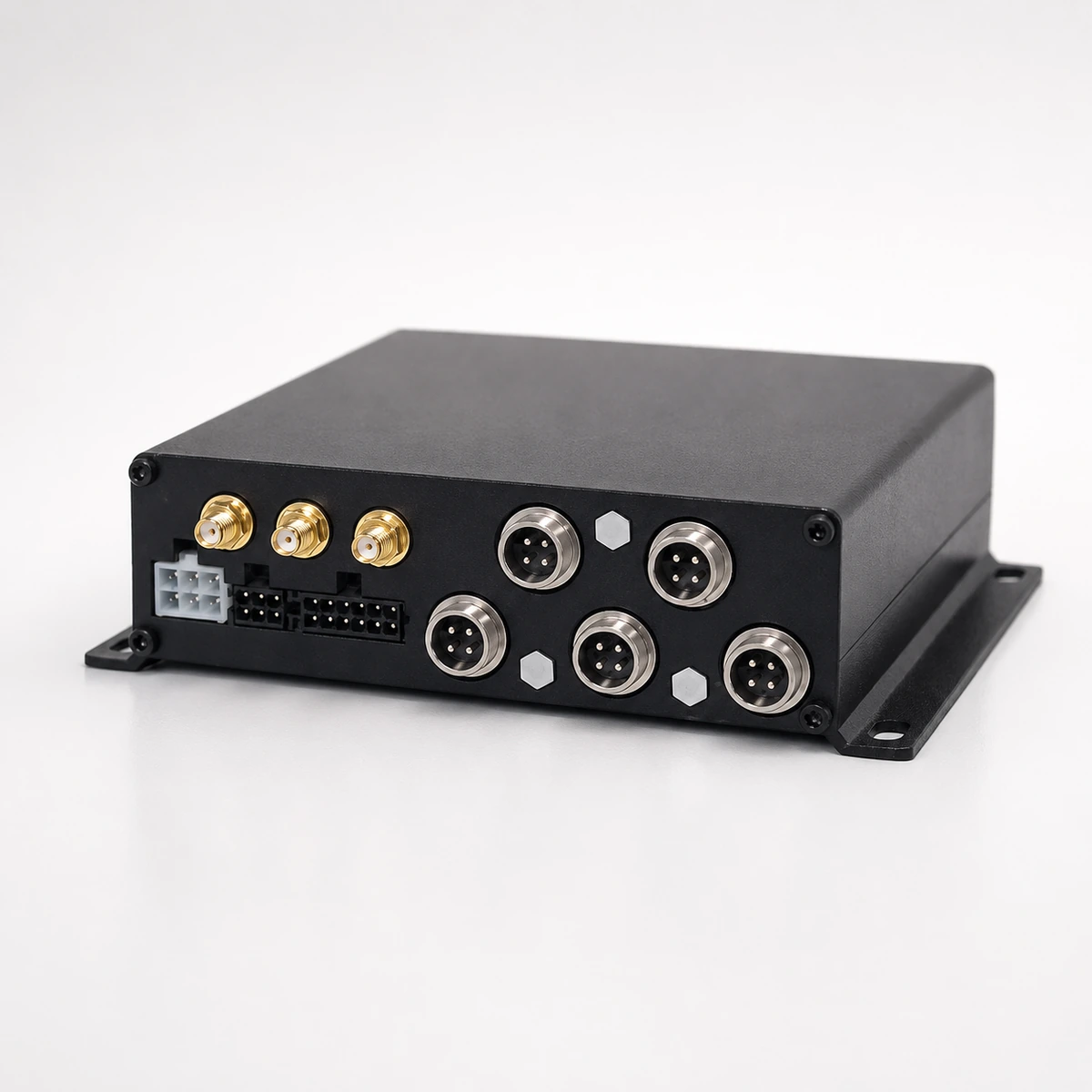
- 1 × RS232 for OBD, a POS or fuel sensor, or an LED panel. 1 × RS485 for a PTZ camera
- Playback
- Up to 4 channels at once, with stop, fast and slow
- Playback speeds
- 2x, 4x, 8x and 16x, forwards and backwards
- Search
- By recording time or recording type
- User accounts
- Two levels, user and administrator, with separate passwords
- Power input
- Wide voltage, DC +10 V to +36 V
- Power output
- +12 V at 2.5 A, +5 V at 2.5 A
- Power consumption
- Under 5 W in normal operation
- Power management
- Timed and delayed shutdown
- Operating temperature
- −20 °C to +70 °C
- Humidity
- 20% to 80%
- Dimensions (W × H × D)
- 154 × 42 × 138 mm
- Net weight
- 0.55 kg
- Operating system
- Linux
- Menu languages
- Chinese, English, or customised
- IP rating
- Not published
- Certifications
- Not published
Figures published by the manufacturer. Two things worth reading closely. This model records to SD cards only, so there is no hard disk figure to compare against the other recorders in the range, and retention on the vehicle is set by two cards rather than by a drive. And 4G and Wi-Fi appear in the manufacturer's feature summary but have no rows in its specification table, so they are quoted here as it states them. Where a figure reads Not published, the manufacturer does not state it, which is not the same as the feature being absent.
Supply
What ships, and what the install needs
A mobile DVR is quoted as a fitted system rather than a boxed product, and the manufacturer does not publish a packing list for this model. Confirm exactly what the recorder ships with on your own quotation. These are the parts that go on the order around it.
Ordered with the recorder
- One AHD camera per channel in use, up to four
- Aviation cable looms, cut to the vehicle
- Two SD cards, up to 128 GB each
- A monitor on the AV output for commissioning
Fitted on the vehicle
- Antennas on the three mounts
- A switched power feed, 10 to 36 V
- A panic button on one of the four alarm inputs
- The remote control used to set the recorder up
Specified at order
- A DSM camera for fatigue, distraction, phone use and smoking
- An ADAS camera for forward warnings
- Blind spot sensing for the nearside
- An OBD, fuel or POS device on the RS232 line
Accessories
What goes on the order with it
A recorder is one line on a vehicle quotation. These are the parts that make up the rest of it.
Cameras and cabling
- Front road, cabin, rear and nearside cameras
- AHD only on this model, up to four
- Aviation cable looms cut to the vehicle
- A monitor on the AV output for commissioning
The three AI systems
- DSM for fatigue, distraction, phone use and smoking
- ADAS for forward warnings
- Blind spot detection on the nearside
- Each camera module takes a channel, so count them in the four
Cards, power and links
- Two SD cards, up to 128 GB each
- Antennas on the three mounts
- An OBD, fuel or POS device on the RS232 line
- A PTZ camera on the RS485 line
Compare
How it sits against the alternatives
Three recorders often considered alongside the M605. The full comparison, including the dash cameras and the PTZ units, lives on the range page.
| Xignal M605 | Xignal M710(G4F) | Xignal M720(G4F)-IP | Xignal M728(G4F) | |
|---|---|---|---|---|
| Channels | 4 analogue | 4 analogue | 4 analogue + 1 to 4 IP | 8 analogue |
| Camera types | AHD | AHD or CVBS | AHD, TVI or CVI | AHD, CVI, TVI or CVBS |
| Max resolution | 1080p | 720p | 1080p | 1080p |
| Compression | H.265 or H.264 | H.264 | H.264 | H.264 |
| Records to | 2 × 128 GB SD, no hard disk | HDD to 4 TB + 128 GB SD | HDD to 4 TB + 128 GB SD | HDD to 4 TB + 128 GB SD |
| Alarm in / out | 4 / 2 | 6 / 2 | 6 / 2 | 6 / 2 |
| Driver AI | DSM, ADAS and blind spot | ADAS and DSM at order | ADAS and DSM at order | ADAS and DSM at order |
| Blind spot | Yes | Not published | Not published | Not published |
| Size | 154 × 42 × 138 mm | 218 × 161 × 65 mm | 218 × 161 × 65 mm | 218 × 161 × 65 mm |
| Weight | 0.55 kg | 2.2 kg | 2.2 kg | 2.2 kg |
| You are here | View the M710(G4F) | View the M720(G4F)-IP | View the M728(G4F) |
Scroll sideways to see every column.
Questions
Before you specify the M605
Questions we are asked about this model.
Is an SD card recorder as reliable as a hard disk one?
For a small vehicle, usually more so. A 2.5 inch hard disk is the only moving part in a mobile DVR and vibration is what kills it, which is why the disk based recorders sit in shock mounted caddies. Cards have no moving parts at all. What you give up is capacity: two 128 gigabyte cards against a 4TB drive is a much shorter buffer on the vehicle. That is the trade this model makes, and H.265 encoding is what keeps it workable, because it stores the same picture in roughly half the space.
How many days will 256 gigabytes actually hold?
It depends on channel count, resolution and how much of the shift is recorded, so we size it per route rather than quote a number here. The manufacturer publishes the bit rates that let you work it out: 1080p runs 4 to 8 Mbps per channel and 720p runs 4 to 6, and both cards loop record. What matters more is that days on the vehicle are a buffer, not your retention policy. Sixty days lives on the server the footage is offloaded to, not on the cards.
What does blind spot detection add over ADAS and DSM?
They watch three different things. DSM faces the driver and detects fatigue, distraction, phone use and smoking. ADAS faces forward and warns on what is ahead. Blind spot detection covers the side the driver cannot see, which on a left hand drive vehicle is the nearside, and it is the one that matters most for cyclists, motorcycles and pedestrians alongside a turning vehicle. This is the only recorder in our range for which the manufacturer publishes blind spot monitoring.
Does it take the cameras already on my vehicles?
Only if they are AHD. This model publishes AHD inputs and nothing else, where the M710(G4F) also takes CVBS and the M720 and M728 recorders take CVI and TVI as well. It is the most restrictive input set in the range, which is the price of the small chassis. On a new installation it changes nothing because the cameras are specified with the recorder. On a retrofit, tell us what is fitted and we will check it before you order.
What is the 8 to 10 second data protection?
When a vehicle battery is disconnected or the ignition is cut mid write, the file being recorded can be left incomplete or corrupt. This recorder keeps writing for 8 to 10 seconds after power is lost so the file closes properly. The disk based recorders in the range do the same thing and call it a UPS function, at about 7 seconds on most of them. It is the difference between losing the last clip of a shift and keeping it.
Can it do live streaming and GPS tracking?
The manufacturer’s feature summary says 4G, GPS and Wi-Fi, and describes live remote video and audio monitoring, GPS live tracking and voice intercom through its central monitoring software. Its specification table itemises the GPS and BeiDou module but does not carry rows for the cellular or Wi-Fi radios, which the tables for the other recorders do. We publish it exactly as the manufacturer states it. If live streaming is a firm requirement on your tender, ask us and we will confirm the radio configuration in writing before you order.
The range
Other models worth comparing
Three other recorders in the range, and what each one changes against the M605.
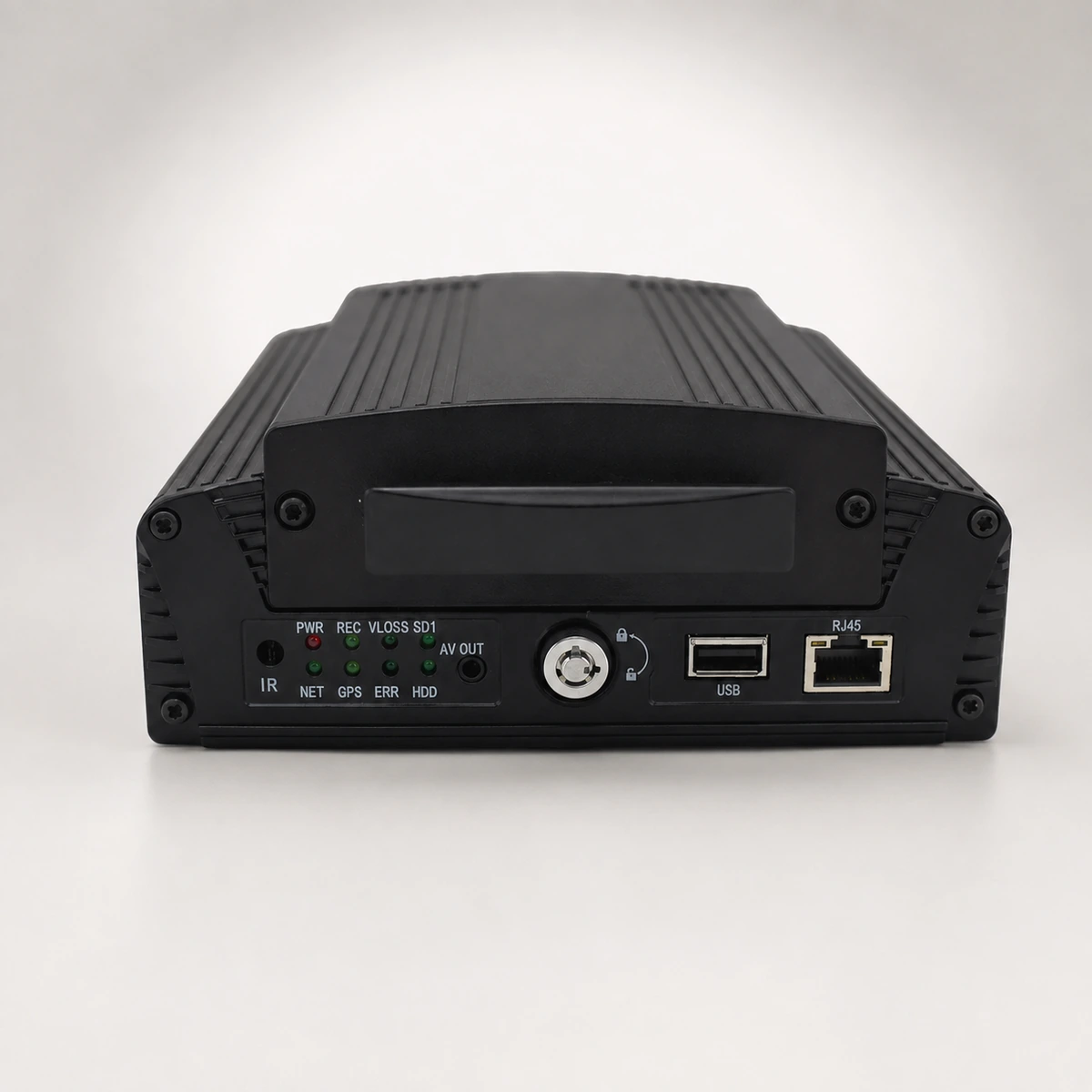 Xignal · HDD Mobile DVR
M710(G4F)
+4 TB drive−720p−H.264 only
The disk based entry point. Far more storage on the vehicle, but 720p and a much larger box.
Xignal · HDD Mobile DVR
M710(G4F)
+4 TB drive−720p−H.264 only
The disk based entry point. Far more storage on the vehicle, but 720p and a much larger box.
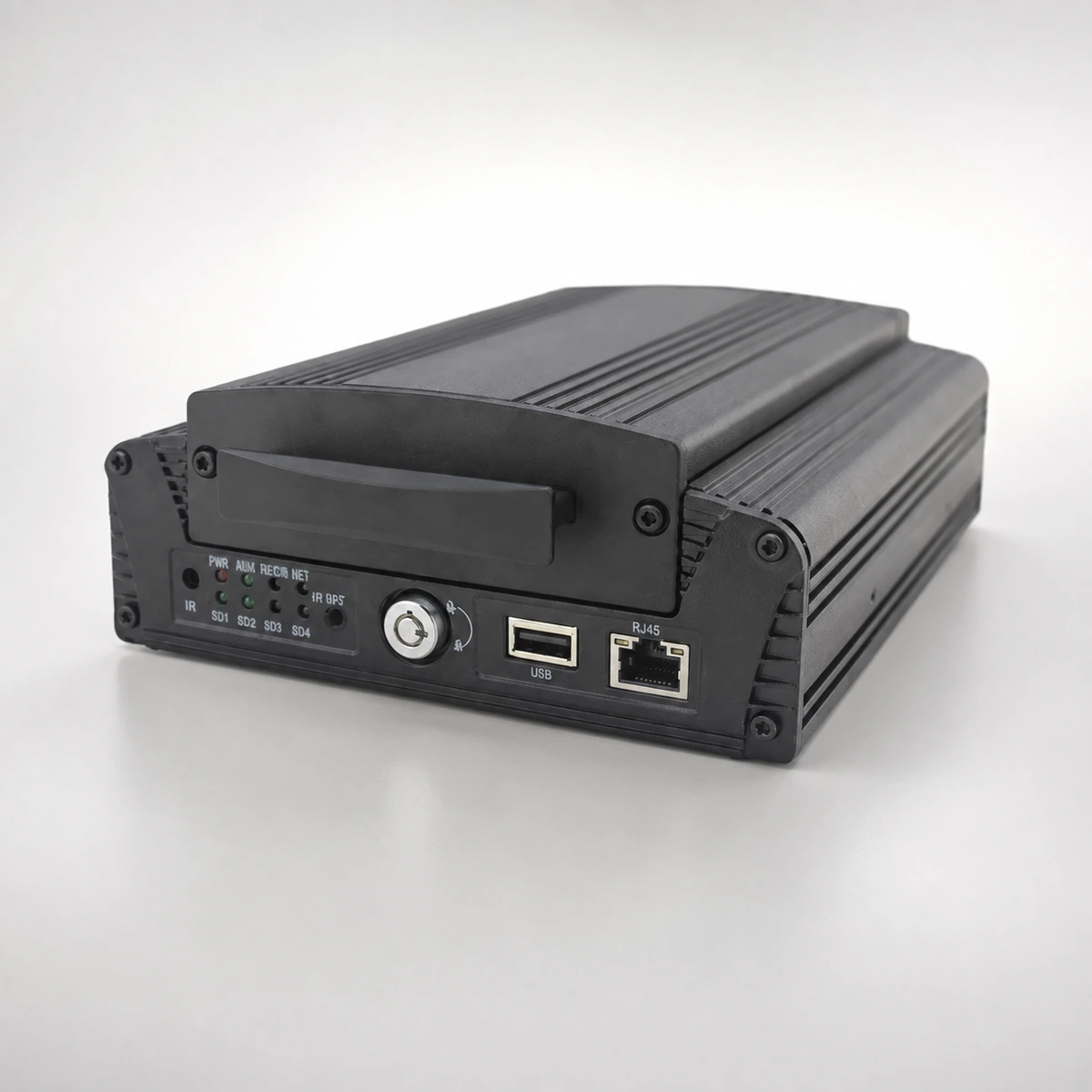 Xignal · Hybrid Mobile NVR
M720(G4F)-IP
+IP channels+ONVIF+4 TB drive
Adds IP cameras and a built-in switch, for a fleet moving off analogue.
Xignal · Hybrid Mobile NVR
M720(G4F)-IP
+IP channels+ONVIF+4 TB drive
Adds IP cameras and a built-in switch, for a fleet moving off analogue.
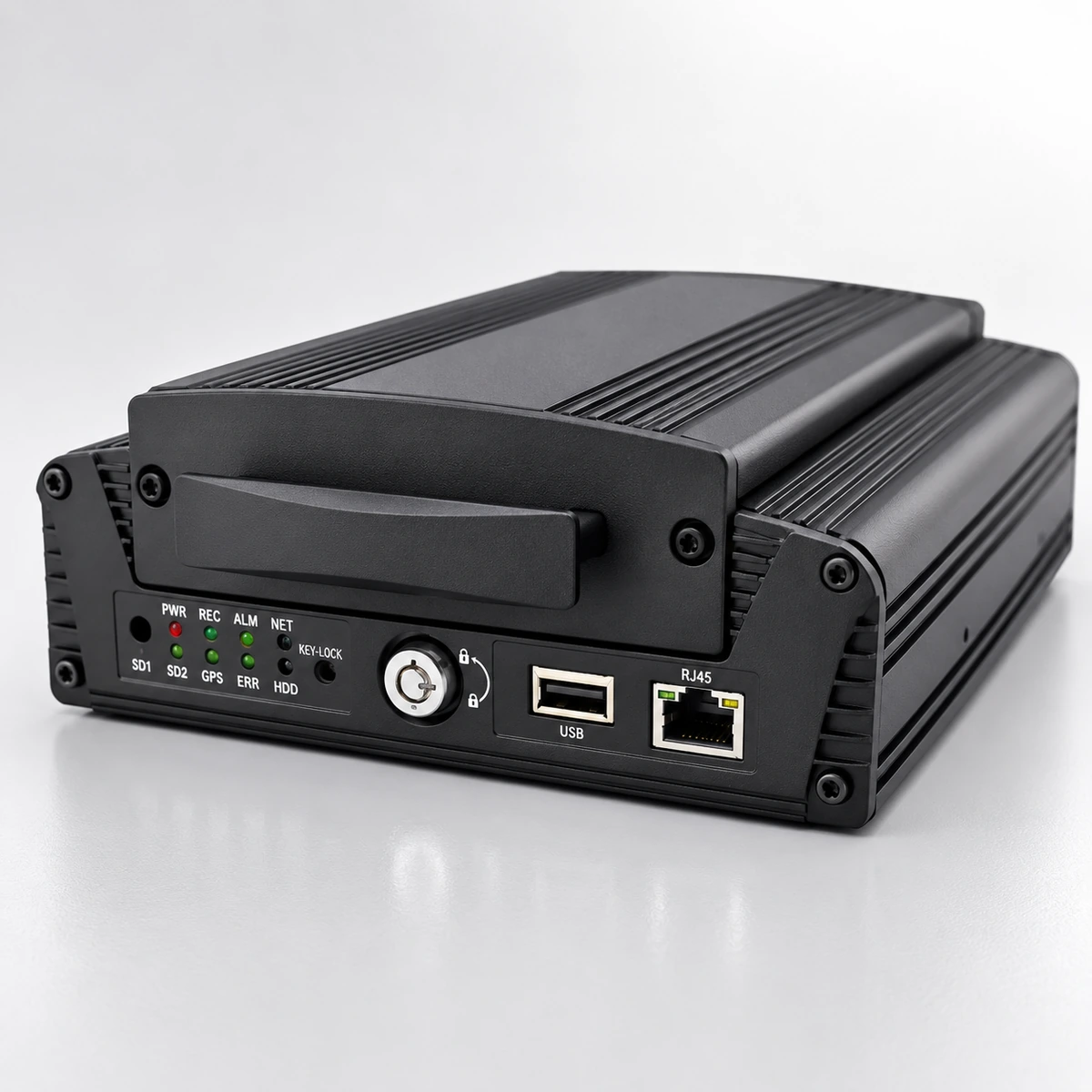 Xignal · HDD Mobile DVR
M728(G4F)
+8 channels+4 TB drive
Eight channels on a disk, which is the recorder that covers a school bus.
Xignal · HDD Mobile DVR
M728(G4F)
+8 channels+4 TB drive
Eight channels on a disk, which is the recorder that covers a school bus.
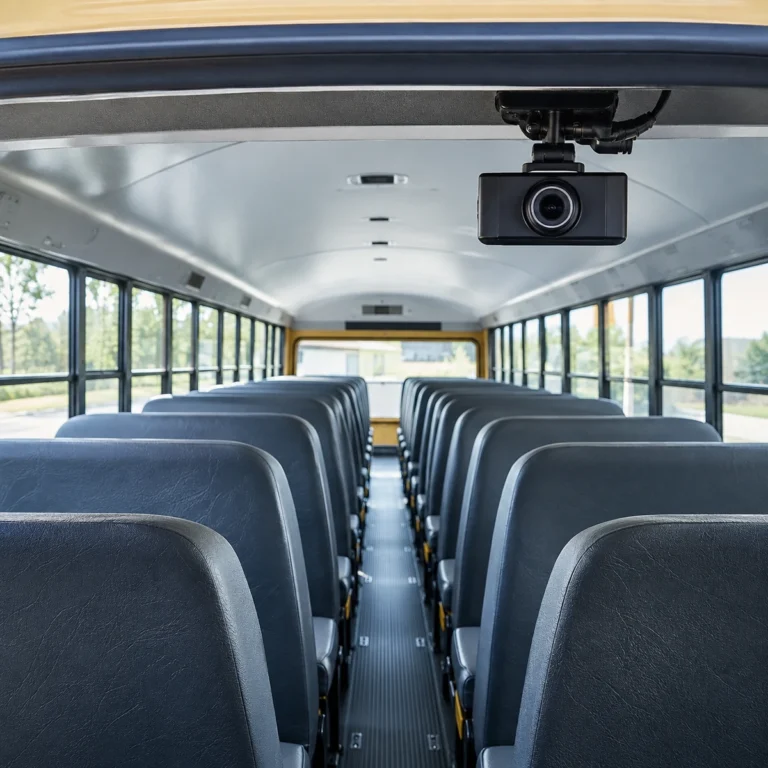
fleet and duty of care rules
The M605 mobile DVR against common requirements
At four channels this is not a school bus recorder, and no configuration of it will be. Where it earns its place is the driver behaviour side of a fleet policy, on the light vehicles that a bus operator also runs. This is what applies, and what it asks of the system rather than of the box.
- Not a school bus recorder: school transport requires seven cameras. Four channels cannot cover that, so specify the eight channel M728(G4F) for buses.
- Telematics on heavy vehicles: many authorities require driving hours, harsh braking, acceleration and speeding to be reported on heavier vehicles, and licensing can depend on it.
- Driver behaviour on the record: fatigue, distraction, phone use and smoking are detected by the DSM camera and raised as alarms, which is what a duty of care policy is usually asking for.
- Blind spot cover on turns: the blind spot system watches the side the driver cannot, which is where vulnerable road users are struck.
- Retention sized on the server: two SD cards are a rolling buffer. Any retention period longer than the cards hold is met by the server, not by the recorder.
- Position from an approved provider: the built-in GPS and BeiDou module reports position, and the link to the approved provider is configured at commissioning.
- Encrypted storage and an authorised user register: where footage documents a violation, the evidence rules that apply govern the server it lands on. The recorder itself offers two password levels, user and administrator.
Get a price for the Xignal M605
Tell us the vehicle type, how many cameras each vehicle needs, whether you want driver monitoring, forward warnings or blind spot detection, and how long footage has to be retained. If the vehicles already carry cameras, mention what they are, because this model takes AHD only.