Home  ›  How It Works

How body cameras work

The whole chain, from the camera on the officer to the evidence in the case file.

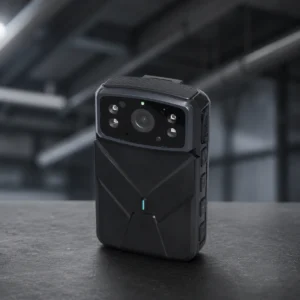
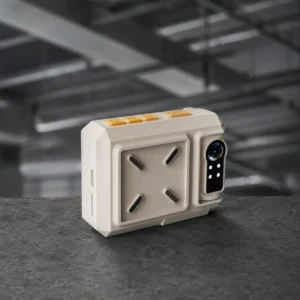
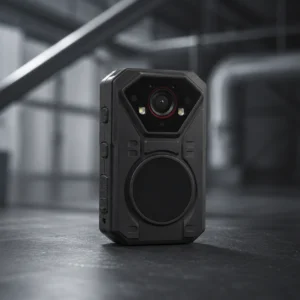
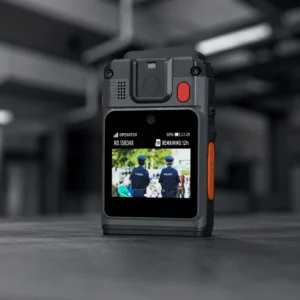
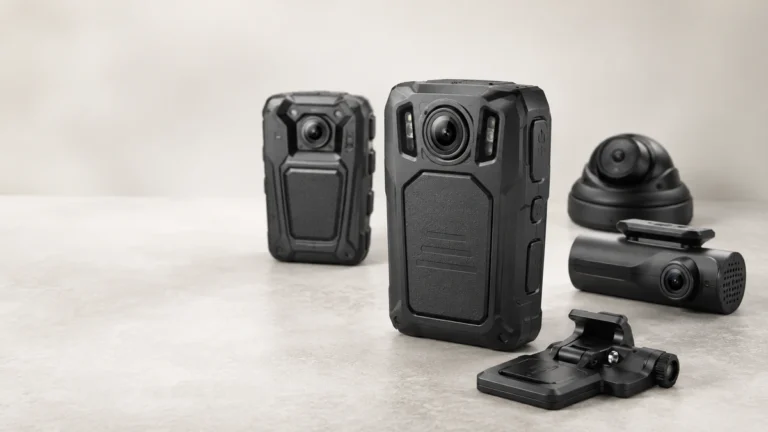
Two body-worn cameras with a dome camera, a dash camera and a mount clip on a light surface
Capture

One shift, start to finish

Four steps, from picking the camera up to putting it back.

Step 1 of 4 Swipe for the next step

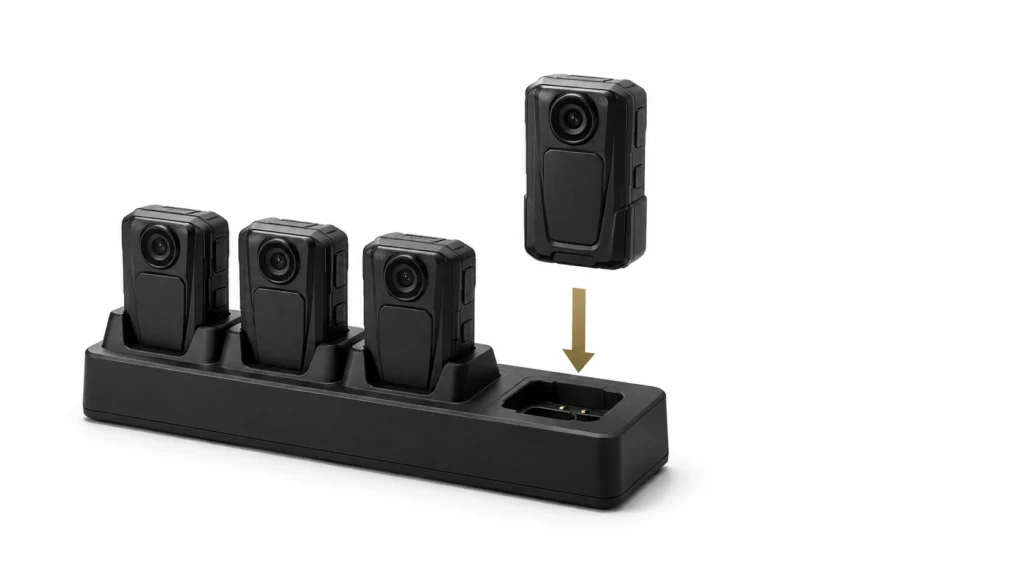
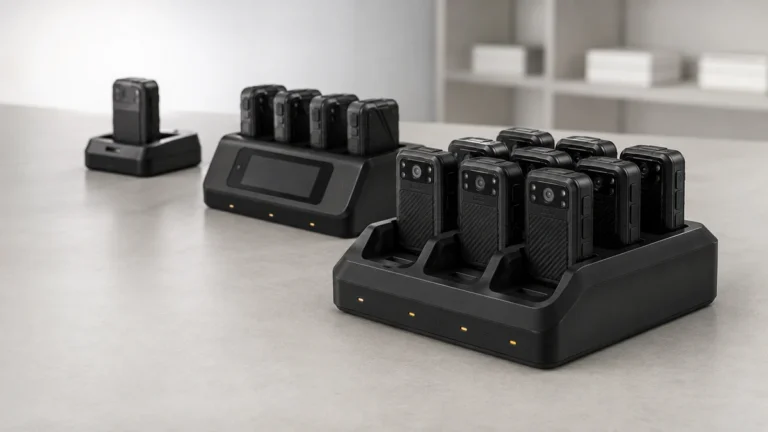
Body cameras charging in a multi-bay docking station at the start of a shift

The officer picks up a camera at the start of the shift.

Officer on patrol in the UAE wearing a body camera on a chest harness

One press starts the recording. Nothing on the camera can edit or delete it afterwards.

Offline and Wi-Fi models hold everything until the camera is docked.

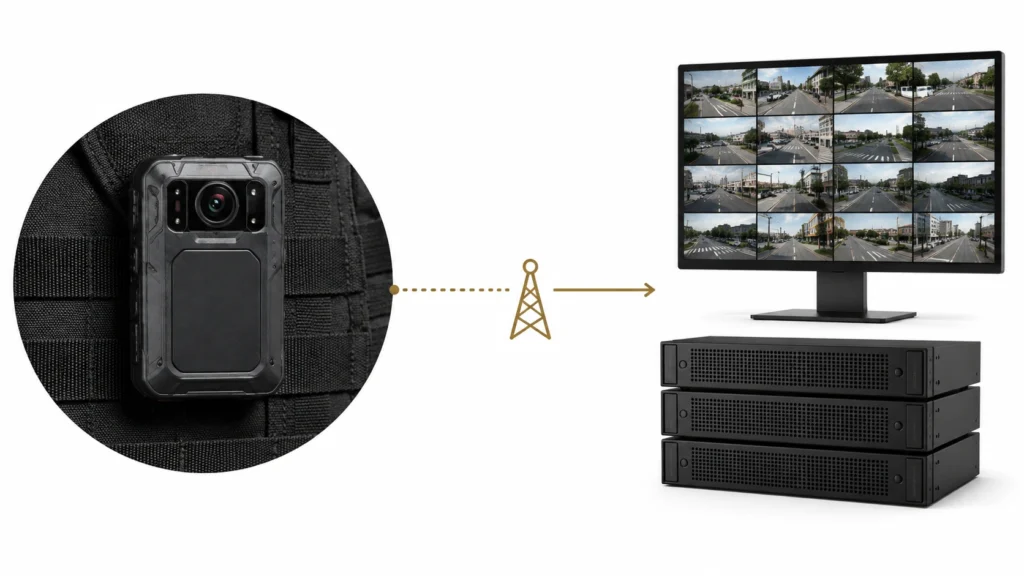
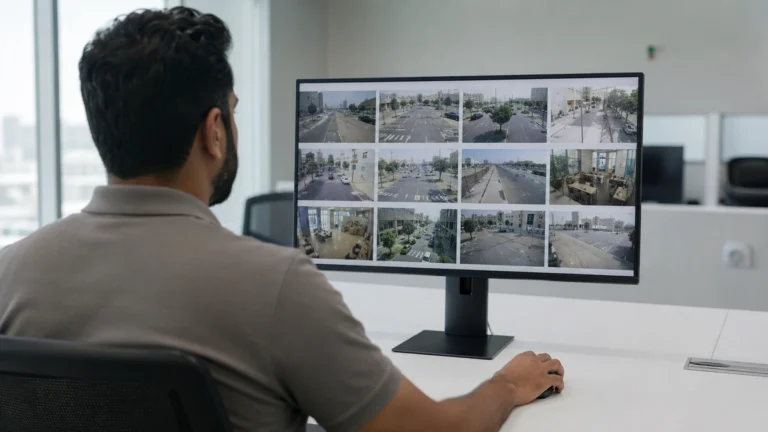
Control room operator watching a live body camera stream beside a location map

A control room can watch what the camera sees while the officer is still on scene.

4G and 5G models stream over the mobile network or Wi-Fi.

Officer returning a body camera to its docking station at the end of the shift

At the end of the shift the camera goes back into a bay. That is the officer’s last involvement with the footage.

Explore by type

From frontline personnel to emergency response and fleet operations, choose the camera designed for your mission.

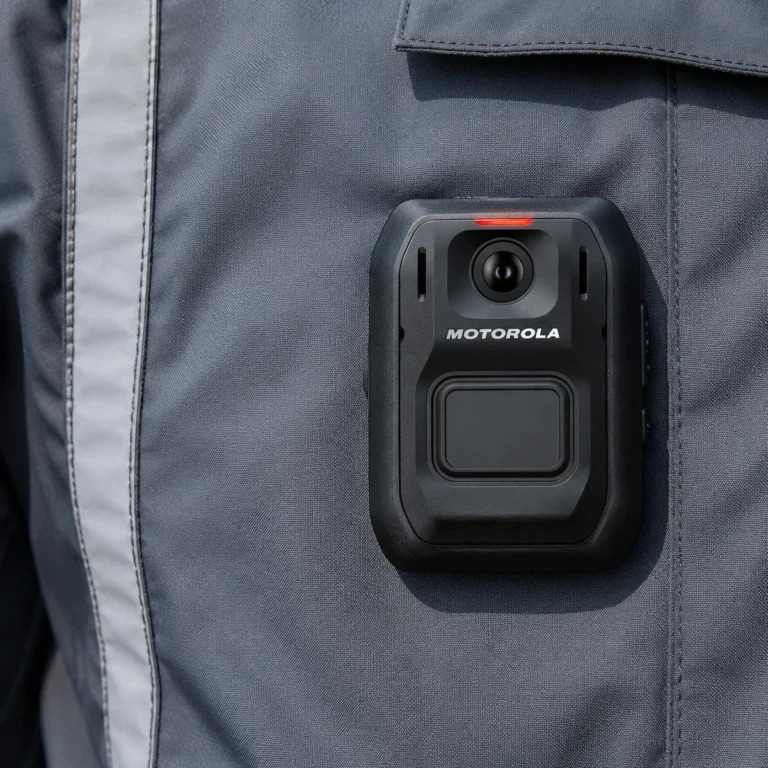
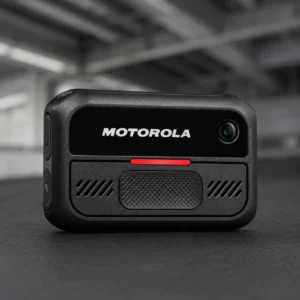
Motorola V500 body camera mounted on a grey uniform jacket with reflective trim, lens and recording indicator facing forward
Worn on the body

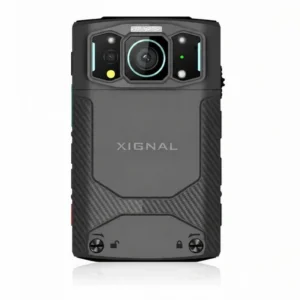
Body-worn cameras

Chest or shoulder mounted, worn for a full shift. Nine models, some compact, some 5G with a spare battery.

Camera mounted on the front of a white safety helmet, with a spare battery alongside
Worn on the helmet

Helmet cameras

For motorcycle units, marine patrols and anyone in breathing apparatus. Anywhere a chest mount will not sit, or will not stay pointed at the incident.

Dash camera mounted on a vehicle windscreen beside the rear-view mirror
Mounted in the vehicle

Vehicle cameras

Dash cameras, multi-channel recorders and PTZ units for patrol cars, school buses, ambulances and fleet. Footage lands on the same server as the body-worn range.

Extract

How the docking station works

Four steps, and an operator performs none of them by hand.

01

Docked

Contacts in the bay carry power and data at the same time. There is no cable to connect and no card to pull out.

02

Identified

The dock knows which camera is in the bay, and on some systems which officer signed it out for the shift.

03

Transferred

Files move across carrying their metadata. Nothing is renamed and nothing is dragged between folders.

04

Indexed

Footage lands on your server searchable by officer, device and time, while the camera clears and charges for the next shift.

Analyze

How the evidence software works

Where the footage lives once it leaves the dock.

01

Evidence arrives

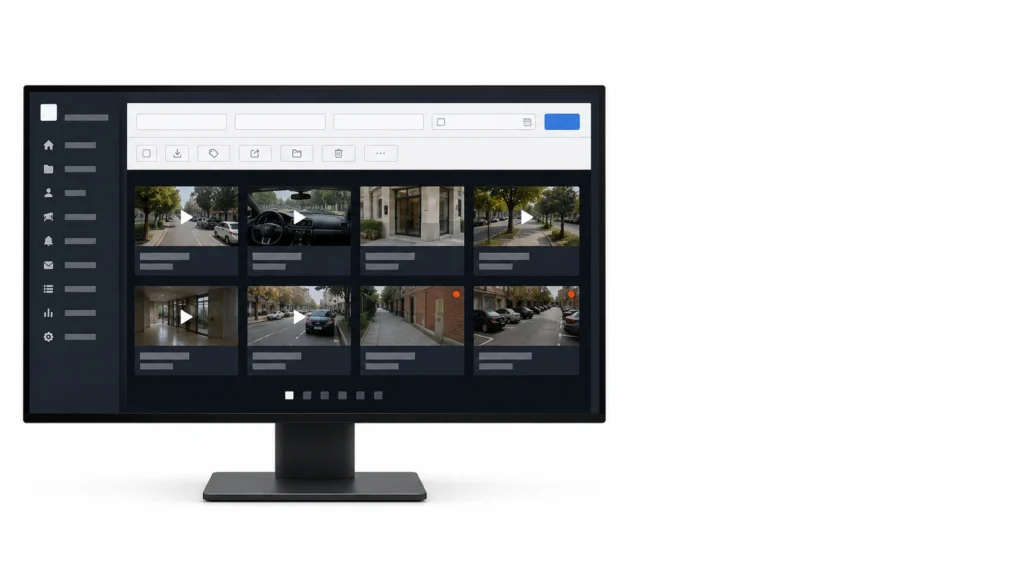
Footage lands from the dock with its audit trail attached: who recorded it, when, and on which device.

02

Built into a case

Find a recording by officer, device or time, tag it, and attach it to a case file with the rest of the evidence.

03

Shared under permission

Release goes to named users against a recorded purpose. The original file is never edited and every action is logged.

Common questions

The ones that come up most about how the chain works.

No. Offline units record to encrypted internal storage and transfer everything when they are docked, with no connectivity required at any point. 4G/5G models add live streaming where operations need it, but that is an option rather than a dependency.

An offline camera records to encrypted internal storage and transfers the whole shift when it is docked, or over Wi-Fi once it reaches base. A 4G or 5G camera does the same, and also streams to a command centre while the incident is still running. Read the full answer

Across the range we supply, published continuous recording runs from 9 to 12 hours on one charge, and 13 hours on the helmet unit, which carries a detachable second cell. Models with a swappable cell extend past their figure without returning to a dock.

Through a dock. The camera is placed in a bay at the end of the duty, the files transfer to your server and the camera charges at the same time. Docks are brand-specific.

No. Footage is written to storage the wearer has no write access to, and every file carries the operator ID and a tamper-evident timestamp. That is what makes the recording defensible later under review or in court.

On a private server you control, deployed on-premise or hosted in-country. The system is built so that evidence does not leave the jurisdiction that collected it, and there is no dependency on a third-party public cloud.

See it running in your environment

We walk the full chain with you, then specify the models that fit.

Body Camera Models

Two ways to deploy. Browse below.

Request a Demonstration

Tell us where the cameras will be deployed and we will arrange a demonstration with the right models for your sector.

Connect on WhatsApp