Klick Fast stud and dock
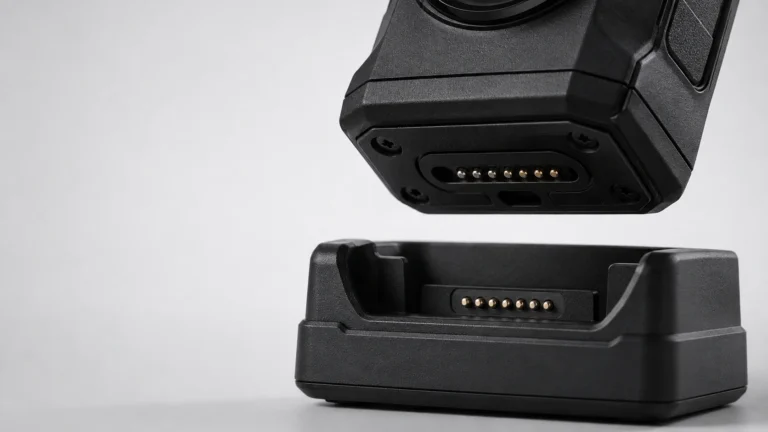
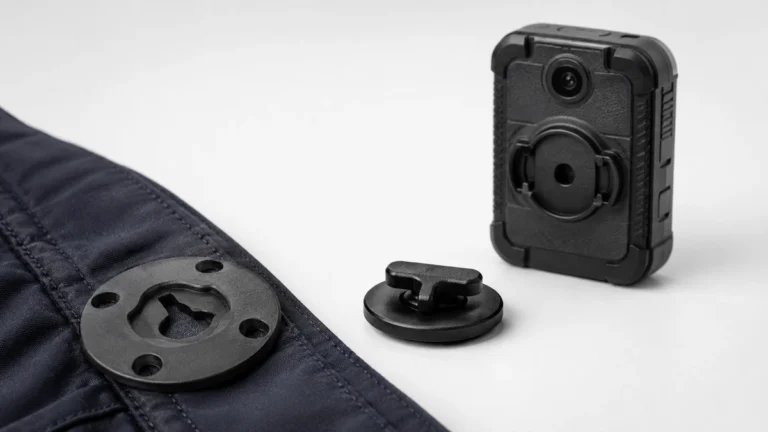
A stud fitted to the garment and a dock plate on the camera. It twists on and off in one movement and holds the camera square on the chest through a shift.
- Fits
- Duty shirts, tactical vests, tabards

Home › Industries › Commercial Security
Body-worn cameras, mounts, docking and evidence software for guarding companies. Almost nowhere requires a guard to wear one. When a camera appears it is the client contract asking for it, and the guarding company that has to produce the footage afterwards.
What the officer wears and who asks for the footage decide the specification.
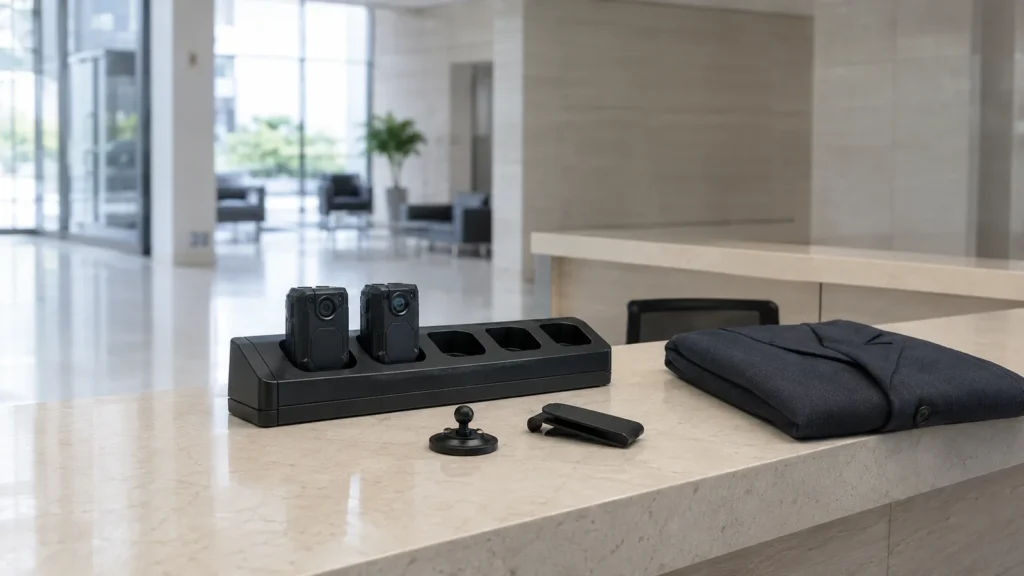
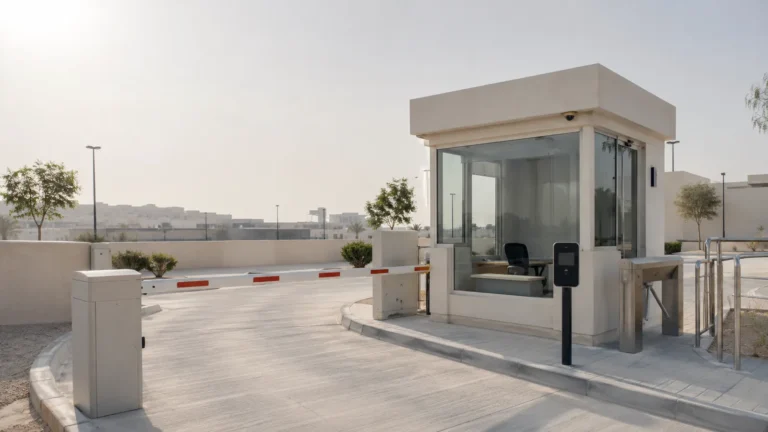
A gatehouse or a lobby, held by one officer for a full shift. The recording exists whether or not anyone was watching.
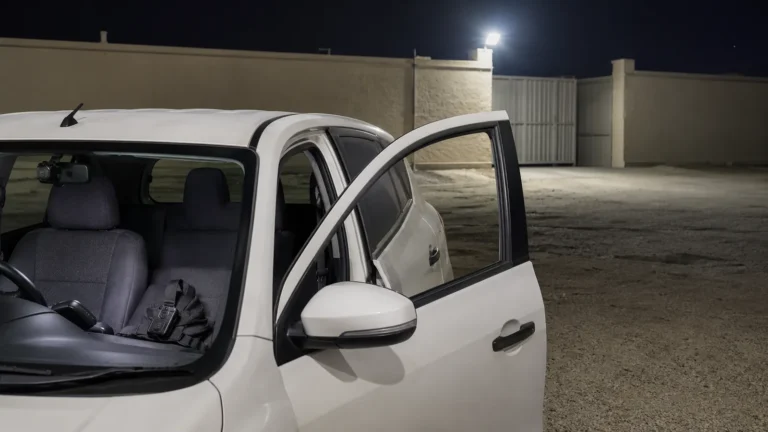
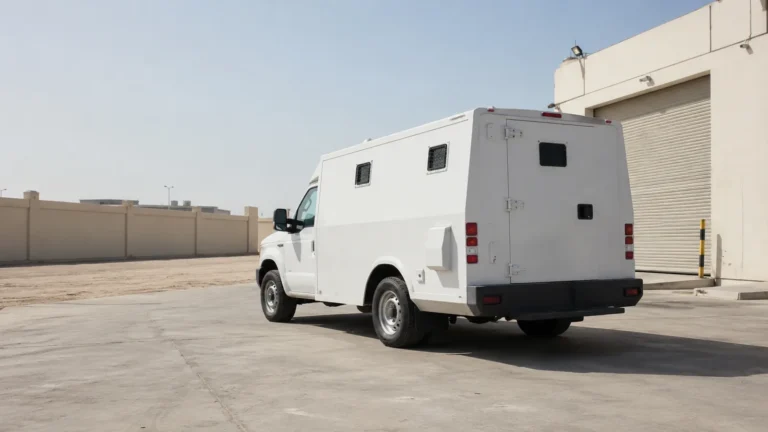
Arriving alone at a site nobody else is on. The worn camera pairs with the recorder in the patrol vehicle. Both land on the same server.
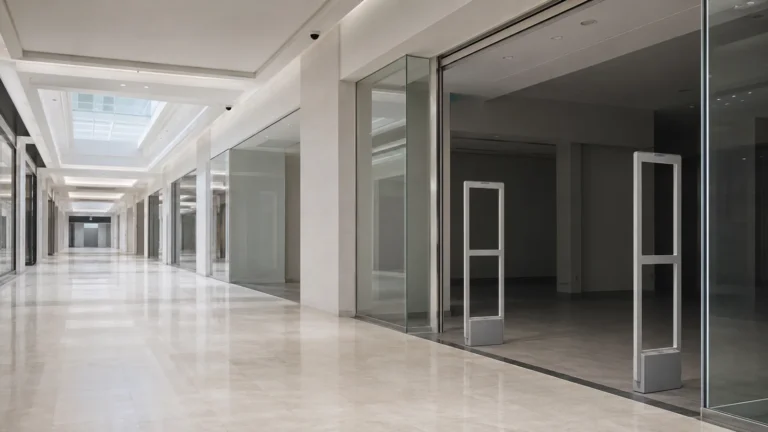
Detentions at the door, lost property, and the argument at the service desk, almost none of which is ever looked at again.
Kit goes out to officers who may never have worn it, and comes back the same night.
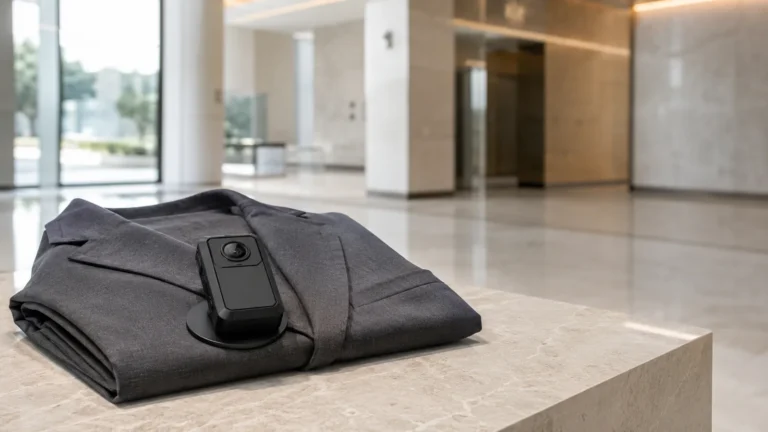
An officer in business dress works reception, concierge and floor patrol. A chest harness over a suit jacket defeats the reason they were put in one.
A crew of two, a fixed route, and a handover at each end. On the models that pre-record, the approach to the vehicle survives the button press.
The practical reasons guarding companies buy them.
A resident says an officer was rude. The recording settles what happened, and most complaints close there.
Hourly rounds get signed off by the person being checked. A timestamped file with position written into it is a different kind of record.
Someone is pushed or threatened on a gate, and there is a record of it that does not belong to the officer.
Rotating posts and real turnover. The camera binds to the officer at the moment it is signed out, so the recording carries a name.
On the models that carry a SIM, a supervisor can join a post without waiting to be called out to it.
Footage is on the server by the end of the shift, before a resident's phone video reaches the property manager.
Guarding is priced per officer per month, so this is a running-cost decision.
AFor static posts that begin and end at the same guardroom, where nobody needs to watch live.
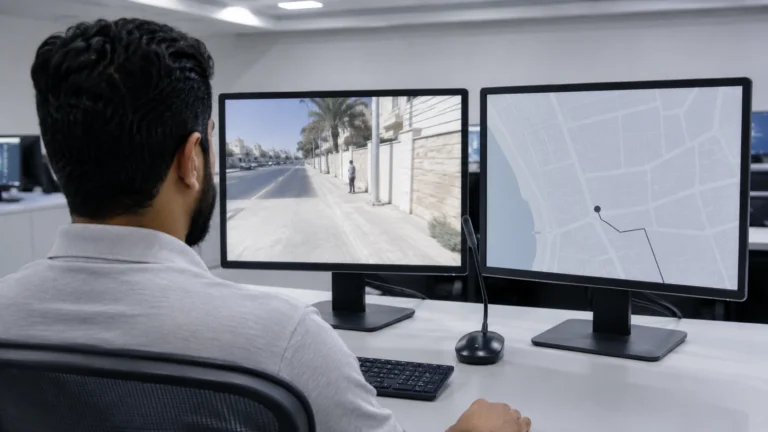
BFor mobile patrol, cash in transit and lone officers on remote sites.
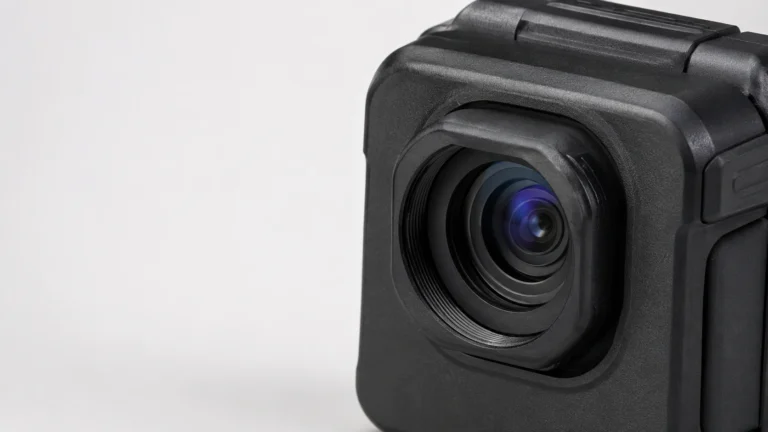
CFor the few posts where an incident is likely to be enlarged or challenged later.
Sizing by post count, retention and resolution is on video infrastructure. Send us the post list and we will work the figure back from it.
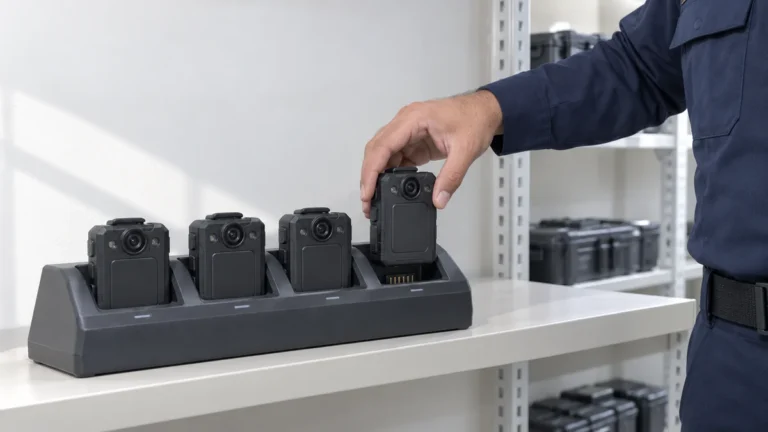
The camera is one part of what a contract actually needs.

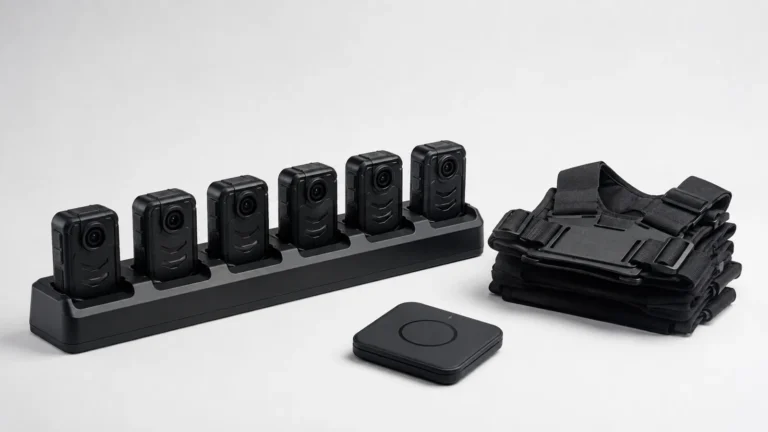
Sized by how many cameras come off post at once, not by the headcount on the contract. An officer takes one from the rack at handover and returns it there.
How docking works
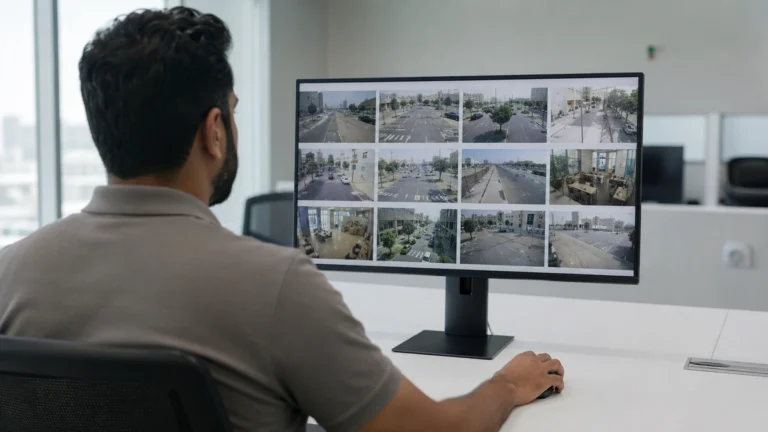
The server the footage lands on, in your own rack or a data centre you choose. Sized to how many posts you cover and how long the contract makes you keep recordings.
Video infrastructure
All footage in one place, whichever camera recorded it. You set which supervisors see which client's footage, and how long it is kept before the server deletes it.
Evidence managementPatrol vehicles feed the same server and the same software. See vehicle cameras.
An officer in a blazer cannot wear what a response officer wears.

A stud fitted to the garment and a dock plate on the camera. It twists on and off in one movement and holds the camera square on the chest through a shift.
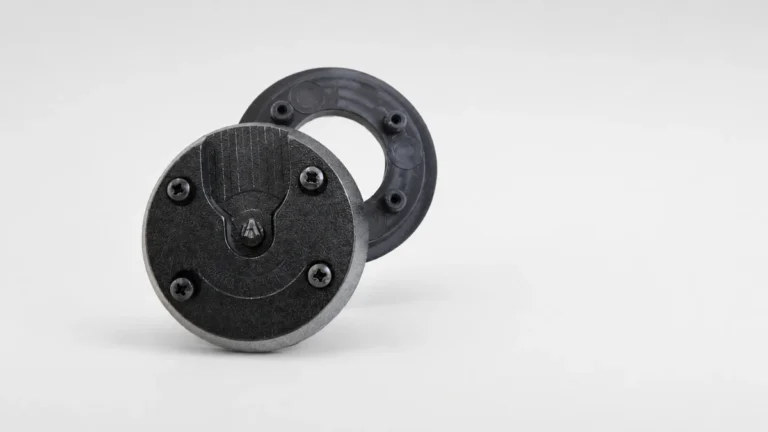
A plate in front of the fabric and a magnet ring behind it. Nothing is fitted to the garment and nothing is pierced, which is what makes it the route for business dress.
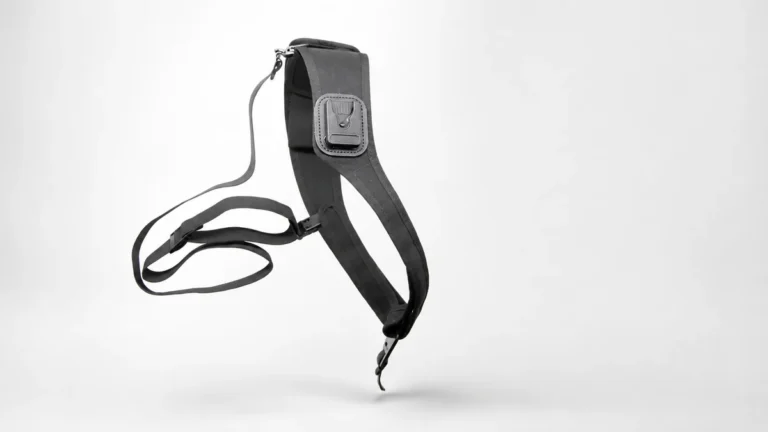
A padded strap over the shoulder that carries the camera clear of a hi-vis vest or coveralls, and takes the weight off a pocket seam on a twelve-hour post.
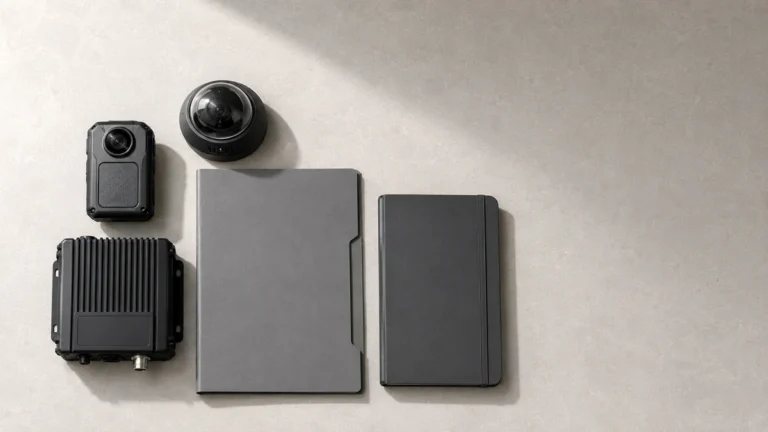
Every mount we supply, and which models each one fits, is set out on Accessories.
The ones contractors ask when scoping a first deployment.
Yes, and in most places there is no separate licence for the camera. Privacy and data protection law govern it, and both are met by a written policy, signage and controlled access.
Usually not. Regulators approve the security system installed at a premises, and a camera an officer wears is generally not part of that installation.
Treat it as yes. An officer who states the camera is running, at a site with signage and under a policy, stands in a very different position.
The clip is exported as a permissioned action and the export is logged. The requester gets a copy and the original recording stays where it was.
The mount decides it before the specification does. A lapel or magnetic mount needs a small body, while officers in hi-vis can carry anything on a harness.
Posts covered at once rather than officers on the contract, whether the cameras carry SIMs, the resolution you record at, and how long the contract makes you keep footage.
Short guides on choosing a camera, on the rules, and on how footage leaves the device.
View All Resources
What the law asks of a recording, and what it does not.
Read the article
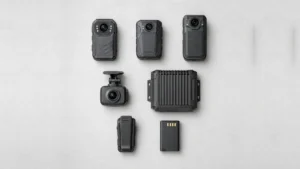
The questions to settle before you write a specification.
Read the guide

How footage should leave the camera, and what each route costs to run.
Read the guide
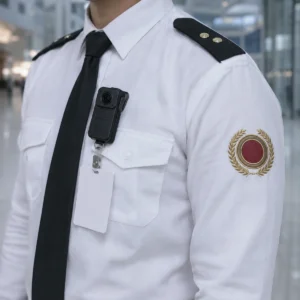
Where a camera is actually required, and where it is a client asking.
Read the articleWe will show you the whole chain: cameras, mounts, docking, server and evidence software. Send your post list and the retention your client contract asks for, and we will specify against them.
Complete body-worn camera systems for government and enterprise operators across the UAE and GCC.
© 2026 BodyCamera.ae
Two ways to deploy. Browse below.


Tell us where the cameras will be deployed and we will arrange a demonstration with the right models for your sector.