Home › Vehicle Cameras › Xignal M720(G4F)-IP
Xignal · Hybrid Mobile NVR
Xignal M720(G4F)-IP 8 Channel Mobile NVR
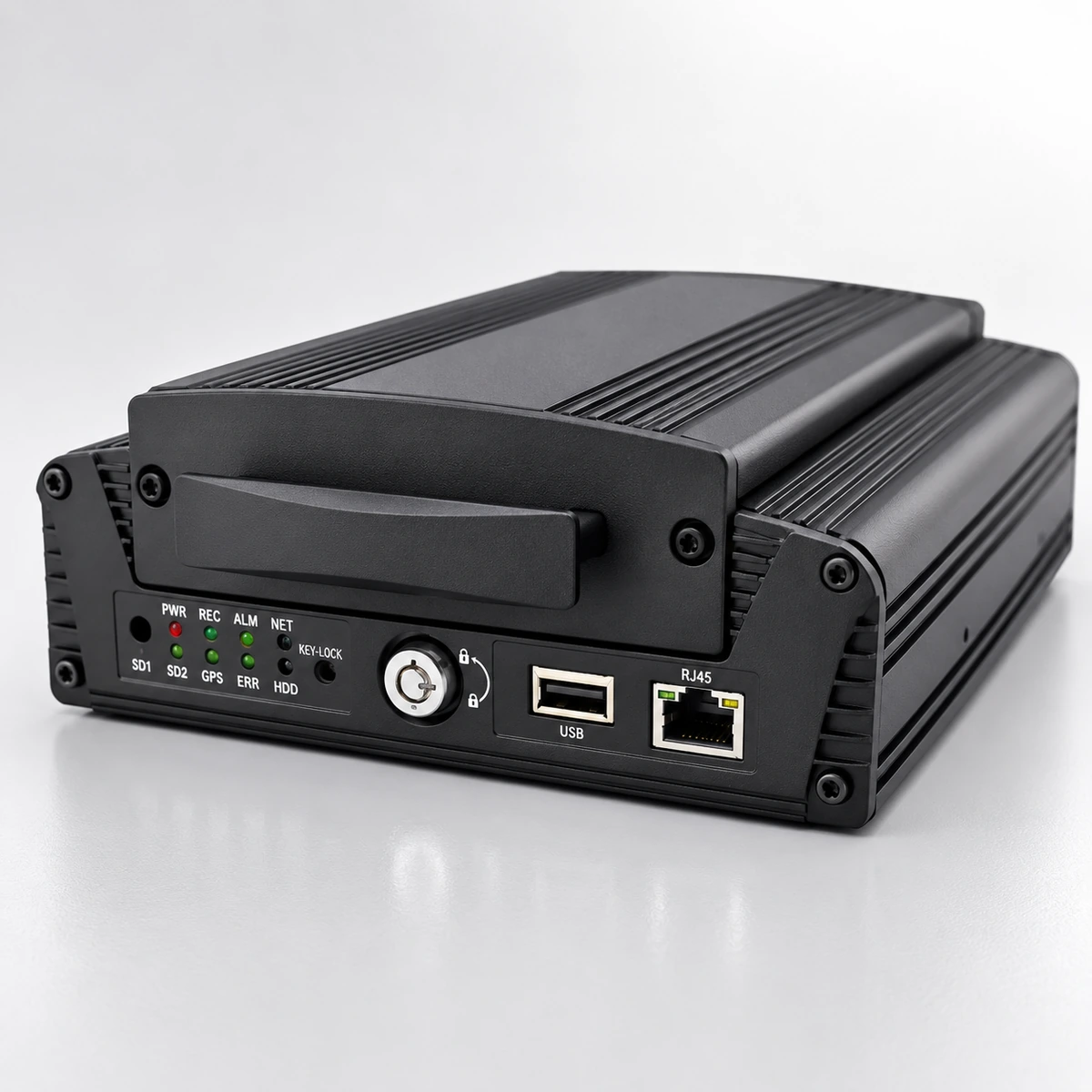
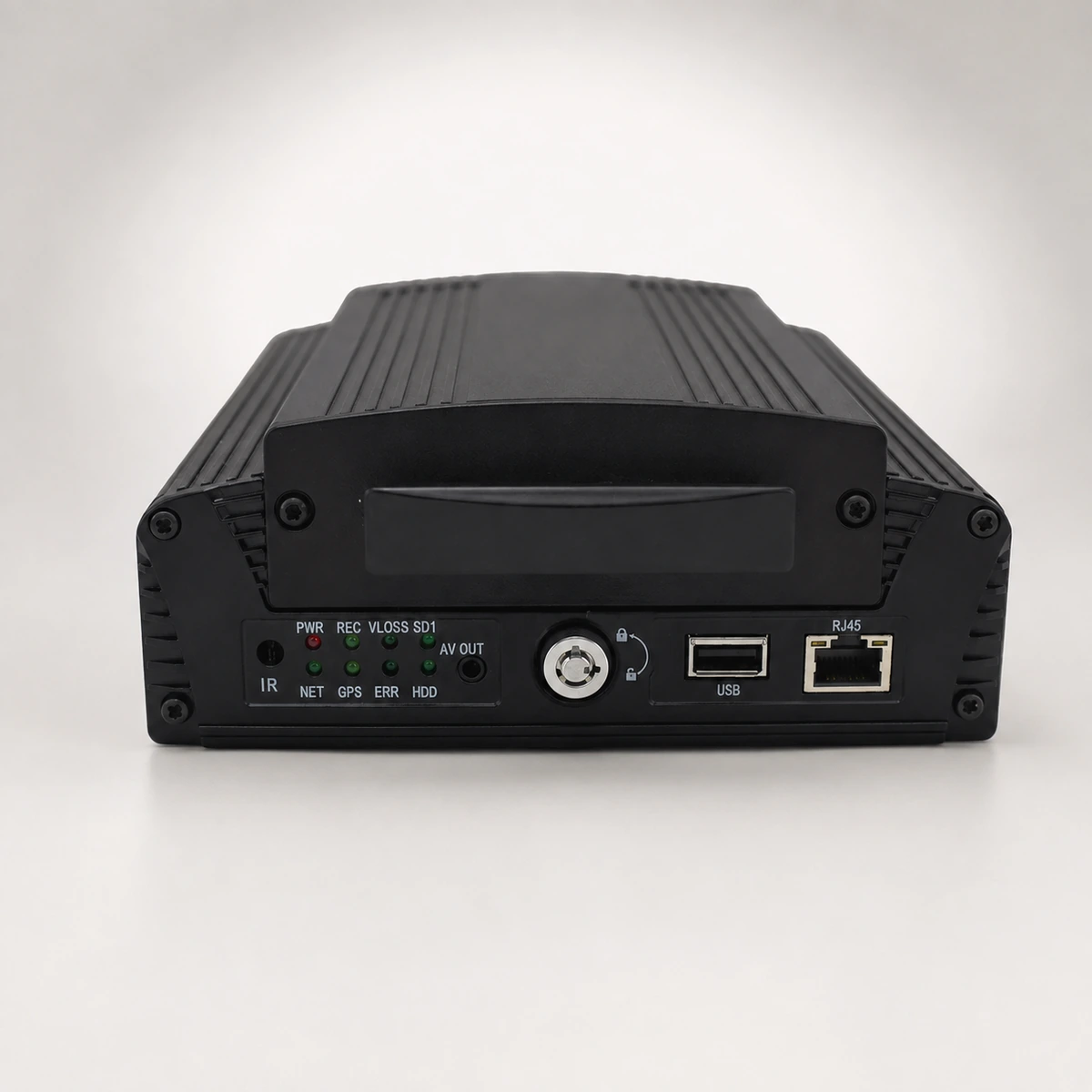
The networked hybrid. Four analogue cameras plus four IP cameras on one recorder, five to eight channels in total, with a built-in switch and ONVIF support so the IP side is wired and configured without a separate network box. It also carries plate recognition and the ADAS and DSM driver AI options.
Supplied, fitted and commissioned
Overview
What the M720(G4F)-IP mobile NVR does
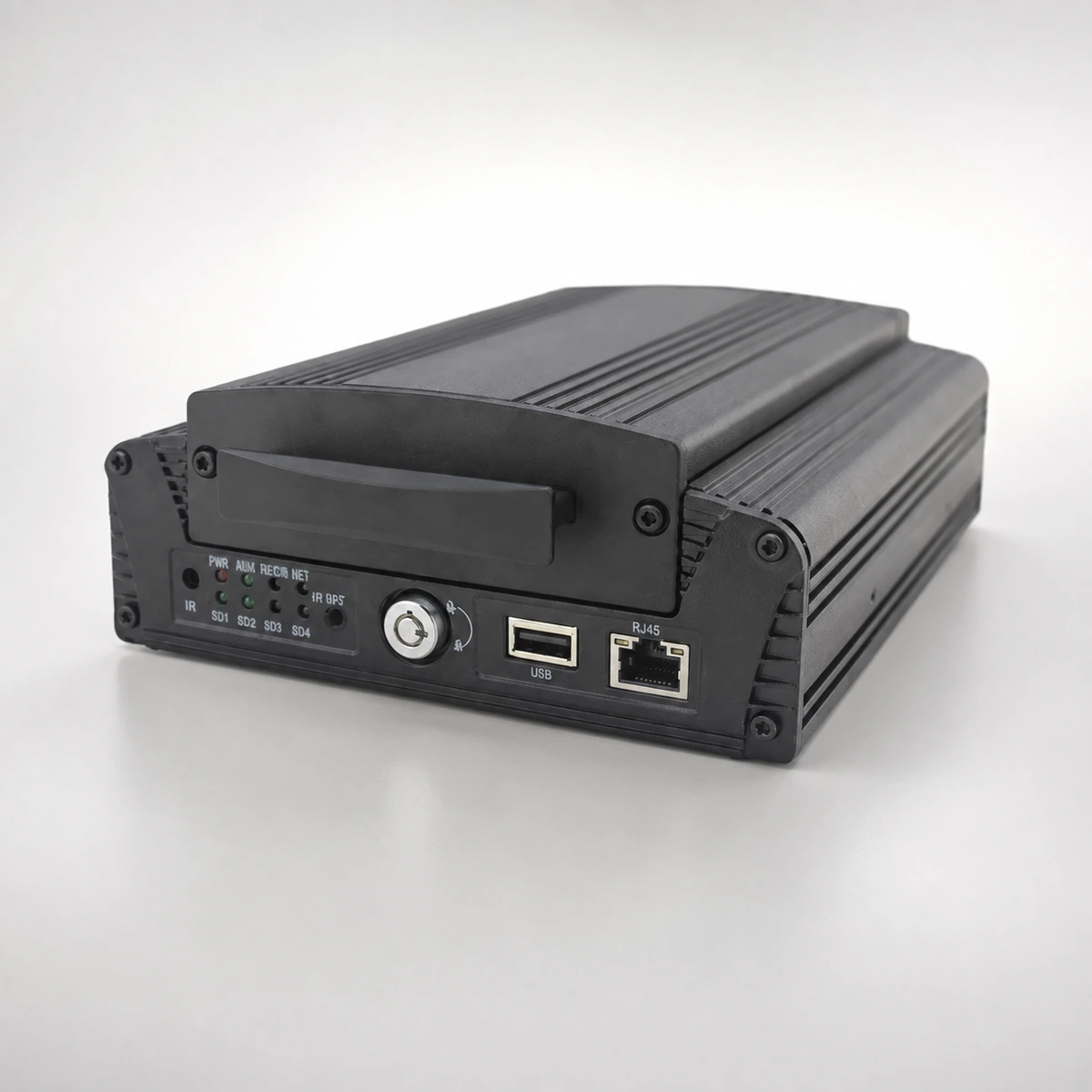
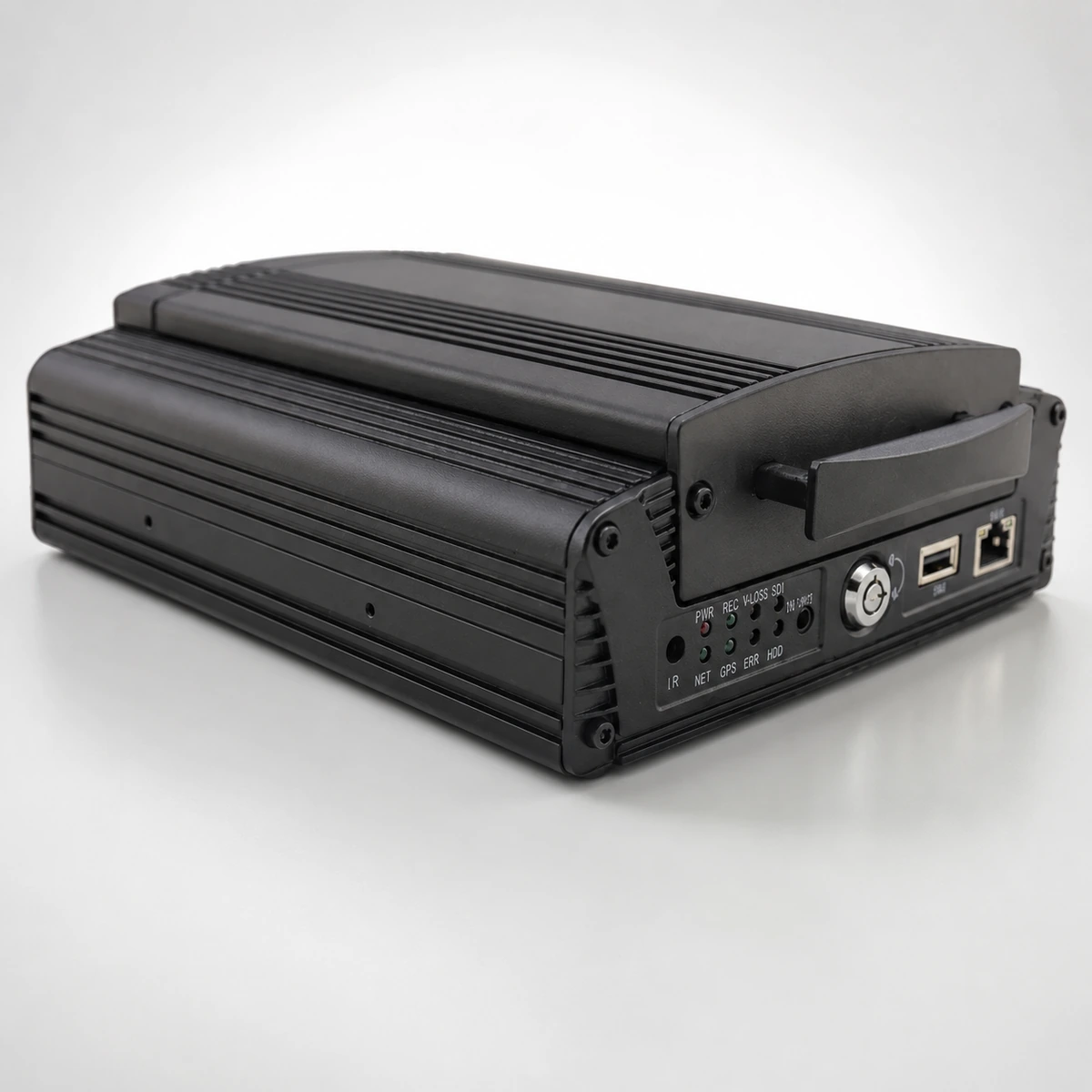
The smaller of the two hybrid recorders, and the more networked one. Four analogue inputs take AHD, TVI or CVI cameras over cabling already on the vehicle, and four IP channels carry network cameras, for five to eight channels in total. What sets it apart is that the IP side is handled on the box: a built-in switch means the cameras plug into the recorder rather than into a separate network switch, and ONVIF support means the cameras do not have to come from one manufacturer.
It also carries the driver AI that the larger hybrid does not. ADAS connects a forward facing camera for lane and collision warnings, DSM connects a cabin facing camera that detects fatigue, distraction, smoking and phone use, and the recorder reads plate licence numbers. With a 4TB drive and eight channel playback, the trade against the M728(G4F)-IP is channel count rather than capability: that model takes eight analogue inputs and adds a heated drive bay, but publishes no switch, no ONVIF and no driver AI.
Where it fits best
- Patrol cars, vans and light vehicles moving to IP cameras without a separate network switch
- Mixed installations where the IP cameras come from more than one manufacturer
- Fleets that want lane departure, collision and driver fatigue warnings on the same recorder
- Operators needing plate recognition alongside ordinary recording
- Vehicles where four analogue views and a few network cameras is the whole requirement
Not sure this is the right recorder? See how many channels your vehicle needs.
Full specifications
Every published figure
The complete Xignal M720(G4F)-IP specification, as published by the manufacturer.
Four analogue, plus one to four IP
The top row is the four analogue inputs, taking AHD, TVI or CVI over cabling that is already on the vehicle. The row below is the one to four IP channels. Those plug straight into the recorder, because the switch is built in, and ONVIF means they do not all have to come from the same manufacturer.
- Analogue channels
- 1 to 4 channels, AHD, TVI or CVI
- IP channels
- 1 to 4 IP cameras at 1080p
- Total channels
- 5 to 8
- Resolution
- 4 × 1080P or 4 × 720P on the analogue side, plus 4 × 1080P IP
- Also records
- 4 × D1, 4 × HD1, 4 × CIF
- Video compression
- H.264
- Image quality
- 0 to 7 levels, 0 is the highest
- Video input
- Aviation connector, 1.0Vp-p, 75Ω
- Video output
- 1 CVBS aviation, 1.0Vp-p, 75Ω. One channel full screen or a four channel view
- Playback
- Up to 8 channels at once, with stop, fast and slow
- Event recording
- Pre-recording on alarm events, motion detection alarm and alarm linkage
- Built-in switch
- Yes. The IP cameras connect to the recorder directly
- Camera protocol
- ONVIF
- Wi-Fi
- 2.4 GHz or 5 GHz
- Audio compression
- G.726 at 8 KB/s
- Two way audio
- Two way talking and trunking intercom over 4G or Wi-Fi
- Main recording
- 2.5 inch HDD, up to 4 TB
- Mirror recording
- SD card, up to 128 GB
- Backup
- Front panel USB, to a U disk or a hard disk
- Power-loss hold
- UPS keeps recording for about 7 seconds after a power failure
- Cellular
- Built-in 4G module, optional. TDD-LTE, FDD-LTE, WCDMA
- Live view
- Real time remote viewing over 4G, 3G or Wi-Fi
- Positioning
- Built-in GPS and BeiDou module
- ADAS
- Connects an ADAS camera for real time forward collision and lane warnings
- DSM
- Connects a DSM camera that detects fatigue, distraction, smoking and phone use
- Plate recognition
- Recognises car plate licence numbers
- Alarm input
- 6 channels, plus 1 AD input and an impulse speed input, with alarm linkage
- Alarm output
- 2 channels. Drives a light or sound alarm, or an oil or power cut off
- Voice call
- Supported
- TTS broadcast
- Text to speech voice announcements
- Serial expansion
- LED advertisement panel, oil sensor, car OBD, two way talking
- Power input
- Wide voltage, DC +10 V to +36 V
- Power output
- +12 V at 1.5 A, +5 V at 1.5 A
- Operating temperature
- −20 °C to +70 °C
- Dimensions (D × W × H)
- 218 × 161 × 65 mm
- Weight
- 2.2 kg
- Operating system
- Linux
- Menu languages
- English, Chinese, or customised
- IP rating
- Not published
- Certifications
- Not published
Figures published by the manufacturer. One thing worth knowing about the source: its specification table covers this model and the larger M728(G4F)-IP together, and several rows carry two values. The figures published here are this model's, taken from the first of each pair, which the manufacturer's own feature list labels by series. Note also that the analogue inputs take AHD, TVI or CVI but not CVBS, where the M728(G4F)-IP does list CVBS. Where a figure reads Not published, the manufacturer does not state it, which is not the same as the feature being absent.
Supply
What ships, and what the install needs
A mobile NVR is quoted as a fitted system rather than a boxed product, and the manufacturer does not publish a packing list for this model. Confirm exactly what the recorder ships with on your own quotation. These are the parts that go on the order around it.
Ordered with the recorder
- Analogue cameras on the aviation inputs, up to four
- ONVIF IP cameras for the network channels, up to four
- A 2.5 inch hard drive, up to 4 TB
- An SD card for the mirror recording
Fitted on the vehicle
- 4G, GPS and Wi-Fi antennas
- A switched power feed, 10 to 36 V
- Network cabling from the cameras to the recorder
- A monitor on the AV output for commissioning
Specified at order
- The 4G module, if the fleet needs live view
- An ADAS camera for lane and collision warning
- A DSM camera for driver monitoring
- An oil sensor, LED panel or OBD adapter
Accessories
What goes on the order with it
A recorder is one line on a vehicle quotation. These are the parts that make up the rest of it.
Analogue cameras and cabling
- Front road, cabin, rear and blind spot cameras
- AHD, TVI or CVI on the four aviation inputs
- CVBS is not supported on this model
- Aviation cable looms cut to the vehicle
IP cameras and networking
- Up to four ONVIF IP cameras at 1080p
- They plug into the recorder, the switch is built in
- Cameras need not all come from one manufacturer
- Network cabling run to the recorder
Driver AI and storage
- ADAS camera for lane and collision warning
- DSM camera for fatigue, distraction and phone use
- 2.5 inch hard drives up to 4 TB, plus a 128 GB SD mirror
- 4G, GPS and Wi-Fi antennas
Compare
How it sits against the alternatives
Three recorders often considered alongside the M720(G4F)-IP. The full comparison, including the dash cameras and the PTZ units, lives on the range page.
| Xignal M720(G4F)-IP | Xignal M728(G4F)-IP | Xignal M720(G4F) | Xignal M710(G4F) | |
|---|---|---|---|---|
| Analogue channels | 4 | 8 | 4 | 4 |
| IP channels | 1 to 4 | 1 to 4 | None | None |
| Total channels | 5 to 8 | 9 to 12 | 4 | 4 |
| Camera types | AHD, TVI or CVI | AHD, CVI, TVI or CVBS | AHD, CVI, TVI or CVBS | AHD or CVBS |
| Max resolution | 1080p | 1080p at 15 fps | 1080p | 720p |
| Hard drive | To 4 TB | To 2 TB | To 4 TB | To 4 TB |
| Built-in switch and ONVIF | Yes | Not published | Not published | Not published |
| Playback | 8 channels | 4 channels | Not published | Not published |
| Driver AI | ADAS and DSM at order | Not published | ADAS and DSM at order | ADAS and DSM at order |
| Plate recognition | Yes | Not published | Yes | Not published |
| You are here | View the M728(G4F)-IP | Find it in the range | View the M710(G4F) |
Scroll sideways to see every column.
Questions
Before you specify the M720(G4F)-IP
Questions we are asked about this model.
Which of the two hybrids should I specify?
Channel count decides it first: this model takes four analogue cameras, the M728(G4F)-IP takes eight, and both add up to four IP channels. After that the two diverge in what the manufacturer publishes for each. This one publishes a built-in switch, ONVIF support, Wi-Fi, ADAS, DSM, plate recognition and a 4TB drive. The M728(G4F)-IP publishes none of those, and instead publishes a heated drive bay, a longer eight to ten second power-loss hold and a pre-allocated file system, on a 2TB drive. So it is roughly networking and driver AI here against channel count and ruggedness there, not simply a bigger and a smaller version of one product.
What do the built-in switch and ONVIF actually buy me?
The switch means the IP cameras plug into the recorder itself rather than into a separate network switch mounted somewhere else on the vehicle. That is one less box to find space and power for, one less thing to fail, and a simpler loom. ONVIF is the open protocol that lets a recorder talk to IP cameras from different manufacturers, so you are not tied to one camera brand for the life of the vehicle and can replace a failed camera with whatever is available. Neither is published for the M728(G4F)-IP, which is the single clearest reason to choose this model over it.
Does it take my existing CVBS cameras?
No, and this is the one place the smaller hybrid is more restrictive than its siblings. The analogue inputs take AHD, TVI or CVI. CVBS, the older composite standard, is not listed for this model, though it is listed for the M728(G4F)-IP and the analogue M710(G4F). If a vehicle still runs CVBS cameras, either those cameras get replaced or a different recorder is specified. Tell us what is fitted and we will check it before you order.
Is this the answer to an all-IP school bus requirement?
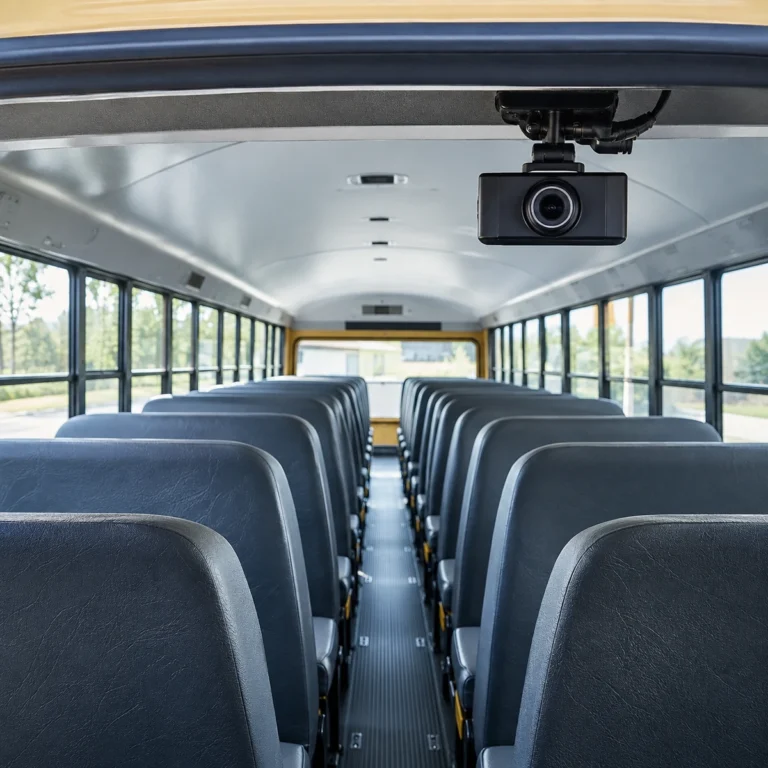
No, and neither hybrid is. Where an authority requires IP cameras for school transport, the requirement is typically seven cameras, four exterior and three interior. This recorder carries four IP channels and the M728(G4F)-IP carries four as well, so neither reaches seven on the IP side. Where the hybrids do fit is the mixed case, a vehicle part way through moving to IP. If the contract is regulated school transport, say so on the enquiry and we will specify against that rule rather than around it.
What do ADAS and DSM do on this recorder?
They are separate camera modules specified at order, not features of the box. ADAS faces forward and gives real time warnings on lane departure and collision risk. DSM faces the driver and detects fatigue, distraction, smoking and phone use. The recorder also reads plate licence numbers. Each camera module occupies a channel, so count them against the four analogue inputs when you plan the views a vehicle needs.
Where do the days of retention actually live?
On the drive in the vehicle first, and on the server after that. The 4TB drive is a rolling buffer sized to the route and the channel count, which on eight channels of 1080p is a real constraint. Longer retention lives on the server the footage is offloaded to. Three routes run alongside each other: reduced rate streaming over 4G while the vehicle is moving, full resolution transfer over Wi-Fi at the depot, and manual extraction of the drive or the SD card when an incident needs the original file.
The range
Other models worth comparing
Three other recorders in the range, and what each one changes against the M720(G4F)-IP.
 Xignal · Hybrid Mobile NVR
M728(G4F)-IP
+4 analogue channels+heated bay−2 TB drive
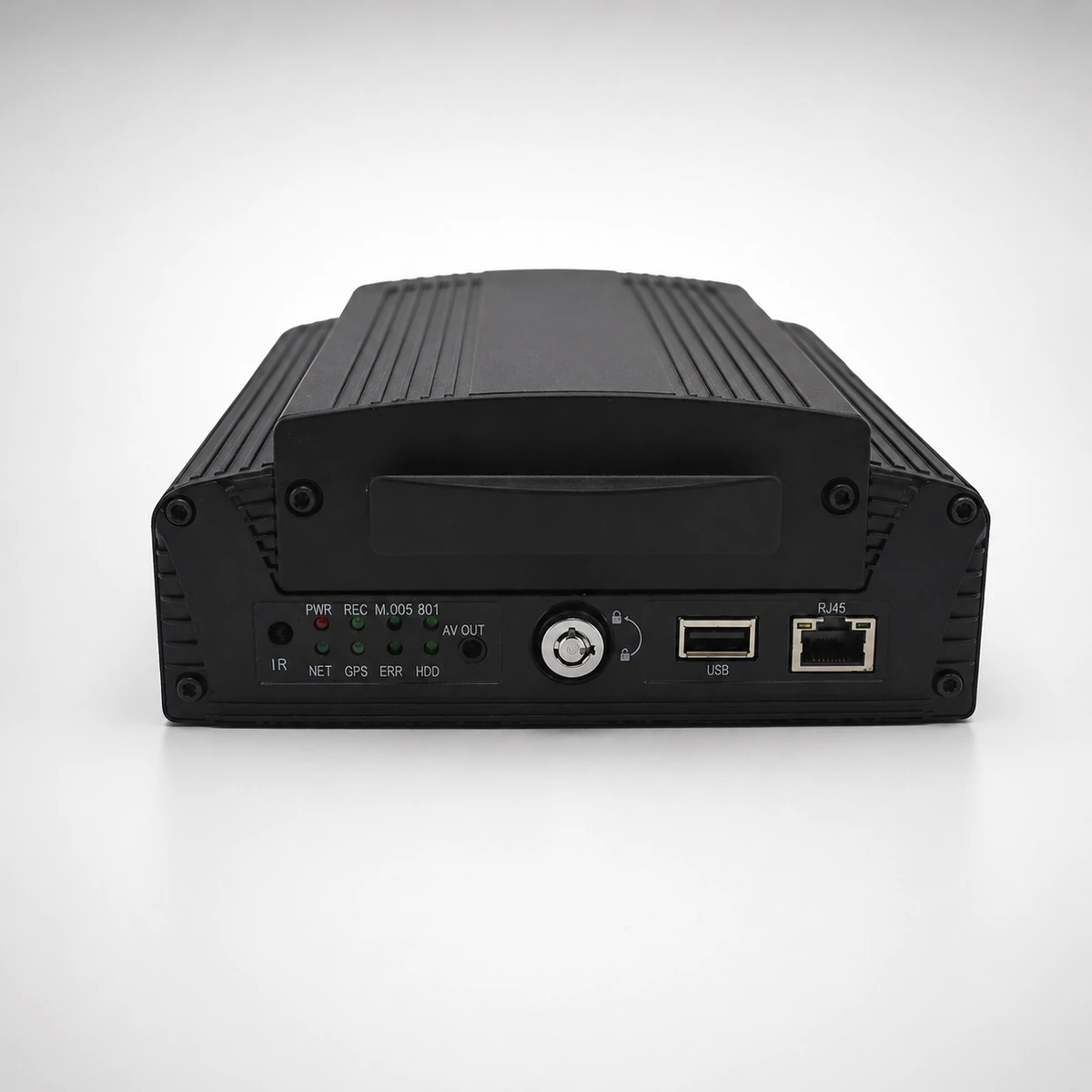
The larger hybrid. Twice the analogue channels and a heated drive bay, but no switch, ONVIF or driver AI published.
Xignal · Hybrid Mobile NVR
M728(G4F)-IP
+4 analogue channels+heated bay−2 TB drive
The larger hybrid. Twice the analogue channels and a heated drive bay, but no switch, ONVIF or driver AI published.
 Xignal · HDD Mobile DVR
M728(G4F)
+8 analogue channels−no IP channels
Eight analogue channels and no IP side. The recorder for a school bus wherever AHD is accepted.
Xignal · HDD Mobile DVR
M728(G4F)
+8 analogue channels−no IP channels
Eight analogue channels and no IP side. The recorder for a school bus wherever AHD is accepted.
 Xignal · HDD Mobile DVR
M710(G4F)
−720p−no IP channels
The entry point of the range, for a patrol car, an ambulance or a van.
Xignal · HDD Mobile DVR
M710(G4F)
−720p−no IP channels
The entry point of the range, for a patrol car, an ambulance or a van.
fleet and school transport rules
The M720(G4F)-IP mobile NVR against common requirements
The hybrids get asked about wherever an authority requires IP cameras for school transport, so the honest answer belongs at the top. Four IP channels does not cover a seven camera all-IP bus, and no configuration of this model will. What follows is what each rule asks, and where this recorder does and does not answer it.
- Seven cameras on a school bus: four exterior and three interior. Eight total channels covers seven in a mixed installation, but not as seven IP cameras.
- Where IP cameras are mandated: this recorder carries four IP channels, so it suits a mixed fleet rather than an all-IP bus. Ask us before specifying it for one.
- Open camera choice: ONVIF support means the IP cameras are not tied to one manufacturer, which matters on a framework that runs for years.
- At least 60 days of retention: the vehicle holds a rolling buffer. Retention beyond what the 4TB drive holds is sized on the server, not on the recorder.
- GPS from an approved provider: the built-in GPS and BeiDou module reports position, and the link to the approved provider is configured at commissioning.
- Telematics on heavy vehicles: many authorities require driving hours, harsh braking, acceleration and speeding to be reported on heavier vehicles, and licensing can depend on it.
- Encrypted storage and an authorised user register: where footage documents a violation, the evidence rules that apply govern the server it lands on rather than the recorder itself.
Get a price for the Xignal M720(G4F)-IP
Tell us the vehicle type, how many analogue and how many IP cameras each vehicle needs, whether you want ADAS or driver monitoring, and how long footage has to be retained. If the vehicles still run CVBS cameras, mention it, because this model does not take them.